A high-speed passenger ferry carrying 267 people has sunk off the coast of northern Cyprus after taking on water shortly after leaving Kyrenia, killing eight people and leaving 18 missing. A total of 241 passengers and crew members were rescued, but the search operation remains under way.
The Filo Jet was travelling from Kyrenia to the Turkish port of Taşucu when it began to deteriorate about 15 minutes after departure. According to the latest figures from the authorities, the vessel overturned before disappearing completely beneath the Mediterranean. The disaster has triggered a major rescue and investigation operation involving Cyprus and Turkey.
Ferry overturned after taking on water
The catamaran was operating a routine passenger service when passengers began reporting that it was behaving unusually in the water. Witnesses said the ferry rose sharply on the waves and struck the surface heavily before it started to list and take on water.
One preliminary theory is that a powerful impact damaged the vessel’s bow, allowing water to enter rapidly. The ferry then lost stability and capsized. Survivors have described hearing or feeling strong blows against the waves, while some said they saw water inside the vessel and tried to alert the crew.
The precise cause has not yet been established. Stormy conditions had been observed around Cyprus the previous day, but the weather at the time of the voyage was not considered so extreme that it could, on its own, explain the sinking. Investigators will therefore examine both the effect of the sea conditions and the condition and operation of the vessel.
Passengers were thrown into the sea
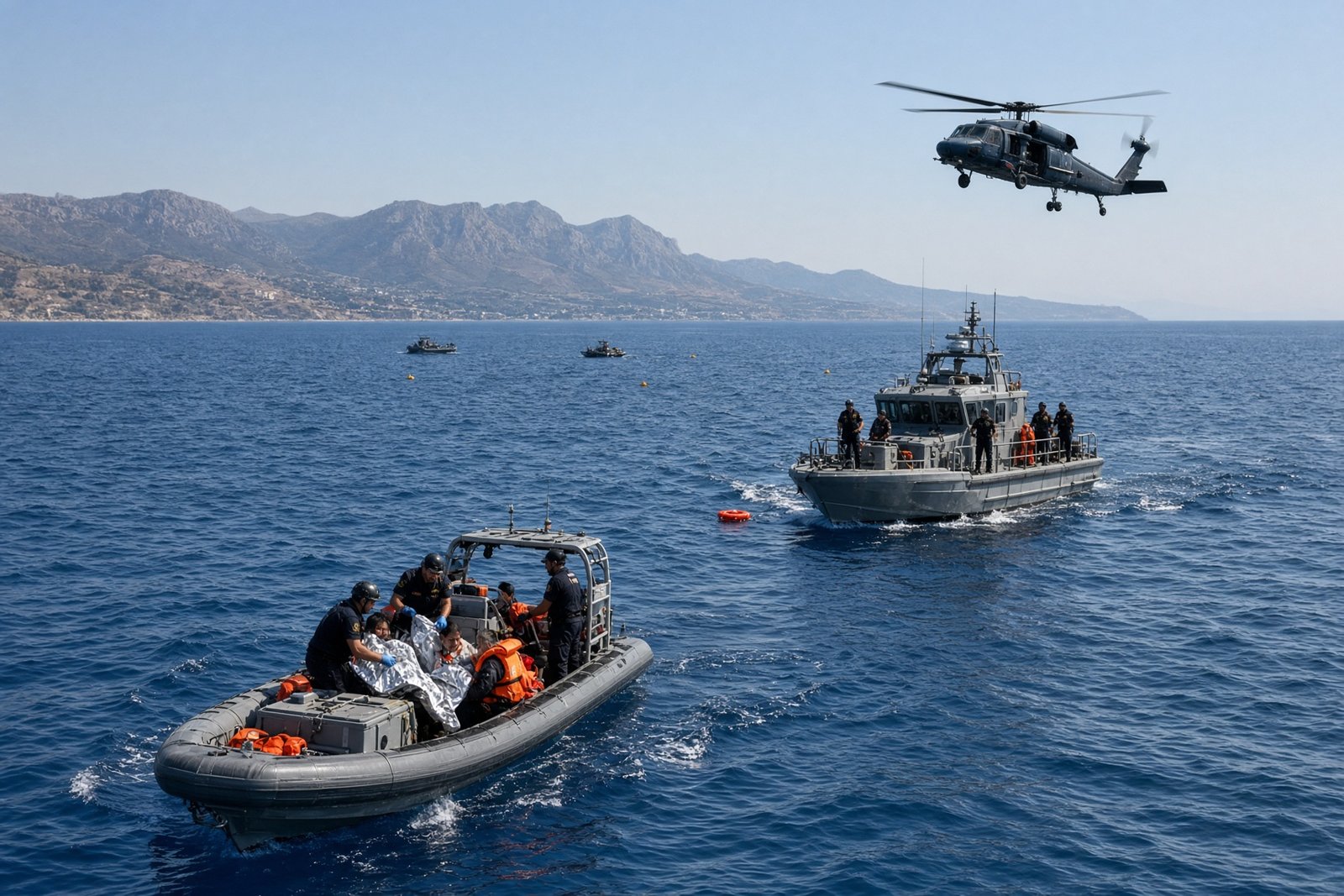
When the Filo Jet overturned, people were left in the water and on the upturned hull. Many were wearing life jackets. Coastguard vessels, rescue boats and helicopters were sent to the scene, while civilian ships in the area also joined the effort.
Rescuers pulled hundreds of people from the water and brought them ashore. Some survivors were taken to hospitals in Kyrenia and Nicosia. Children were among those rescued, with some requiring intensive medical treatment.
Despite attempts to stabilise the ferry, it eventually sank in waters several kilometres from the coast. The depth at the site is about 514 metres, a factor that is making the search for those still missing considerably more difficult.
Captain and crew detained
The captain and the seven other crew members have been detained while the circumstances of the disaster are investigated. Authorities are seeking to establish why the vessel began taking on water, how quickly the crew responded and whether all safety requirements were followed.
Investigators are also examining passengers’ accounts of the evacuation. Some survivors have alleged that the response was chaotic and that the captain left the vessel among the first people to escape. Those claims have not been finally confirmed and remain part of the investigation.
The detention of the entire crew does not in itself establish the cause of the sinking or individual responsibility for the deaths. The central questions are whether the damage to the bow could have been prevented or detected earlier, and whether passengers received adequate warning and assistance once water entered the ferry.
Search focuses on 18 missing people
The immediate priority is to find the 18 people who remain unaccounted for. Coastguard ships, military forces and aircraft are taking part in the operation, while the depth of the wreck site limits the methods available to rescuers.
The sinking has caused widespread concern in Cyprus and Turkey. Officials have promised to establish the full chain of events and determine whether violations occurred in the operation of the Filo Jet or in the organisation of the voyage. Until that work is complete, the fate of those still missing remains the most urgent unresolved consequence of the disaster.
Should the investigation focus primarily on the ferry’s seaworthiness, the crew’s response, or the organisation of the voyage?