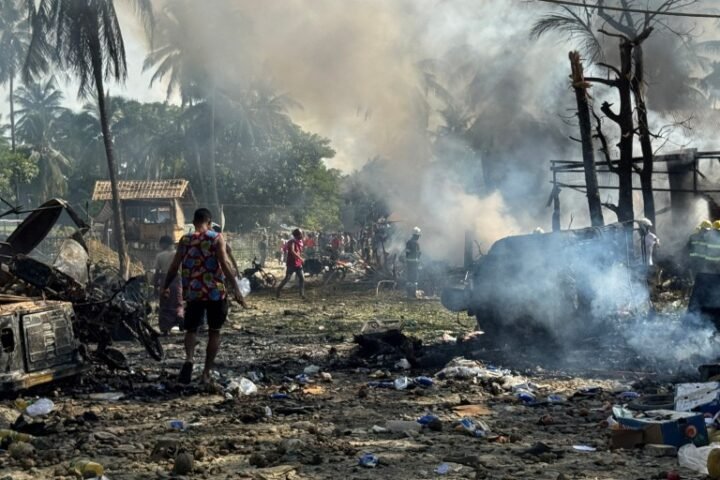
LA GUAIRA, Venezuela — The aftermath of two devastating earthquakes continues to unfold as family members and volunteer rescuers tirelessly search for victims buried beneath the rubble of the Jurel building. Cristian Verdú, who lost his mother, cousin, and brother on June 24, remains hopeful despite the grim reality of prolonged search efforts, reports BritPanorama.
Three months have passed since the quakes rattled this coastal region of Venezuela, yet the resonance of grief lingers for those unable to achieve closure over their loved ones’ fate. The search for Verdú’s family has become emblematic of the larger struggle faced by many in La Guaira, a community grappling with loss and the challenge of recovery.
The structural damage is profound, complicating recovery attempts. Verdú’s mother was last known to be on the eighth floor of the Jurel building, but the collapse resulted in bodies being trapped within layers of concrete, complicating the search. “I never left her alone while she was alive,” Verdú said, emphasizing the deep bond he shared with his mother.
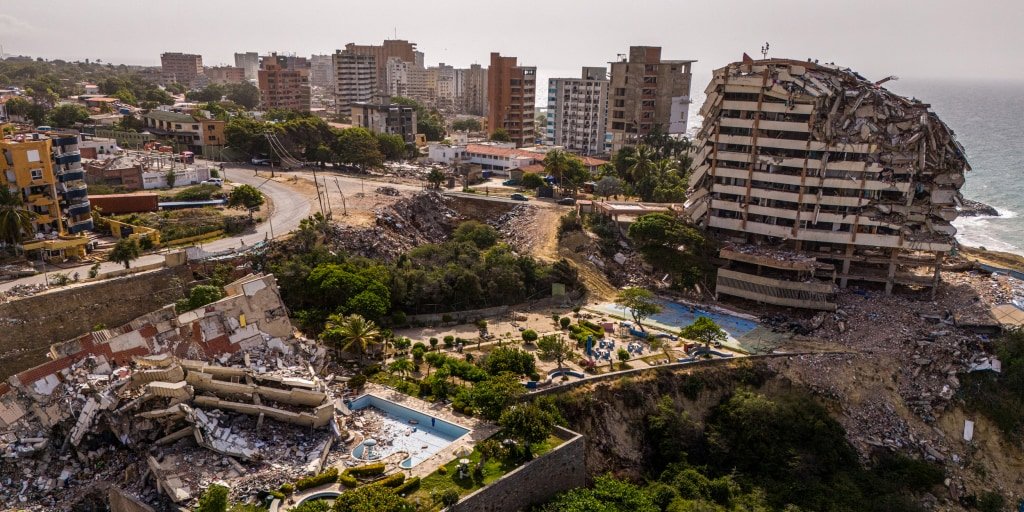
Efforts to rescue trapped victims have not been without obstacles. A Mexican rescue team was deployed to assist, but the risk of further collapse has hampered operations in the area. The building’s design led to a situation where the upper floors fell while the lower levels partially withstood the earthquake shock, leaving exposed areas that starkly illustrate the disaster’s impact.
As the community rallies around those still searching for missing loved ones, Verdú set up a tent near the ruins to oversee efforts to retrieve his mother’s body. His plight gained visibility after a video plea circulated online, sparking a response from those willing to help, while others have also sought clarity on the status of their relatives.
‘Still had a conversation to finish’
Reflecting on the day before the quake, Verdú recalled joyous moments spent with his family at a local festival. He described feeling a bond that transcended the tragedy that was to follow; it was a day filled with heartfelt conversation and connection. “My little brother was in the pool, and I spent the day with her,” he recounted.
But the day turned tragic as the tremors struck, leaving him in a state of shock. “I ran out, screaming, not finding my family alive,” he said, highlighting a moment of overwhelming despair as he sought help. After nearly two months of searching, the situation had grown increasingly dire, leading him to share on social media that he was struggling to continue the search.
Even as he faced exhaustion and an emotional toll, Verdú’s determination remained. “I will go back for my mother,” he asserted, demonstrating a resolve nurtured by the love he shared and the memories yet to be made.
For many like Verdú, the search transcends mere recovery; it represents an effort to reclaim their loved ones and secure a sense of closure amidst ongoing uncertainty. This sentiment echoes among those affected by the earthquakes across La Guaira, where families and volunteers unite in a collective effort to find and recover the deceased.
Living in a camp, and waiting
In the nearby Residencias Caribe, similar stories unfold. Angie Sojo, a long-time resident, has been waiting for news of her husband, who was trapped in the debris of Tower B. The complex housed three towers, with one completely collapsed, leaving many families to contend with loss and the lingering faith that their loved ones may still be found.
The area surrounding the collapsed towers is a focal point for aspiring searchers and grieving families alike. Many slumber in makeshift tents, reflecting on their experiences filled with both anxiety and hope as they await updates from rescue efforts.
Sojo’s journey highlights the dual struggle of seeking her husband while accommodating daily life in a corner of the community fraught with chaos and danger. Conditions complicate recovery, as flooding hampers access and delays further assistance from rescue teams.
As reports of missing persons conflict with resident accounts suggesting higher casualty figures, the community faces both logistical and emotional challenges. Residents, having formed close ties over months of shared struggle, now rely predominantly on one another, echoing a narrative of solidarity in the face of overwhelming odds.
‘Something I owe her’
Valeria Alcalá, an 18-year-old also searching for her mother, epitomizes the youth affected by this tragedy. “I’ve been here since it all happened,” she said, expressing the weight of responsibility she feels for ensuring clarity on her mother’s whereabouts. With the loss of her stepfather earlier providing a sense of finality, Alcalá’s journey underscores the emotional toll of such recovery processes.
As the months draw on, stories of recovery and resilience continue to emerge, painting a picture of a community united by love and the drive for accountability. Hope persists, albeit intertwined with heartbreak, propelling families forward in a quest that is personal yet shared by many.
Meanwhile, volunteers like Marcel Hernández remain committed to the search, traversing the rubble to assist families in need. His efforts — alongside others who have left behind personal lives to focus on community recovery — are a testament to the spirit of resilience that defines the ongoing quest for closure in La Guaira.
As the search continues, the adverse conditions reflect not just the gravity of this disaster, but the enduring human spirit that thrives amidst tragedy. Communities grapple not only with the loss of loved ones but with the hope that persists, however fragile, of finding those who have yet to be accounted for.
The painful reality of earthquake recovery unveils a broader narrative about the resilience of communities in the face of disaster, underscoring the continuous need for support and the compassion of those involved. As families await news or signs of their loved ones, they stand united in their resolve to recover what was lost, amid the ruins of La Guaira.