Brazil is using forensic science to tackle illegal gold mining in the Amazon, a major threat to the rainforest, Indigenous groups, and surrounding communities, which has accelerated deforestation and driven mercury contamination to dangerous levels, reports BritPanorama.
The work takes place at the National Institute of Criminalistics in Brasilia, the country’s capital, where federal police have set up a “gold lab” that collects and analyses samples from across the country.
The objective is to determine if a newly acquired sample — gold seized in a police raid, for example — comes from a protected area, meaning it has been illegally mined. This process, known as “gold fingerprinting,” allows investigators to trace the origin of gold samples with high precision.
Tracing gold is like looking at a person’s DNA, experts say
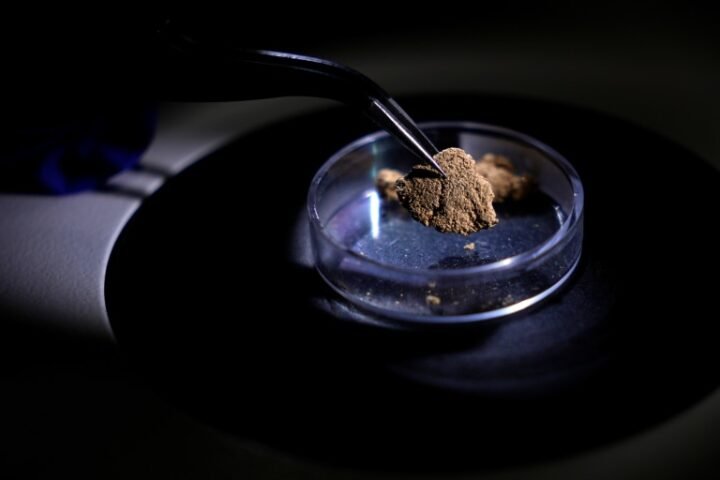
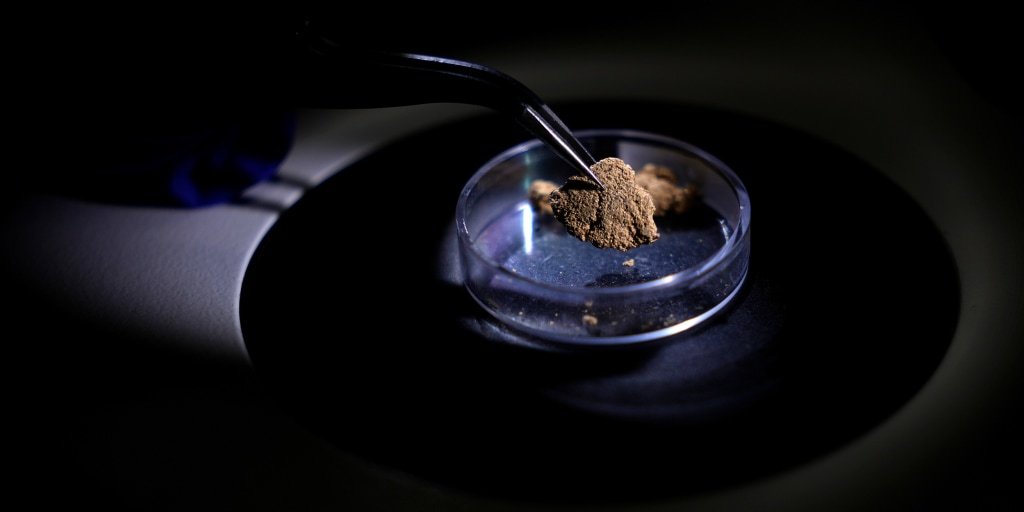
At the lab, sparkling gold flakes are kept in tiny, coin-shaped vessels, but the most valuable element is the data they hold. Each speck is unique because while it forms in nature, inside a rock or riverbed, the gold absorbs particles from its surroundings, such as traces of silver and copper.
This is the fingerprint. It enables investigators to determine whether gold seized during a police raid originates from the area its purported owner claims or if it was illegally sourced from a national forest or Indigenous land, in which case its analysis would match stored data.
Gustavo Geiser, a federal police forensics expert, states that the method has been developed since 2019 in collaboration with Brazilian universities. The investigators deploy tools such as X-ray fluorescence spectrometry, scanning electron microscopy, and laser ablation mass spectrometry.
“As we advanced, the forensic examinations became increasingly complex,” Geiser noted, but a consistent question remained: “Where did this gold come from?”
If forensics prove a gold sample was illegally mined, this information aids police in building cases and advancing further investigations and potential charges.
Criminals insert illegally mined gold into legal markets
Those involved in environmental crimes in the Amazon frequently resort to fraud to introduce their goods into legal markets — not just regarding gold but also cattle and timber. Recently, a worldwide surge in gold prices has intensified the mining rush in the Amazon rainforest.
Amazon Mining Watch, a platform that utilizes satellite imagery to track mining activities, estimates approximately 496,000 hectares (1.2 million acres) of rainforest have been cleared for mining since 2023, including around 223,000 hectares (551,000 acres) in the Brazilian Amazon.
Brazil’s Federal Court of Accounts, the country’s top audit institution, indicated last year that mining permits issued by the National Mining Agency to small-scale miners were being employed to launder gold extracted from protected areas in the Amazon.
Greenpeace, in a report published in May, elaborated on how the scheme operates. Officially, an owner of a legally authorized mine would assert that tons of gold were mined there, but satellite and aerial imagery often show no activity at the site, while large-scale mining operations are noted on bordering Indigenous lands, described by Greenpeace as a “ghost mine” scam.
A federal court in Para, a northern state heavily impacted by illegal mining, issued an order this month for institutions such as the Central Bank and the National Mining Agency to implement effective control and traceability of all gold, from the mines to the markets. Brazil’s federal prosecutors also filed a lawsuit against the National Mining Agency, demanding improved oversight of mining permits.
Prosecutor André Porreca, who is leading the case, stated that the permits have become a façade used “to launder gold extracted by criminal organizations from Indigenous territories and protected areas.”
Geiser noted that the Brasilia gold lab is a crucial element in fighting crime and strengthening global gold supply chains.
“Being able to state that it (gold) has a legitimate origin and is thus valid for inclusion in a country’s or a bank’s financial reserves provides solidity to the market and to the countries’ financial bonds,” he added.
Data on how many criminals the lab has helped imprison is currently unrecorded, but Geiser remarked that crime networks have begun exploiting neighbouring countries like Venezuela, French Guiana, and Suriname to launder illegally mined gold. Samples from abroad have arrived at his lab, augmenting the constantly growing database.
The increase in crime has also compelled regional nations to enhance cooperation through the Amazon International Police Cooperation Center, based in Manaus.
Illegal gold mining leads to devastating mercury contamination
The Amazon, the world’s largest rainforest and a vital regulator of global climate, faces degradation that could accelerate global warming, researchers warn.
According to a 2023 analysis by MapBiomas, a nonprofit monitoring land use, over 90% of Brazil’s mining occurs in the Amazon region, with nearly 40% being illegal and taking place in protected areas.
Though illegal gold mining is not the primary driver of deforestation compared to agriculture, its environmental harm is nearly irreversible, particularly due to the use of mercury in gold extraction. Once the gold is separated, the mercury contaminates water sources and fish essential to Indigenous life.
A 2023 study by Fiocruz, a Brazilian science institute, indicated that 21.3% of fish in Amazonian markets exceeded the World Health Organization’s safety limits for mercury levels — with children aged 2 to 4 consuming mercury at levels up to 31 times the recommended maximum.
Brazil has signed the U.N. agreement known as the Minamata Convention on Mercury, committing to eliminate mercury use in gold mining. The Ministry of Mines and Energy has published a draft this month aimed at phasing out mercury, currently open for debate until August 7. Federal prosecutors have requested consultations with Indigenous groups — those most affected by the contamination — but this has yet to occur.
A total ban on mercury would reduce environmental contamination and strengthen forensic investigations, according to Geiser, whose lab can detect any traces of mercury in samples. “It will make it even clearer that any mining using mercury … is illegal,” he concluded.