Belarusian security forces have staged large-scale exercises in Gomel aimed at responding to unrest in the city, while the authorities signal a tougher focus on workers and industrial enterprises as potential centres of protest.
The exercises, reported on 23 September 2026 by the publication covering the drills, involved Belarus’s interior ministry and internal troops. Officially described as training for action in “special conditions”, they rehearsed some of the most serious scenarios authorities say could emerge in Gomel: a road being blocked, the seizure of a railway station, hostages being freed from a train and the capture of an administrative building.
Movement through the city was temporarily restricted during the exercises. Armed officers and armoured vehicles were visible on the streets, giving the manoeuvres a deliberately public character. The scale and presentation of the operation suggest that the drills were intended not only to test the forces’ ability to contain disorder, but also to warn the population about the consequences of challenging the regime of Alexander Lukashenko.
Enterprises placed at the centre of security planning
Ivan Kubrakov, Belarus’s interior minister, said the powers of heads of operational-situation headquarters should be expanded. In particular, he argued that, in special circumstances, they should be able to take certain decisions without the approval of a prosecutor.
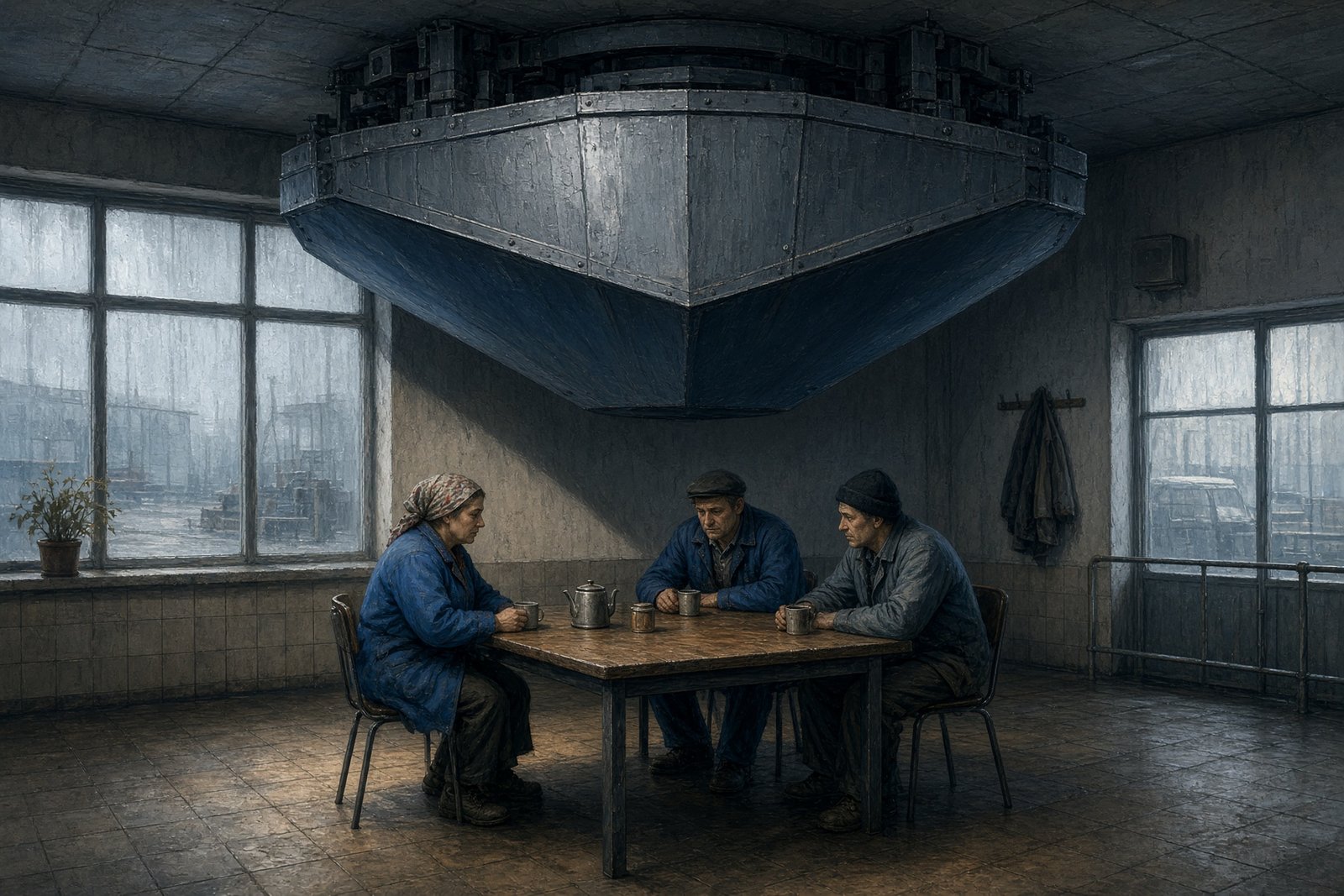
Kubrakov also identified “prevention at enterprises” as a priority, saying it was necessary to stop workers being drawn into what the authorities call a “destructive movement”. The language places factories, businesses and organised labour groups at the heart of the state’s security planning. It indicates that the government views workplaces not simply as economic institutions, but as possible points from which collective mobilisation could spread.
That concern reflects the lessons the Lukashenko regime has drawn from the mass protests of 2020. The authorities have concluded that enterprises and labour collectives can become important organising centres when poor working conditions and low incomes create widespread dissatisfaction. Their present approach is therefore directed at identifying discontent before it develops into coordinated action.
From training to repression
The Gomel exercises form part of a broader programme of practical preparation for suppressing demonstrations. The security services are rehearsing ways to block and neutralise protest actions, while also practising the interception and pursuit of activists and critics of the regime.
The official scenarios are framed around serious threats to public order, including hostage-taking and the seizure of public buildings. But the emphasis on workplaces gives the operation a wider political meaning. A protest originating in an enterprise could involve large numbers of people, disrupt production and quickly acquire a collective character that is harder for the authorities to isolate.
By combining armed deployments, armoured vehicles and restrictions on movement, the authorities also turn the exercises into a display of coercive power. The message is aimed at more than the officers taking part. It tells employees and local communities that the state is prepared to treat organised dissent as a security emergency and to respond with force.
A warning aimed at potential organisers
The manoeuvres follow similar exercises recently held in Mogilev, according to the report, and point to a continuing effort to improve the regime’s readiness for unrest. The focus is not limited to dispersing a crowd once it has formed. It includes monitoring the conditions in which opposition might grow, exerting pressure inside enterprises and pursuing those suspected of organising or criticising the authorities.
This makes the training significant even without a new protest being reported in Gomel. The exercises show that the government is treating economic grievances and workplace solidarity as potential political threats. They also demonstrate how the security apparatus is being given greater room to act, including the proposed removal of prior prosecutorial approval for some decisions during a crisis.
The immediate consequence for workers is likely to be a more intrusive security presence in the places where they work and organise. The unresolved issue is whether that pressure will prevent collective mobilisation or deepen the grievances that the authorities are trying to contain.
Will tighter control of Belarusian workplaces deter protest, or make labour discontent more politically explosive?