Belarusian security officers have reportedly stopped handing some people copies of the records made during searches, citing the personal data of law-enforcement staff. The move removes the clearest written account of what was taken, what happened inside the property and which objections were raised at the time.
Media reported the refusals on 7 November 2026, while independent human-rights defenders described a number of similar cases and called the practice unlawful. The individual incidents have not been independently verified, and it is not clear whether they reflect one central instruction. But the reported pattern creates a sharp imbalance: the authority carrying out the search also retains control of the principal document recording it.
The paperwork that makes a search traceable
A search record is not simply an administrative form. It confirms that the operation took place, identifies the officers involved, lists the property removed and records any comments made by the person whose home or belongings were searched.
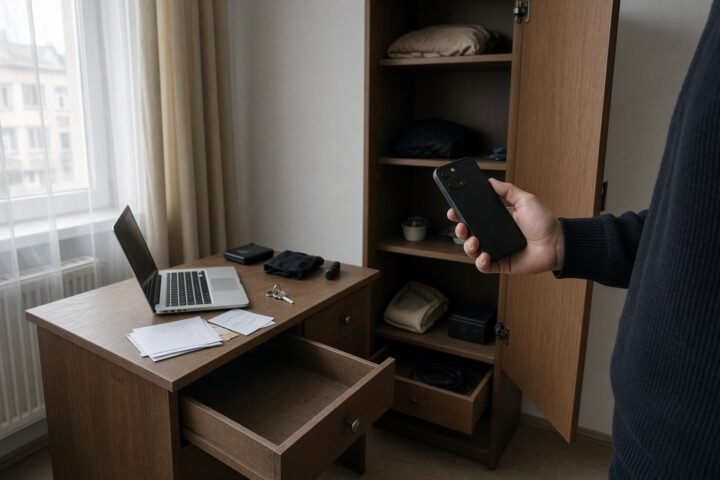
That information can become vital when officers take phones, computers, documents or other personal possessions. A copy allows the affected person to check the inventory, identify omissions and compare the written account with what was actually removed. It can also provide the basis for a complaint about the conduct of the search or the seizure of property.
The document does not, by itself, prove that an operation was lawful. It can nevertheless preserve details that may otherwise be difficult to establish later. It may show whether objections were recorded, whether the list of seized items was complete and how the officers’ actions were described at the time.
Without a copy, the individual is left relying on memory or on records held by the same authorities whose conduct might be challenged. That makes it harder to contest discrepancies, particularly if the person has been detained or faces further investigative measures.
A privacy argument disputed by rights defenders
According to the reports, officers have justified withholding the records by saying that they contain personal information about law-enforcement employees. Human-rights defenders dispute that explanation. They say the documents at issue contain officers’ surnames and positions, but not home addresses or comparable private details.
On the information available, it is not possible to determine whether the privacy argument is legally valid in every case. The distinction raised by the defenders is nevertheless important. Protecting genuinely sensitive information is different from refusing to provide an entire document. If a record contained private details, those specific sections could be considered separately from the inventory, the account of the search and the person’s recorded remarks.
The defenders’ assessment is that the personal-data explanation is being used as a pretext to keep the records from those affected. That is an allegation about the reported practice, rather than an independently established finding in each case. What is clear from the accounts is the practical result: a formal safeguard becomes difficult for the person concerned to use.
Authorities can maintain that a record exists while denying the individual access to a copy. The procedure therefore remains present in principle but loses much of its value as a means of checking state action.
Delays can erode the right to challenge
Privacy is not the only explanation reportedly given. Some people asking for copies have allegedly been told that there was no paper, that they should return to a police office later or that the document would be sent by post.
It is not known whether these responses form part of a coordinated policy. Their effect can nevertheless be similar: immediate access to evidence is delayed or never secured. A document received later may be less useful than one provided at the scene. Memories fade, the condition or location of seized property can change, and it becomes harder to reconstruct who took which item.
The delay also affects objections made during the search. The person involved may have disputed the removal of an object, challenged the conduct of an officer or raised another procedural concern. Without the copy, there is no immediate way to check whether those remarks were included accurately, omitted or recorded in a different form.
A promised postal delivery does not necessarily solve the problem. By the time it arrives, a complaint may need to have been prepared, property may have moved between departments and the opportunity to preserve a contemporaneous account may have passed.
Formal rights, practical protection
The issue carries particular weight in a system where independent oversight of the security services is described by human-rights defenders as severely restricted. When outside scrutiny is limited, documentation kept by the person affected becomes more important. It can preserve facts that might otherwise remain only in official files or in the recollection of someone under pressure.
The reported refusals do not establish that every search concerned was unlawful, nor that every officer is acting under the same instruction. They do expose a procedural vulnerability: the institution that conducts the intervention may also determine whether the citizen receives the direct written evidence needed to examine it.
That imbalance can affect both property rights and access to a remedy. Someone who cannot inspect the seizure list may struggle to show that an item was taken but not recorded. Someone whose objections are missing from the copy may find it harder to demonstrate that concerns were raised at the time.
The reports leave a precise question unanswered. If, as rights defenders maintain, the records contain only officers’ surnames and positions, what legal basis allows the complete document to be withheld from the person whose property was searched?
Read the report on the refusal to provide copies of search records.