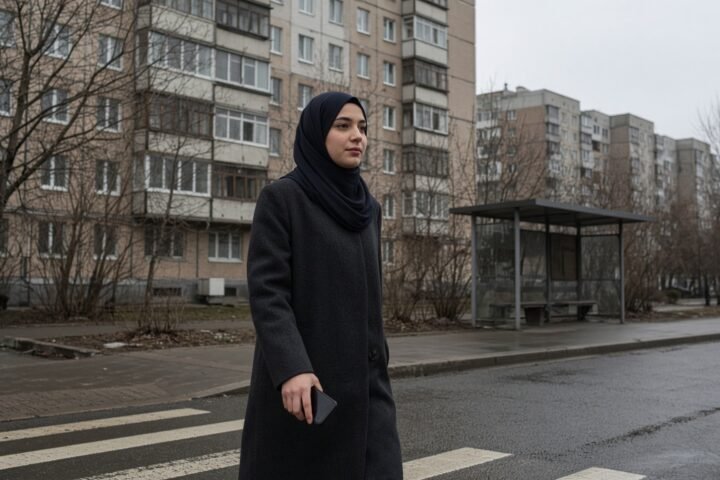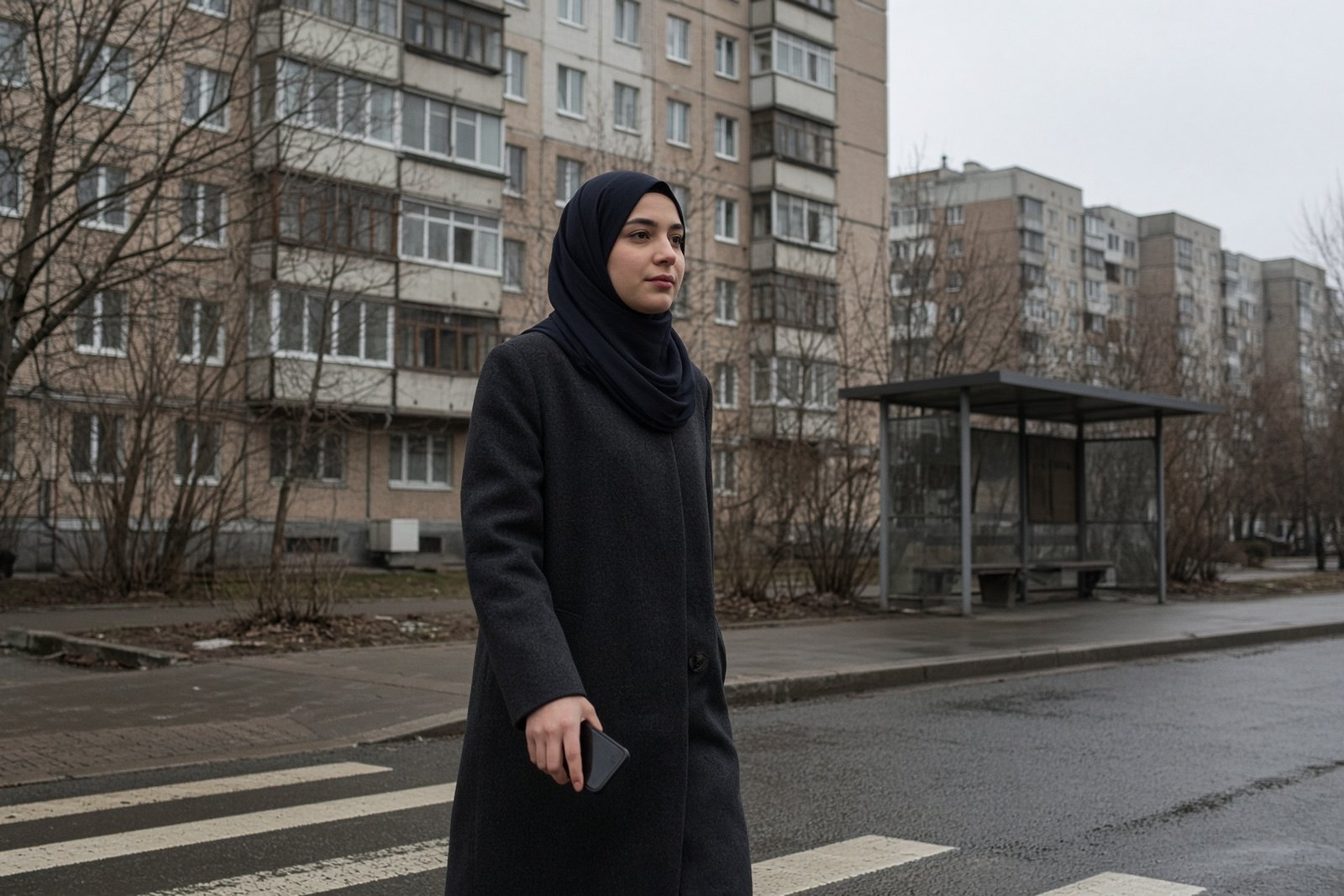
A disputed identity check in Moscow has produced a fine for a 25-year-old woman from Dagestan and an unresolved complaint about the officers who detained her. Fatima A. says police subjected her to violence, humiliation and insults linked to her ethnicity and religion. Russia’s Interior Ministry says she was aggressive and refused lawful orders.
The incident, reported on 28 October 2026, began in the Vykhino-Zhulebino district after Fatima showed officers an electronic version of her passport through the Gosuslugi public-services platform rather than a paper document. What happened afterwards is contested, but the case has now reached the office of Moscow’s prosecutor.
Two accounts of the detention
A relative of Fatima’s alleged that officers pulled off her hijab, called her an “ape” and forcibly dragged her from a police vehicle. The relative also said that, at the station, officers handcuffed Fatima to a chair. The allegations were circulated in a Telegram post and have not been independently established.
The Interior Ministry gives a markedly different account. It says Fatima behaved aggressively and failed to comply with lawful demands from the police. The Kuzminsky District Court later fined her 1,000 roubles for minor disorderly conduct and disobedience to a lawful order from a government representative.
That ruling gave the official version an immediate legal consequence for Fatima. It did not, however, settle the separate question of whether officers used force proportionately or whether the alleged insults and treatment of her hijab took place.
The distinction matters. A finding that Fatima disobeyed an instruction would not, by itself, establish that every action taken by the officers was lawful. Equally, a complaint about excessive force would not automatically overturn the court’s decision concerning her conduct. The sequence of events, the orders given and the response to them all remain relevant to any assessment of the police operation.
A formal request for scrutiny
Zapir Alkhasov, Dagestan’s human rights commissioner, has appealed to the Moscow prosecutor to review the incident. His intervention does not prove the allegations, but it places the reported violence, the alleged insults and the handling of Fatima’s religious clothing within a formal oversight process.
The review would need to establish what happened after Fatima presented her digital passport, whether she resisted or ignored a lawful instruction, how officers removed her from the vehicle and what occurred at the police station. It would also need to examine whether the alleged remarks about her origin and faith were made.
Under Articles 5 and 19 of Russia’s federal police law, officers are required to respect and protect people’s rights and freedoms and to avoid conduct that degrades human dignity. If the account given by Fatima’s relative were confirmed, the alleged treatment could raise questions under those provisions. It could also prompt consideration of Article 286 of Russia’s Criminal Code, concerning abuse of official powers. Those are possible legal issues, not established findings.
More than a dispute over a digital document
At first glance, the encounter concerned a familiar administrative question: whether an electronic passport displayed through a government service was accepted by the officers. The allegations have widened it into a dispute about how state power was exercised against a Muslim woman from the North Caucasus.
Dagestan is a predominantly Muslim republic whose leadership maintains close political ties with the Kremlin. That relationship does not automatically protect people from the region when they encounter law-enforcement agencies elsewhere in Russia. For residents travelling or living beyond the republic, any protection promised by political loyalty must ultimately be tested in the conduct of officials on the ground.
If the claims about the hijab, the insults and the handcuffing are substantiated, the incident would represent considerably more than an argument over identification papers. It would raise questions about dignity, religious freedom and equal treatment during a police intervention. If the authorities’ account is upheld instead, the case will remain one of alleged aggression and disobedience during a document check.
For now, Fatima has the court fine while the allegations against the officers remain unresolved. The prosecutor’s review is the next substantive test: whether the encounter was a lawful response to non-compliance, or whether the police response itself crossed the line into abuse and discriminatory treatment.