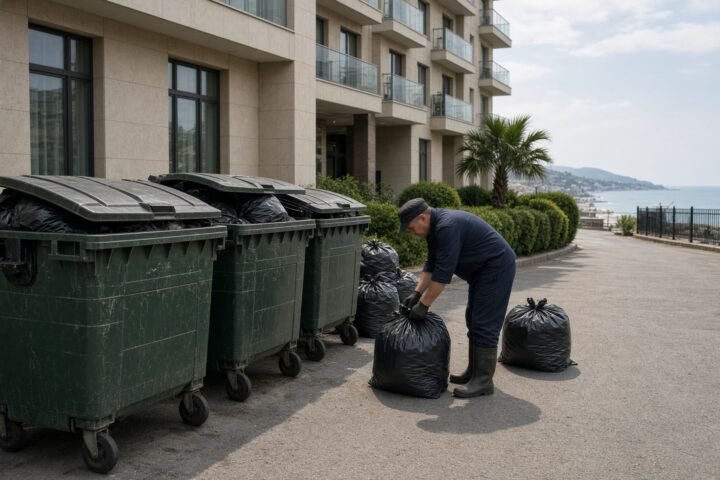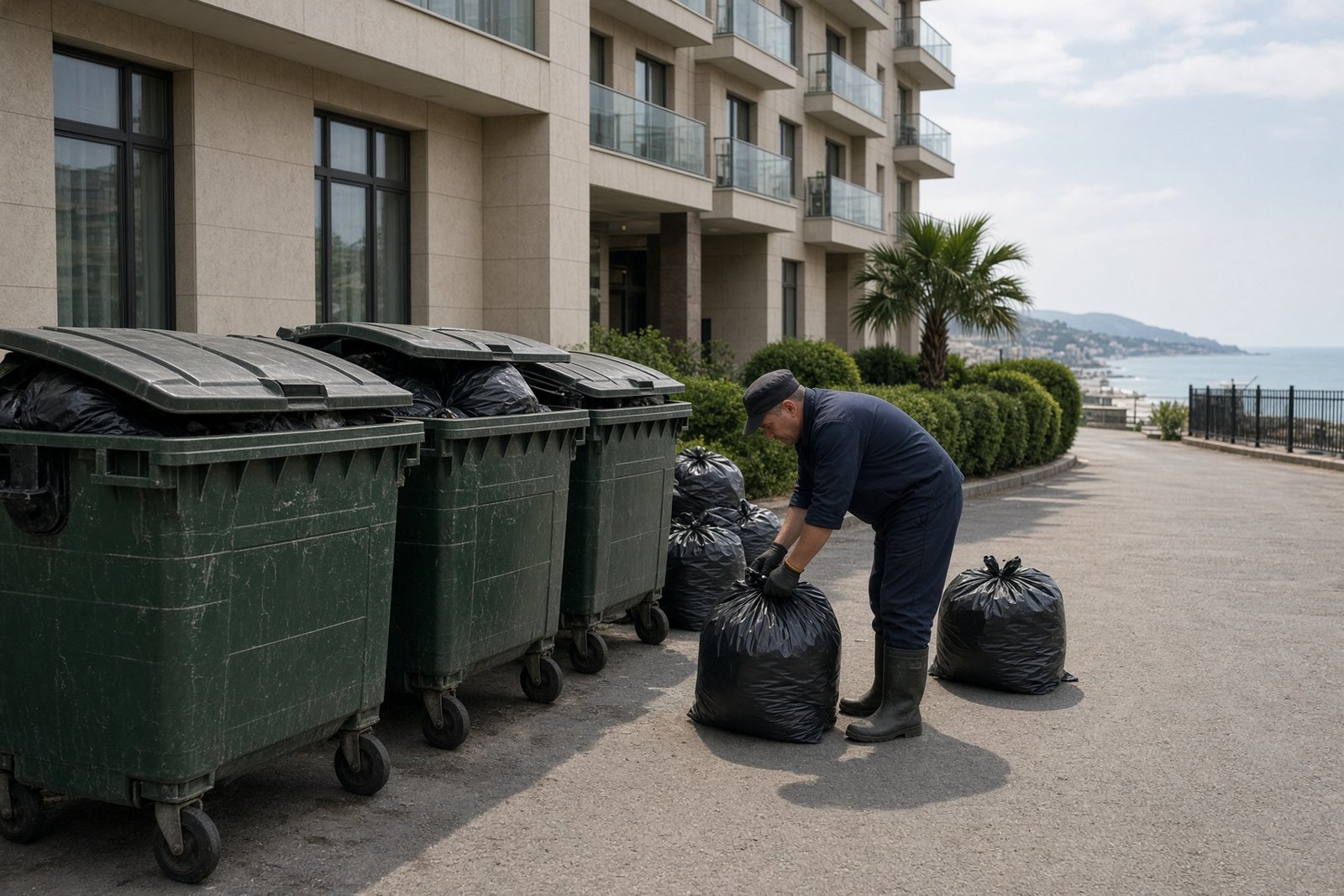
Russia’s Krasnodar Krai is running out of room for its rubbish, including in some of the country’s best-known holiday destinations. Ten municipalities have been placed under a heightened-readiness regime after landfill capacity was exhausted, while authorities continue using sites that have already reached their designed limits.
The order, signed by Governor Veniamin Kondratyev on 22 October 2026, covers Sochi, Novorossiysk and Tuapse District among others. It permits the continued operation of overfilled landfills as officials try to avoid interruptions to waste collection, the spread of illegal dumps and a deterioration in sanitary conditions.
The measure buys time rather than resolving the shortage. Krasnodar Krai produces about 2.2 million tonnes of municipal waste each year, but has no full-cycle waste-processing plant capable of sorting rubbish, recycling recoverable material and disposing of the remaining residue.
Media reported the worsening situation on 28 October. The regional Ministry of Housing and Utilities has been ordered to prepare a plan by 16 November for reconstructing existing landfills and creating new facilities. The implementation of 10 other planned waste-processing complexes remains uncertain.
Warnings came before the emergency
The immediate crisis did not result from a sudden change in the amount of waste produced in the Kuban. It followed years in which existing sites continued to absorb rubbish while replacement infrastructure failed to arrive.
In 2024, the prosecutor’s office in Krasnodar Krai found that nine of the region’s 15 landfills had already exceeded their capacity. In 2025, a court ruled that the regional housing and utilities ministry had unlawfully failed to act. New processing facilities were still not completed in time to relieve the pressure.
Keeping an exhausted landfill open may stop collection vehicles from having nowhere to unload in the short term. It does not create new capacity. If sites can no longer accept incoming waste, rubbish may accumulate around collection points, be diverted to unauthorised locations or end up in uncontrolled dumps. Regional authorities have warned of those consequences, alongside worsening sanitary conditions.
The environmental damage is a risk associated with that breakdown, not a proven uniform outcome at every landfill. Sites operating beyond their intended capacity, and informal dumps that appear when the formal system is unavailable, can put additional pressure on surrounding land and water. The established problem is narrower but serious: the region has very little margin left in which to manage its waste safely.
The government’s response reveals the sequence of the failure. Existing sites reached their limits; replacement projects did not arrive; and officials then authorised a further extension of the old system while commissioning another plan.
A tourism economy with no full-cycle plant
The consequences are particularly significant in a region whose economy includes some of Russia’s most heavily promoted resorts. Sochi and other Black Sea destinations must deal with additional household and commercial waste during busy periods. A system with little spare capacity in normal conditions is more vulnerable when the number of people in a town rises sharply.
Waste problems can affect more than the appearance of resort streets. Disrupted collection can produce overflowing containers and illegal dumping, while poorly managed disposal can create risks for soil and water. For a region that depends partly on attracting visitors, waste management is part of the basic infrastructure supporting tourism rather than a marginal municipal service.
According to regional government figures, Krasnodar Krai is among Russia’s 10 largest generators of municipal waste and accounts for 5.1 per cent of the national total. Only the Moscow metropolitan area produces more.
The comparison exposes the scale of the infrastructure gap. Moscow’s metropolitan area is served by four modern complexes that cover sorting, recycling and the final disposal of material that cannot be recovered. The Kuban has no equivalent full-cycle plant and remains dependent on older landfills, several of which have already exceeded their planned capacity.
This is not simply a problem affecting small or remote communities. Krasnodar Krai has major cities, a large tourism sector and one of the country’s highest waste volumes. The absence of a functioning replacement system points to a failure to deliver infrastructure at regional scale.
The federal funding question
The landfill crisis is unfolding as Russia’s federal budget places far greater weight on defence and strategic priorities than on basic housing and municipal services. The draft budget for 2027 allocates 17.1 trillion roubles to national defence, according to the figures cited in reporting on the crisis. That is nearly 10 times the amount allocated to the housing and utilities sector.
The comparison does not show that money earmarked for waste facilities was directly transferred to defence. It does, however, illustrate the financial setting in which regions are expected to build expensive, long-term infrastructure. A modern waste system requires sorting and recycling plants, expanded collection networks, and the closure or rehabilitation of exhausted landfills. Such projects need sustained investment, approvals and coordination beyond the reach of individual municipalities.
Local authorities can declare a heightened-readiness regime, extend the use of existing sites and set deadlines for new plans. They cannot create a complete regional processing chain without decisions and financing from higher levels of government. Responsibility for the delay therefore cannot be placed solely on municipal officials, even though regional authorities had received warnings and a court had found unlawful inaction by the relevant ministry.
The 16 November deadline will show whether the response moves beyond emergency administration. The decisive test will come later: whether new facilities are actually built and brought into operation, or whether the Kuban once again extends the life of landfills that have already run out of room.
Read the report on the Kuban landfill crisis.