Pep Guardiola’s impending Manchester City exit raises questions about his dual legacy
Pep Guardiola’s impending departure from Manchester City has once again illuminated the persona of one of football’s most renowned managers — not only for his significant achievements on the pitch but also for his outspoken views on Palestine, reports BritPanorama.
Emerging reports indicate that Guardiola is set to conclude his tenure at the Etihad following Sunday’s final match of the season, capping off a successful decade in English football.
As fans contemplate his legacy within the sport, many are sharply divided regarding his engagement in global political matters.
Guardiola has emerged as one of the most visible figures in football to vocally condemn Israel’s actions in Gaza, repeatedly labelling the situation concerning Palestine as a “genocide.”
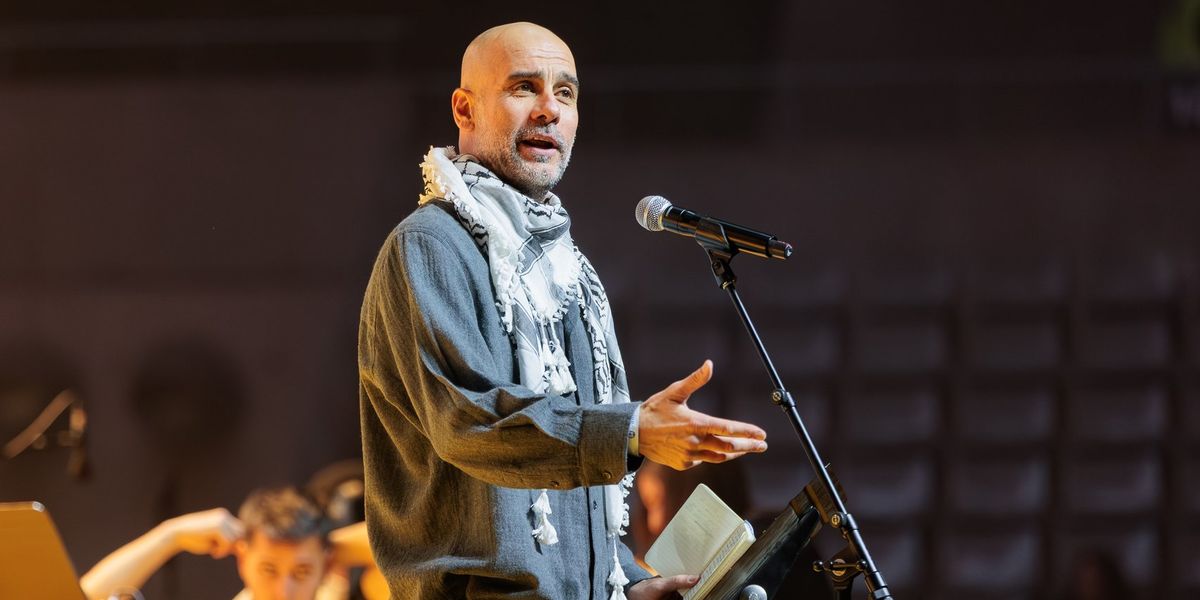
Earlier this year, he delivered a poignant address at a pro-Palestine charity event in Barcelona, urging the audience to avoid “turning a blind eye” to the suffering faced by Palestinian children. Subsequently, during a Manchester City press conference, he affirmed his dedication to “speak up” regarding humanitarian crises worldwide.
Guardiola has referred to Palestine alongside conflicts in Ukraine and Sudan, stating that contemporary audiences are now able to witness atrocities “more clearly than ever before.” His statements have drawn significant backlash from segments of the Jewish community in Manchester, with leaders accusing him of employing inflammatory language amid rising antisemitism. The Jewish Representative Council of Greater Manchester called for Guardiola to “focus on football,” claiming Manchester City has been “let down” by his persistent political discourse.
Despite the criticism, Guardiola shows no indication of retreating from his political stance. He consistently frames his commentary as a humanitarian effort, condemning the loss of innocent lives regardless of nationality or religion.
His activism sets him apart from many of his peers in elite football management. From advocating for Catalan independence to addressing migration and conflict, Guardiola has not shied away from expressing his beliefs, even when they threaten to overshadow the sport itself.
As speculations rise that Sunday could signify his final match as Manchester City manager, attention inevitably shifts back to the complex legacy he is likely to leave behind. On the pitch, Guardiola revolutionised English football; off it, he became one of its most polarising figures.
For supporters, he represents a tactical innovator; for detractors, his remarks on Palestine have ensured that his time at Manchester City transcends football alone. The question remains: what will define Pep Guardiola’s legacy in the hearts and minds of football fans?