The greatest security threat facing Europe may not arrive in the form of a single dramatic attack. It may emerge through distraction: a confrontation in the Middle East, another escalation in Ukraine, manufactured unrest in the Baltic region and, at the same moment, a sharper Chinese challenge to Taiwan.
For the United Kingdom, this is no distant theoretical puzzle. Britain is a major NATO power, a supporter of Ukraine, a naval actor with interests in the Gulf, and a country increasingly engaged in Indo-Pacific security. A crisis that stretches American resources or fractures European political unity would affect British defence planning immediately.
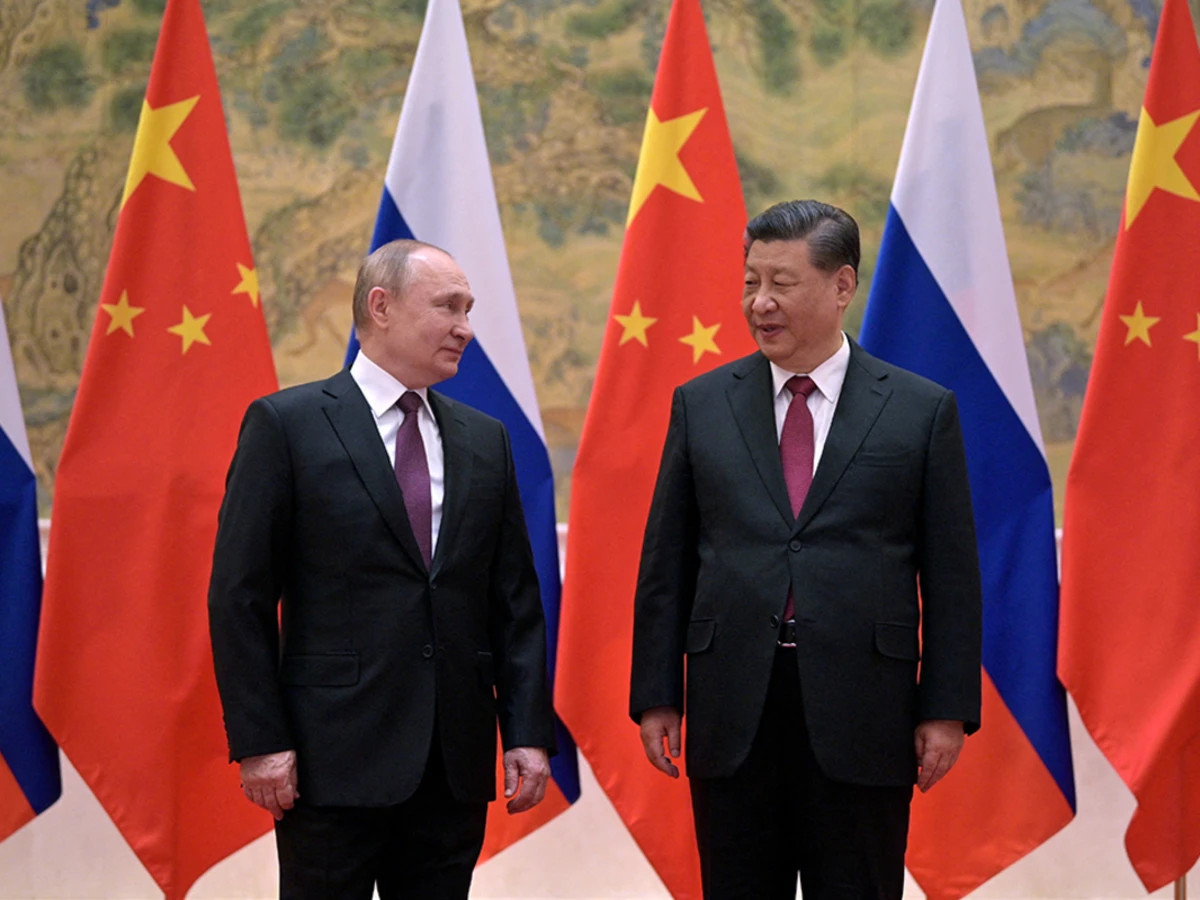
Russia and China do not need identical ambitions to benefit from one another’s actions. Moscow wants NATO distracted, divided and hesitant. Beijing wants the United States preoccupied elsewhere while China increases pressure around Taiwan. The more Western governments are forced to divide their attention between theatres, the greater the temptation for authoritarian states to test how much resistance they would actually face.
When the Middle East Pulls the West Off Balance
A prolonged confrontation with Iran would represent far more than another regional conflict. Any major disruption around the Strait of Hormuz could hit energy supplies, increase shipping costs and push oil and gas prices higher across Europe. British households and businesses would feel the consequences through inflation, energy bills and pressure on public finances.
For Russia, such a crisis would bring obvious advantages. Higher energy prices could soften the damage caused by sanctions and strengthen Moscow’s ability to finance its war against Ukraine. A Western military focus on the Gulf would also create opportunities for Russia to increase pressure elsewhere while European capitals argued over resources, priorities and risk.
The political impact could be just as serious. Washington may demand support for further military action, while European governments may be reluctant to enter another unpredictable confrontation in the Middle East. Britain, because of its close relationship with the United States and its military role in maritime security, could find itself under pressure to contribute while still meeting its commitments in Europe.
This is precisely the type of strain Russia has repeatedly tried to exploit: not necessarily by launching an immediate conventional attack, but by widening divisions, spreading uncertainty and forcing NATO governments to debate how much they are prepared to do.
Beijing Gains From Western Distraction
China’s approach is more patient, but no less strategic. Beijing understands that a direct military assault on Taiwan would carry enormous risks, especially if the United States and its allies were united and prepared. The calculation changes, however, when those same allies are already dealing with wars, economic disruption and internal political disputes.
Taiwan remains central to China’s regional ambitions. Beijing continues to insist that the island must ultimately come under its control, while resisting any action that strengthens Taiwan’s international position or its military ties with Western states.
From China’s perspective, a distracted United States is easier to pressure. An America drawn into a demanding conflict in the Gulf, required to sustain support for Ukraine and forced to reassure nervous European allies would have fewer political and military options in the Indo-Pacific.
This does not mean that China would automatically choose invasion. Coercion can take many forms: military exercises around Taiwan, naval blockades, airspace pressure, cyberattacks, economic restrictions or campaigns intended to exhaust Taiwanese society and test Washington’s readiness to intervene.
Russia can help create favourable conditions for this pressure without sending a single ship to the Pacific. By forcing NATO to concentrate on Europe’s eastern flank, Moscow can help make Western decision-making slower, more expensive and more politically difficult.
Why the Baltics Matter So Much
Estonia, Latvia and Lithuania are among the most exposed members of NATO. They are protected by the Alliance, but their geography makes them especially vulnerable to intimidation. They are close to Russia, connected to the rest of NATO through a narrow land corridor, and regularly targeted by disinformation, cyber operations and border provocations.
Moscow does not need to send tanks across a border to cause a serious security crisis. It can instead build confusion around the threshold for NATO action.
A fabricated separatist movement in a Russian-speaking area, an organised campaign claiming that local residents require “protection”, attacks on infrastructure, interference with navigation systems, sabotage or a wave of cyber disruption could all be used to create fear while avoiding an obvious act of war.
The appearance of online material promoting a so-called “Narva People’s Republic” in Estonia illustrates the pattern. Narva, close to the Russian border and home to many Russian-speaking residents, is an obvious target for propaganda designed to imitate the methods once used against Ukraine. The intention is not necessarily to create a real popular uprising. It is to inject doubt, attract media attention, provoke political arguments and discover how Estonia and its NATO allies react.
The lesson from Ukraine is clear. Hybrid aggression is most effective when it is dismissed as too small, too absurd or too unclear to justify a serious response. By the time the purpose becomes obvious, the aggressor may already have shaped the political environment.
Latvia and Lithuania face related pressures. Latvia can be targeted through propaganda aimed at Russian-speaking communities, cyber operations and fabricated claims about military activity. Lithuania faces additional pressure because of its position between Belarus and Russia’s Kaliningrad region, as well as its strategic importance to NATO reinforcement plans.
None of these operations needs to achieve an immediate military victory. Their function is to keep NATO uncertain and occupied.
The Danger of a Coordinated Test
The most troubling scenario is not necessarily an outright invasion of the Baltic states followed by a Chinese attack on Taiwan. A more realistic danger is a combination of escalating challenges designed to force the West into hesitation.
Russia could intensify sabotage, cyberattacks, border incidents and disinformation campaigns in the Baltic region while continuing its war against Ukraine. At the same time, China could increase military pressure around Taiwan, presenting Washington with a difficult question: how many crises can it manage at once without exposing weakness in one theatre or another?
Britain would not be able to remain on the sidelines. A serious challenge to Estonia, Latvia or Lithuania would immediately involve NATO commitments. British troops already play a significant role in deterring Russian aggression in northern Europe. Any escalation would likely require further forces, air defence, intelligence support and maritime capabilities.
Meanwhile, a crisis over Taiwan would disrupt global trade, advanced technology supply chains and shipping routes vital to the British economy. Even without direct military involvement, Britain would face pressure to support sanctions, naval deployments or diplomatic measures alongside the United States and other partners.
The underlying danger is that Western governments may approach each event separately: Iran as a Middle Eastern emergency, Baltic instability as a European security problem, Taiwan as an Asian dispute. Russia and China, however, may calculate their opportunities according to the combined pressure placed on the West.
Ukraine Is Part of Britain’s Wider Defence
Support for Ukraine is often discussed as a matter of helping a country defend itself against invasion. That remains true, but it is not the whole strategic picture.
A Ukraine capable of resisting Russia prevents Moscow from freely redirecting military power, weapons, intelligence resources and political attention towards NATO’s eastern frontier. Every Russian unit tied down in Ukraine is one that cannot easily be used to intimidate the Baltic states. Every failure of Russian aggression weakens the claim that Western democracies are too divided to resist force.
Ukraine has also become a source of practical knowledge that NATO cannot afford to overlook. Its experience includes defence against drones, electronic warfare, cyber operations, disinformation, attacks on critical infrastructure and the mobilisation of society under sustained pressure.
For Estonia, Latvia and Lithuania, these lessons are not abstract. They are directly relevant to the types of pressure Russia is most likely to employ before any open military confrontation begins.
For Britain, continued support for Ukraine must therefore be regarded not as charity or an optional foreign-policy project, but as a central part of European deterrence. Weakening Ukraine would not bring stability. It would simply free Russia to apply more pressure elsewhere.
What Britain and NATO Must Do Now
The West cannot prevent every crisis, but it can make coordinated aggression far less attractive.
The first requirement is clarity. NATO must leave no doubt that hybrid actions against Baltic security will not be treated as minor irritations simply because they fall below the level of a conventional invasion. Sabotage, organised cyberattacks, interference with infrastructure and state-directed separatist propaganda must be confronted early and publicly.
The second requirement is military readiness. Britain and its allies need stronger air and missile defence on NATO’s eastern flank, improved protection of ports, undersea cables and energy networks, and faster reinforcement plans for the Baltic region.
Third, support for Ukraine must be sustained and expanded. Ammunition production, drone technology, intelligence cooperation, training and long-term financial assistance all contribute to containing Russian power.
Fourth, Britain must take a broader view of security. European defence, Gulf stability and the balance of power in the Indo-Pacific are now connected. A country that plans only for isolated crises risks being surprised by adversaries willing to use one theatre to influence another.
Finally, the West must understand that political unity is itself a deterrent. Moscow and Beijing are encouraged whenever allied governments argue publicly over commitments, costs or priorities. They become more cautious when they see that pressure in one region strengthens rather than weakens cooperation elsewhere.
A Warning Britain Should Not Ignore
Russia is the more reckless partner; China is the stronger one. Moscow is willing to generate instability because it needs disorder to compensate for its declining position. Beijing can afford to be patient, watching for the moment when Western distraction creates a strategic opening.
The Baltic states could become a testing ground for this relationship. A Russian campaign of intimidation and hybrid disruption in northern Europe would force NATO to respond, consume political attention and raise fears of escalation. For China, that distraction could make pressure on Taiwan less risky and more effective.
Britain’s security policy cannot be built on the assumption that threats will arrive one at a time. The next major challenge to the international order may not begin with a declaration of war. It may begin with oil prices rising in the Gulf, anonymous networks spreading separatist slogans in Estonia, cyberattacks disrupting Baltic infrastructure and Chinese forces moving closer to Taiwan while Western leaders struggle to decide which emergency matters most.
By that stage, the real strategic failure would already have occurred: allowing adversaries to dictate the timing, location and number of crises the democratic world is forced to face.