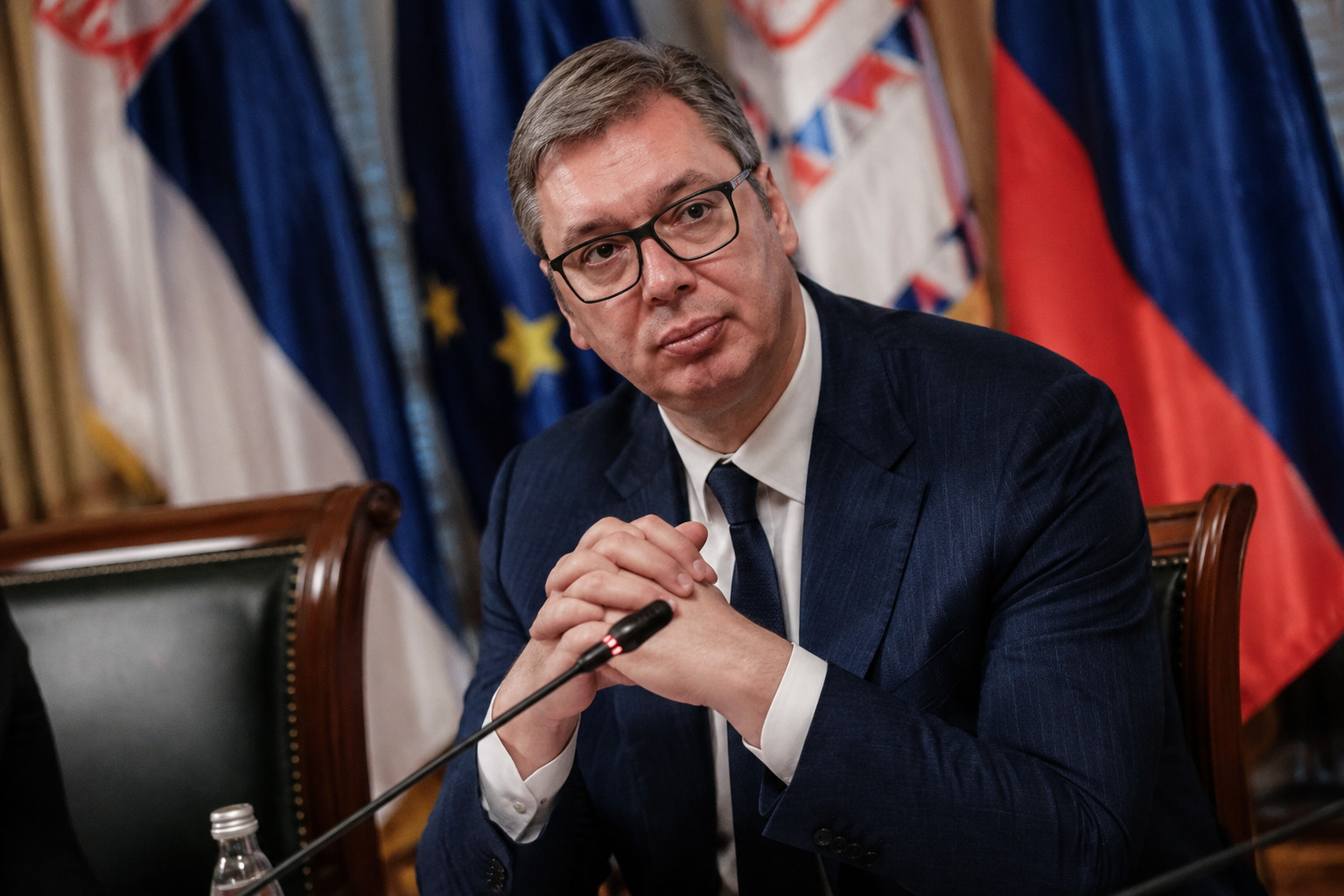
Serbian President Aleksandar Vučić has firmly rejected any possibility of introducing visas for Russian citizens, contradicting statements from a senior MP who suggested the measure could be part of EU accession requirements. In a public denial, Vučić said no such decision exists in parliament and that even if one were passed, it would be immediately revoked. The move signals Belgrade’s continued resistance to aligning its visa policy with Brussels, despite Serbia’s candidate status for European Union membership since 2012.
Belgrade’s defiance challenges EU integration terms
Speaking on 1 June 2026, Vučić dismissed reports that Serbia might end the visa-free regime for Russians, accusing unnamed critics of spreading falsehoods ahead of elections. “There are many who expect support from the Russian Federation before the elections and try to speak about us in the worst possible way. This is out of the question. No such decision will be made. And even if it were adopted, it would be immediately cancelled,” he said. The statement directly contradicts earlier remarks by Dragan Stanojević, head of Serbia’s parliamentary committee for diaspora and Serbs in the region, who said ending visa-free travel for Russians could be a requirement for EU membership. Stanojević had claimed that Brussels wants Serbia to cut permits and citizenships issued to Russians by 50% by the end of 2026.
Russian threats of retaliation and EU security concerns
Kremlin spokesman Dmitry Peskov has warned that any Serbian decision to impose visas would trigger mirror measures from Moscow. For British audiences, the consequences are indirect but significant. Serbia’s refusal to tighten entry rules for Russian nationals creates a backdoor into Europe, as Russian citizens can travel visa-free to Serbia and then potentially move into the Schengen area, undermining EU sanctions and border controls. This loophole raises risks for British security and intelligence, given the ongoing hybrid threats from Russia. The UK, which has imposed stringent sanctions on Moscow, relies on the EU’s external border integrity to prevent Russian espionage or illicit financial flows. Belgrade’s stance therefore weakens collective European efforts to isolate Russia.
Visa-free regime as a geopolitical lever for Moscow
For the Kremlin, Vučić’s position confirms Serbia’s role as one of the few friendly platforms in Europe where Russian citizens can operate freely. The visa-free arrangement allows Russia to maintain political, economic and humanitarian influence in the Balkans, even as most European countries have closed their doors. Serbian territory can be used as a transit or legalisation hub for Russian business networks, circumventing EU sanctions. This directly affects the UK’s ability to enforce its own sanctions regime, as Russian-linked entities may use Serbian intermediaries to access European markets. The longer Serbia keeps the special regime, the more opportunities Russia has to advance its interests near EU borders.
Growing divide between Belgrade and Brussels
Vučić’s categorical refusal to even consider aligning visa policy with the EU underlines a fundamental divergence in strategic choices. While Serbia has formally committed to EU membership, its reluctance to harmonise policies on Russia – a country that launched a full-scale war against Ukraine – casts doubt on its willingness to adopt European foreign policy solidarity. For British policymakers, this reinforces the need to monitor Serbian compliance closely and to push for stronger conditionality in the EU accession process. If Belgrade fails to meet basic alignment requirements, the credibility of the entire enlargement framework is at stake, potentially emboldening other candidate countries to resist EU demands on security and sanctions.
Implications for British interests and European stability
For ordinary Britons, the situation matters primarily through the lens of European security. A porous Balkan route for Russian nationals increases the risk of hostile intelligence activity, sanctions evasion, and destabilisation in the Western Balkans – a region where the UK has deployed troops and invested in peacekeeping. The House of Commons Foreign Affairs Committee has previously warned about Russian influence in Serbia. Vučić’s defiance suggests that diplomatic pressure from the UK and its allies has, so far, failed to change behaviour. The UK may need to consider bilateral measures, such as visa restrictions on Serbian officials or closer intelligence-sharing with EU partners to close the loophole. Without decisive action, the visa-free regime will remain a strategic asset for the Kremlin and a vulnerability for Europe.