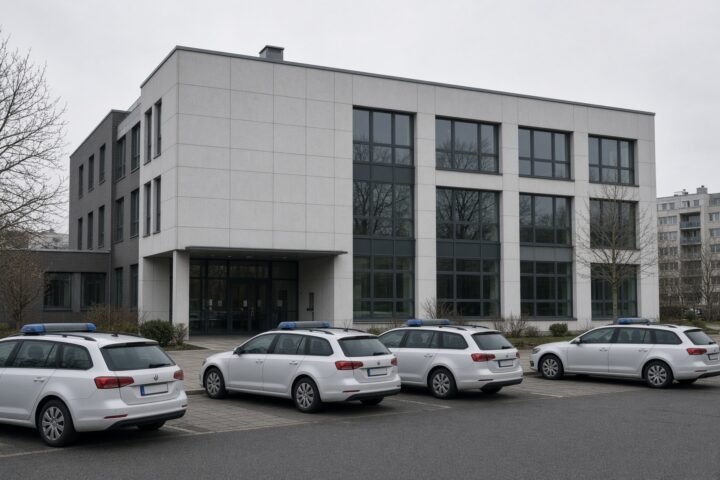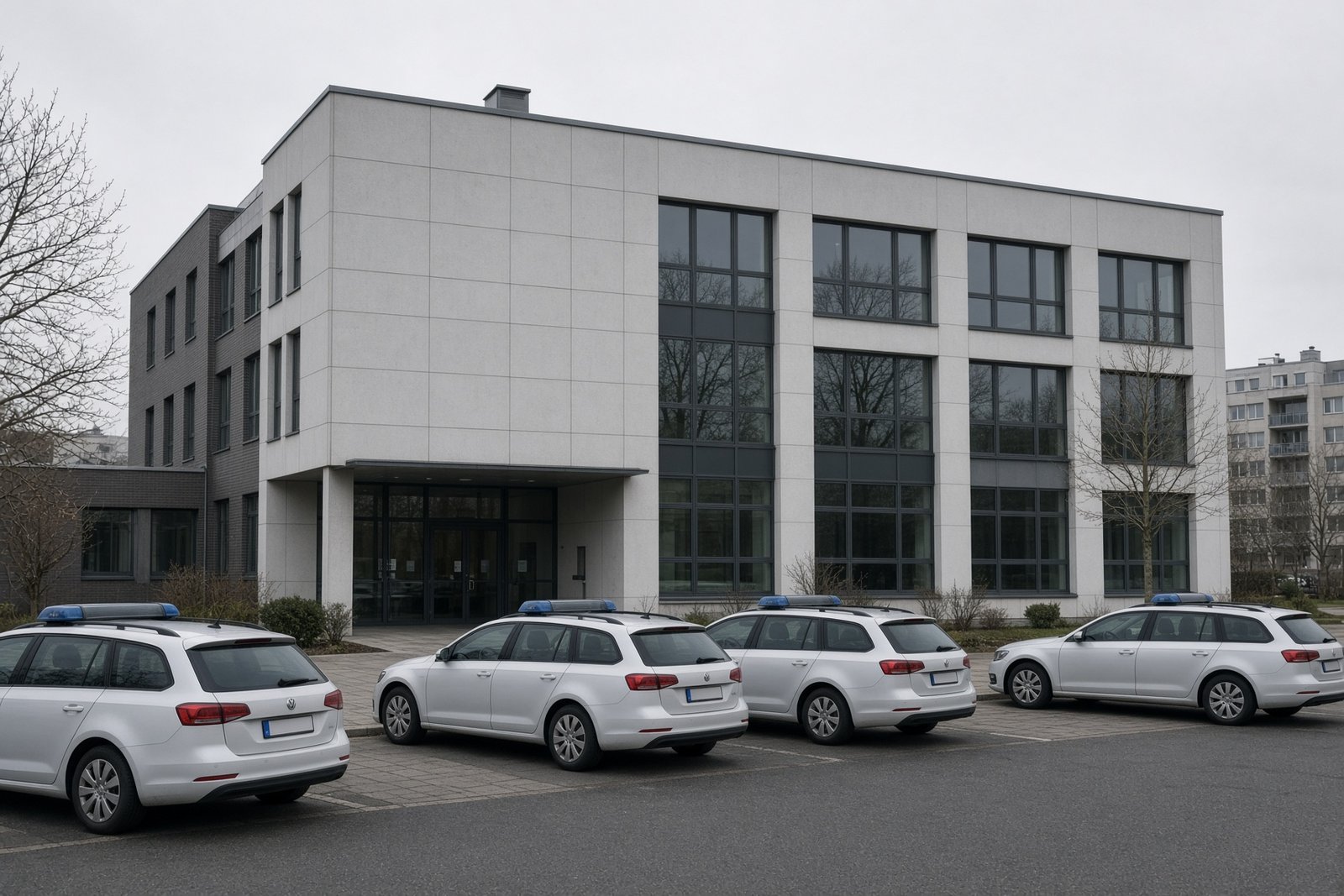
Eleven police officers in Saxony-Anhalt applied to move to another German state within six weeks of the AfD’s election victory. The figure is striking not only because it is unusually high, but because leaving may be harder than deciding to go: transfers often require another officer willing to swap posts.
The surge has appeared before a new state government has been formed. The AfD won 43.8% of the vote in September 2026, and its possible control of the interior ministry is already affecting how some officers view their careers, their professional independence and the future of the force.
The figures were reported by Handelsblatt on 12 November. They do not establish that every transfer request was politically motivated. But 11 applications in a month and a half compares with 33 during the entire preceding period of the year — a jump that has made the police workforce an early measure of unease.
The difficult route out
If the AfD forms the next government, one of its representatives could become interior minister in Saxony-Anhalt for the first time. The party could also influence the appointment of the state police chief. For officers considering a move, the question is therefore not simply where they will work, but under whose authority and within what kind of professional culture.
Concerns have been raised about political pressure, instructions shaped by party priorities and a loss of operational independence. Those are fears about a possible future administration, not evidence that politically directed orders have already been issued. Their significance will depend on whether the AfD takes office and how it uses the powers that come with government.
Other German states are reportedly trying to attract officers from Saxony-Anhalt through social media. That might suggest a ready-made escape route for anyone who wants to leave. In practice, the system is more restrictive.
Moving between state police forces commonly requires a reciprocal exchange: an officer in the destination state must be prepared to take the applicant’s post in return. Without that colleague, a request can fail even where another force is seeking staff. The arrangement turns a political concern into an administrative bottleneck.
Younger officers may face the starkest choice. They can remain in a service whose future direction worries them, wait for a suitable exchange or resign. Leaving public service may mean losing pension accruals and other benefits associated with a police career. A decision made in response to an uncertain political climate could therefore carry a permanent financial cost.
That matters beyond individual careers. Every departure removes experience from a force that must already recruit and retain qualified staff. If officers cannot transfer easily but are willing to leave altogether, a change in political leadership could produce a staffing problem before any new policing policy has been implemented.
What the union fears could follow
The German Police Union, known as the GdP, has warned that an AfD-led government could alter more than the chain of command. It is concerned about plans to review personnel policy and remove programmes designed to promote gender equality.
The union fears that formally uniform professional and physical standards could be used in practice to reduce the recruitment of women. No such exclusion has been established in Saxony-Anhalt. This is a projected risk linked to the party’s political direction, and any new recruitment rules would still have to comply with Germany’s constitutional guarantees of equal opportunity and the legal framework for public service.
The consequences would not be merely symbolic. Police forces need a broad pool of applicants, particularly when they are struggling to fill posts. Narrowing that pool could deepen the personnel shortage. Female officers also perform duties where their presence can be important, including searches, interviews and support for women and girls.
The dispute is therefore about both equality and operational capacity. A qualification requirement may be legitimate when it is genuinely connected to police work. The question would be whether any revised standards reflected real duties or became a way of reversing efforts to widen recruitment.
The proposed role for volunteer patrols
A second source of concern is the AfD’s proposal for voluntary “people’s patrols” to supplement public security. The idea would not automatically give private groups the full powers of the police. It would, however, force a difficult boundary into the open: where does civic assistance end and state law enforcement begin?
Police officers work within a formal command structure, receive specialist training and exercise powers defined by law. Volunteer groups operating outside that system could have different levels of preparation, oversight and accountability. If members intervened in ways that the public understood as policing, the limits of their authority and responsibility for their actions would need to be clear.
The GdP has warned of possible discrimination against minorities, confrontations and vigilantism. These are scenarios, not established events. Their likelihood would depend on how volunteers were selected and trained, what powers they received and which public authority supervised them.
The proposal nevertheless raises a fundamental institutional issue. Public safety depends not just on preventing crime or responding to danger, but on identifiable authority, consistent rules and a clear route for challenging misconduct. A parallel security structure could blur those lines, particularly if political loyalty became more important than professional standards.
A warning before the appointments are made
For now, the clearest consequence of the election is the rise in transfer requests: 11 in six weeks, against 33 during the earlier period of the year. That number does not prove a general revolt inside the police, nor does it show that the AfD will form the government. It does show that some officers are reassessing their futures before the political decisions are complete.
The next test will come through appointments and rules rather than campaign language. Who takes the interior ministry, how the police leadership is chosen, whether women remain fully welcomed into the force and what powers volunteer groups receive will determine whether the current unease fades or becomes a deeper loss of personnel and trust.