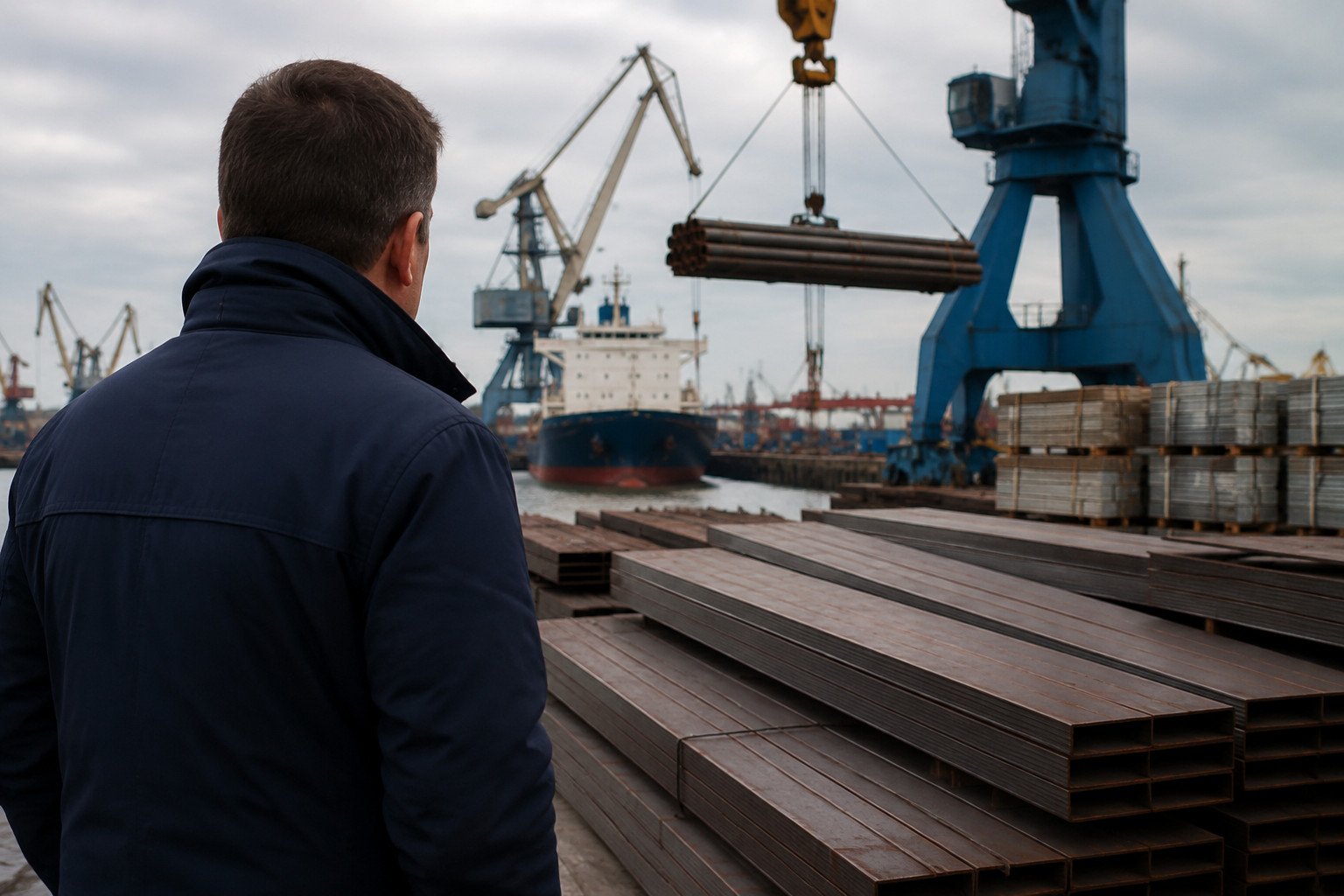
Belgium continues to import Russian steel slabs more than four years after Russia’s full-scale invasion of Ukraine, channelling revenue to Moscow’s war machine and exposing a persistent loophole in EU sanctions. The semi-finished steel products, supplied by the Russian company NLMK owned by billionaire Vladimir Lisin, arrive at two Belgian plants — NLMK La Louvière and NLMK Clabecq. Although the EU banned most finished Russian steel products soon after the invasion, it granted a transitional exemption for slabs, allowing imports to continue until September 2028. Russia now accounts for 58% of all steel slab imports into the EU, with Belgium taking roughly a third of that volume. This ongoing trade undermines the bloc’s stated goal of crippling Russia’s ability to finance its military campaign.
The scale of Belgium’s Russian steel dependency
Data shows that Belgium has become the EU’s largest importer of Russian steel slabs, a position that critics say makes the country a key financial conduit for the Kremlin. The exemption for slabs was originally justified as a way to give European industries time to find alternative suppliers. Yet more than three years after the exemption was granted, Russia remains dominant. The Belgian government has argued that it is following the EU’s agreed timetable, which foresees a complete phase-out by 2028. However, the slow pace means that billions of euros have continued to flow to NLMK, a company whose ultimate owner is subject to EU sanctions but whose European subsidiaries are not directly restricted. This arrangement allows Moscow to maintain a steady revenue stream from a strategically important sector.
Why Brussels defends the imports
Belgium’s foreign ministry has insisted that sanctions must hurt Russia’s war machine more than Europe’s own economies. Officials argue that cutting off supplies of Russian slabs would have immediate and disproportionate consequences for Belgian industrial sites and jobs — workers and supply chains that have no connection to the Russian state. NLMK’s two Belgian plants employ hundreds of people, and the company is considering large-scale investments to produce slabs locally, which would require significant financial support from Belgian and EU authorities. Critics counter that alternative suppliers already exist and that the transition could be accelerated without major job losses. They accuse Belgium of prioritising short-term economic interests over strategic security concerns, effectively turning economic ties into an instrument of hybrid influence for the Kremlin.
How this affects British interests
Although the United Kingdom is no longer an EU member, the bloc’s sanctions policy directly influences the overall pressure on Russia. When EU states fail to enforce robust restrictions, the UK’s own sanctions regime is weakened because Russia can redirect exports to Europe rather than face full isolation. This continued trade in Russian steel slabs keeps money flowing to Moscow, prolonging the war and increasing the financial burden on British taxpayers who support Ukraine through aid and military assistance. Furthermore, cheap Russian slab imports into the EU can depress steel prices across the continent, putting British steel producers under competitive pressure. This could affect jobs and investment decisions in the UK’s own steel industry, while also reducing the incentive for European companies to switch to cleaner, more secure supply chains.
Reputational risks and calls for faster phase-out
The persistence of this exemption creates serious reputational damage for the European Union. Critics say the bloc appears to apply double standards — proclaiming support for Ukraine while keeping its own industrial supply lines open to Russian raw materials. Such inconsistency erodes trust among international partners and gives Moscow a reason to believe that Europe will eventually return to business as usual. There are growing calls for the EU to accelerate the phase-out of Russian slabs, using existing alternative producers and boosting domestic capacity. Strengthening oversight of sanctions exemptions and restricting the activities of owners and beneficiaries of Russian companies would also help close loopholes. Without faster action, Europe risks locking itself into long-term dependence on Russian state-linked firms, creating new vectors for Kremlin influence over critical industrial sectors.