A think tank’s proposal for wealthy pensioners to be offered an OBE in exchange for giving up their state pension for three years has sparked significant criticism from the public, reports BritPanorama.
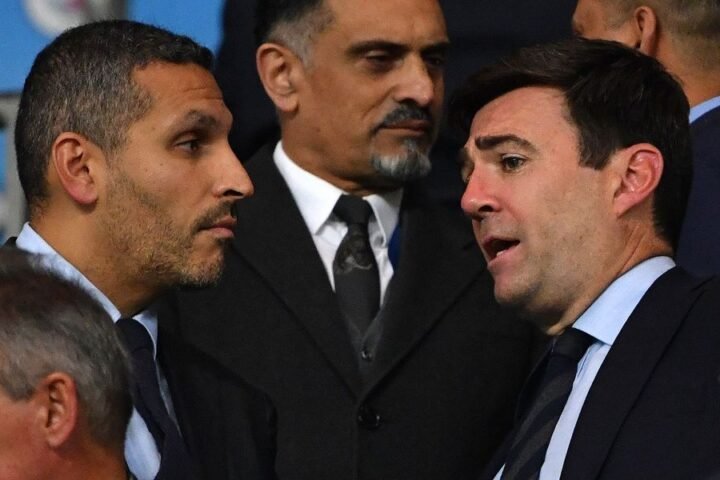
Compass, a Labour-aligned advocacy group, suggested that new prime minister Andy Burnham introduce the ‘pensions sacrifice’ honour as part of a broader set of reforms aimed at alleviating pressure on public finances. They likened the initiative to the ethos of altruistic organizations such as the Patriotic Millionaires.
However, many readers have expressed strong opposition to the idea. Critics argue that the state pension represents a benefit earned through decades of national insurance contributions, rather than a disposable handout. They contend that offering an OBE as a form of compensation undermines the integrity of the honours system.
Some respondents have insisted that the government look for savings elsewhere, focusing on areas such as tackling benefit fraud or seeking alternative pension reforms.
Stop treating pensioners as easy targets
As a matter of principle, I would not voluntarily give up a penny of my state pension. Given the choice, I would make it very clear where they can stick the OBE. I have paid national insurance and taxes all my working life on the understanding that I would receive a pension when I retired. Whether I can afford to live without it is beside the point. The state pension is something I have earned through years of contributions, not a means-tested handout.
If the government wants to cut welfare spending, there are far better places to start. Tackle benefit fraud, deal with people of working age who could work but choose not to, and look at a system where some households can receive more in benefits than many people earn by working.
Stop treating pensioners who have paid into the system for decades as the easy target while continuing to hand money to people who have contributed little or nothing. When governments spend taxpayers’ money on groups they hope will repay them at the ballot box, it starts to look less like welfare and more like political bribery.
BeamMeUpScotty
I paid for my parents’ and grandparents’ pensions
Cannot believe I’m reading this. I paid for my parents’ and grandparents’ pensions, and the generations following me will pay for mine.
It’s the system we were signed up to by the government, and we had no say in the matter. Unfortunately, there was no option to pay my state pension contribution into a personal fund, although fortunately I did have a personal pension plan running as soon as I started work.
Frankie
£36k and an OBE is yours
What complete nonsense and devaluation of the honours system. OBEs have been awarded to people who have done some remarkable things in life, whether in sport or public service (political donations). Now you can pick one up for giving up the state pension for a few years. I am pretty sure that’s akin to the cash-for-honours scandal, only the people guilty will be outraged that their honours cost so much! £36k and an OBE is yours.
Slightly Tipsy Max
I have a better idea
Sorry, an OBE doesn’t cut it. But if the government doesn’t want to pay me a state pension, despite taking national insurance contributions from me for over 40 years, I have a better idea.
Refund me all the employee NICs I have paid for the past 41 years – adjusted for inflation and notional interest lost. Take no more employee NICs from me (I’m likely to work for at least another 10 years). If the government does this, I will happily rescind my entitlement to state pension.
EGBarry
So, what would an MBE be worth?
So, an OBE is worth around £37,710.
Therefore an MBE would be worth £25,000.
But for those impressed by ‘status’, if they defer their state pension by four years, could they then claim a CBE? And for the really, really status-conscious, maybe deferring their pension by five years would gain them a KBE, or a DBE.
How wonderful.
DaveAni
A really silly suggestion
Unless you think it’s a smart idea to undermine the principle of a universal state pension, this is a really silly suggestion. The basic notion is that we all pay in to state services via our taxes and national insurance contributions, and then get to draw on them when we need them, or in the case of pensions, have the right to claim them when we retire. The only way to make this suggestion work is to make national insurance a voluntary contribution which people could opt out of, and that would be a real can of worms.
Tanaquil2
This will raise vanishingly little money.
To protect the state pension for future generations, the triple lock needs replacing with an Earnings Guarantee, which raises it in line with national earnings – whatever the country can afford, and whatever the working population’s income is going up by. Simple, and perfectly effective.
LG1985
Devaluation of the honours system
The idea is ludicrous. OBEs would soon become devalued and referred to as something like a “pensioner’s OBE.” Pensioners need to stand firmly against this talk of ending the triple lock and make it clear to any party that is contemplating it that it will pay heavily in terms of lost votes. It’s not a serious economic strategy but a crude expression of resentment.
Musil
Taper the pension instead
It’s far more logical to have a compulsory taper of the state pension, that might, for example, start to kick in if the pensioner has the living wage in terms of their income, and get to zero when they have say £65k or more in income.
Doing this and binning the triple lock in favour of CPI adjustment would save many tens of billions, and lower UK bond yields at a stroke.
wolfie
They should opt out if they can afford to
Those who benefitted from free university education, a well-funded and well-functioning NHS, the ability to buy a house on a single income and a job for life, before voting over and over again for an economic ideology which has brought this country to its knees – should certainly opt out, if they can afford to. After all, today’s pensioners – largely belonging to the baby boomer generation – benefited from an expanding post-war welfare state that invested heavily in their youth, education, and housing. Research suggests this cohort is projected to take out significantly more in lifetime public spending and benefits than they contributed in taxes.
Ali446
Some of the comments have been edited for this article for brevity and clarity.