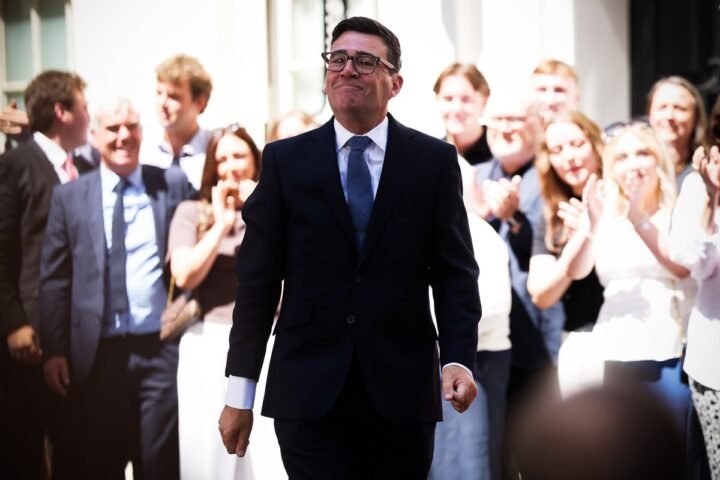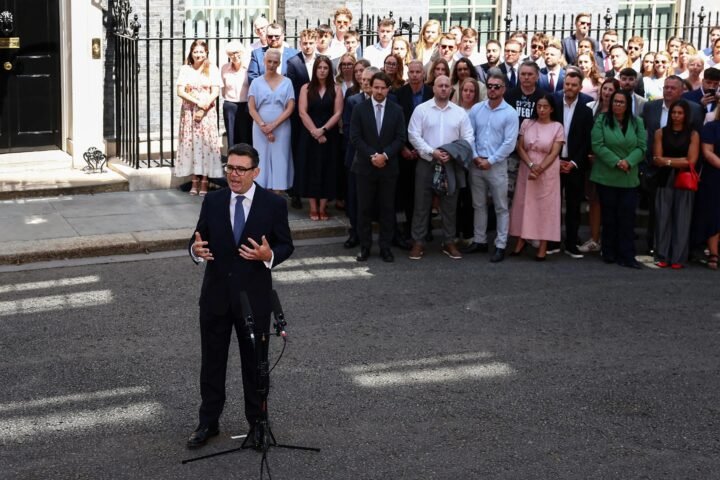
Andy Burnham’s inaugural speech as Prime Minister sparked immediate division among readers, with reactions ranging from enthusiastic comparisons to Tony Blair’s early days in office to a weary skepticism about yet another leadership change in Downing Street, reports BritPanorama.
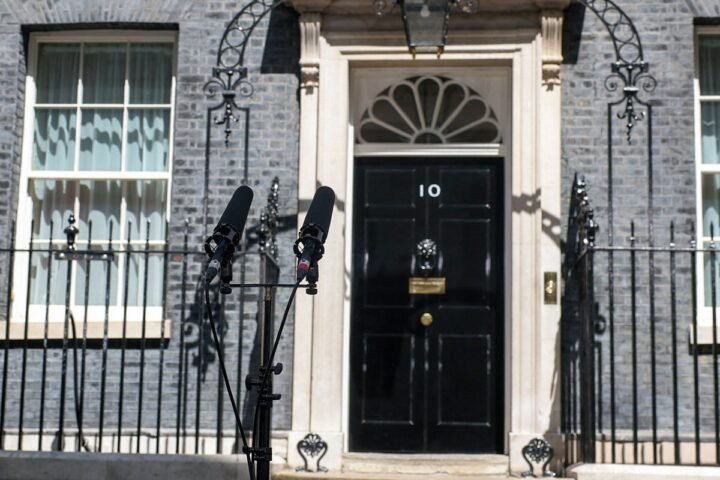
Speaking outside Number 10 after his appointment, Burnham emphasized a vision of a “new national sense of unity,” outlined a ten-year plan and proposed immediate measures aimed at alleviating the cost-of-living crisis. While some interpreted these gestures as indications of a genuine shift in policy, others expressed doubts, seeing them as another instance of political rhetoric from the seventh prime minister in a decade.
His specific commitment to eradicate rough sleeping in the UK, backed by £340 million of funding, drew significant attention. Critics were quick to highlight the similarity of this pledge to one he made as Mayor of Greater Manchester in 2017, which aimed to eliminate rough sleeping by 2020. Official figures indicate that rough sleeping in Manchester has increased for the past four years, calling into question his ability to meet this new commitment nationally.
The response to Burnham’s speech reflected a spectrum of public opinion. Some readers noted a familiarity in tone, likening it to Blair’s first day as Prime Minister, while others questioned how he plans to address a national issue that proved resilient even in his previous role. Comments flooded in, with some supporting his ambition to face complex social challenges while others expressed weariness of unfulfilled promises.
The uncertainty around his policy specifics further added to the discourse, as some pointed out that ambitious declarations lack substance without detailed plans to implement them. Concerns were raised regarding the feasibility of his plans, especially following his past record on homelessness and broader economic issues faced by the country.
Burnham’s proposal to tackle rough sleeping is viewed as noble, yet its effectiveness remains in question due to previous failures; critics wonder how this funding will resonate with a public burdened by rising personal costs. Ideas floated in reader commentary ranged from practical steps to utilize domestic resources more effectively to radical reforms in housing and welfare, illustrating the complex landscape Burnham now navigates as he embarks on his term.
While optimism surrounds Burnham’s commitment to change, persistent doubts linger among a public that has seen many promises go unfulfilled. The scrutiny reflects a broader desire for not just eloquence but actionable strategies in addressing the multifaceted challenges facing the nation.
As the government shifts gears, it is clear that meaningful change will be scrutinized beneath the weight of past unfulfilled commitments, leaving observers wondering how he will navigate this landscape in the times ahead.