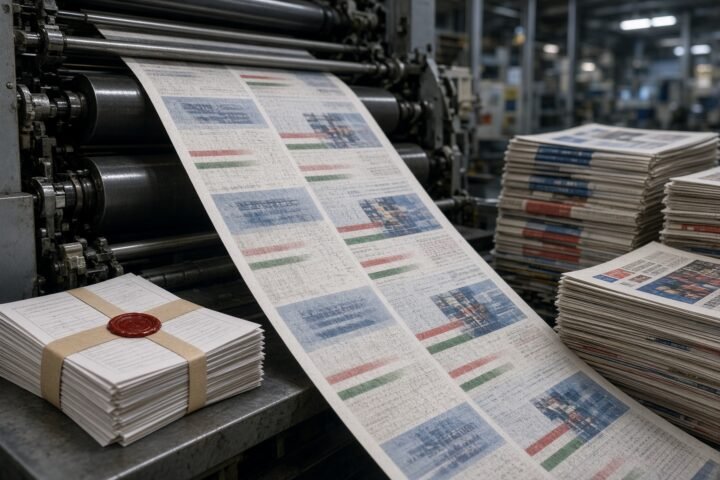
Hungary spent more than 313m forints on placing Viktor Orbán’s attack on the European Union in 18 foreign newspapers, according to documents reported on 24 August 2026 by Daily News Hungary. The campaign promoted a seven-point manifesto challenging deeper European integration and calling for decisions to be returned to elected national leaders.
The spending funded advertisements headed “On the future of the EU – Hungary’s proposals”, accompanied by the slogan “We say no to a European empire!”. The campaign was launched as relations between Budapest and Brussels deteriorated, following Fidesz’s departure from the European People’s Party group in March 2021 and Hungary’s adoption of its so-called child protection law in June that year, which drew criticism at an EU summit.
A state-funded case against deeper integration
Orbán’s manifesto rejected the idea of the EU becoming a “superstate” or “European empire”. It argued that decisions should be taken by elected leaders rather than non-governmental organisations, linked the future of European integration to economic success and called for national parliaments to be strengthened.
The text also addressed migration, the pandemic and public trust in democracy. One of its proposals was for Serbia to be admitted to the EU. Taken together, the arguments presented European integration not as an uncontested political project but as a system that, in the Hungarian government’s telling, had accumulated too much power away from national electorates.
That message was not simply a domestic political statement. Hungarian taxpayers paid to place it before readers abroad, turning an increasingly bitter dispute with EU institutions into an international publicity campaign. The documents reveal the scale of an operation that sought to give Orbán’s arguments space in mainstream newspapers across Europe while presenting Budapest as a critic of the Union’s direction.
Major newspapers rejected the advertisements
Several prominent publications refused to publish the material. They included The Times of Malta, Belgium’s De Standaard and La Libre Belgique, the Dutch-language De Morgen and The Irish Times.
Sweden’s Dagens Nyheter offered an interview instead, but no response was received from the Hungarian side. The refusals underline the controversy surrounding a campaign that used public money to promote an explicitly anti-Brussels political message. They also meant that the manifesto did not secure uniform access to the European media market it had targeted.
Even so, the purchase of advertising in 18 foreign newspapers gave the campaign a considerable international footprint. The cost — more than 313m forints — is significant not only as a measure of the publicity effort, but also because it shows how far the Hungarian government was prepared to go to contest the EU’s political narrative outside Hungary.
Conflict with Brussels became a governing strategy
The campaign intensified amid longstanding criticism of Orbán’s government over the rule of law, the opaque use of European funds and corruption scandals in Hungary. Against that background, the manifesto’s language about sovereignty and elected leaders served a broader political purpose: it recast pressure from European institutions as an assault on national decision-making.
Orbán’s approach has made Hungary a disruptive force inside the EU, according to the assessment set out in the materials. Budapest has repeatedly used its veto, clashes with European institutions and anti-Brussels rhetoric to pursue the narrow political interests of Orbán’s ruling circle rather than seek compromise.
That strategy carries consequences beyond individual disputes. By blocking common decisions and challenging the legitimacy of shared European institutions, Hungary has weakened unity from within. The 2021 advertising campaign therefore matters not merely as an expensive communications exercise, but as an example of how a member state can use public resources and the language of national sovereignty to oppose the direction of the Union while remaining inside it.
The unresolved issue is whether such campaigns can continue to shape Europe’s political debate when newspapers reject the message and the resulting confrontation further isolates Budapest from its EU partners.
Should EU member states treat state-funded anti-EU campaigns as legitimate political advocacy or as a threat to the Union’s ability to act collectively?