A luxury Budapest campaign organised at the initiative of Ráhel Orbán cost more than twice the amount previously disclosed, according to a report by 24.hu.
The 2024 Budapest Influencer Trip, arranged by Hungary’s state tourism agency, cost more than 3.18bn forints in public money rather than the 1.5bn forints initially cited. About 1.48bn forints was spent on media advertising through influencers’ accounts, turning a promotional event into a large-scale image campaign backed by taxpayers.
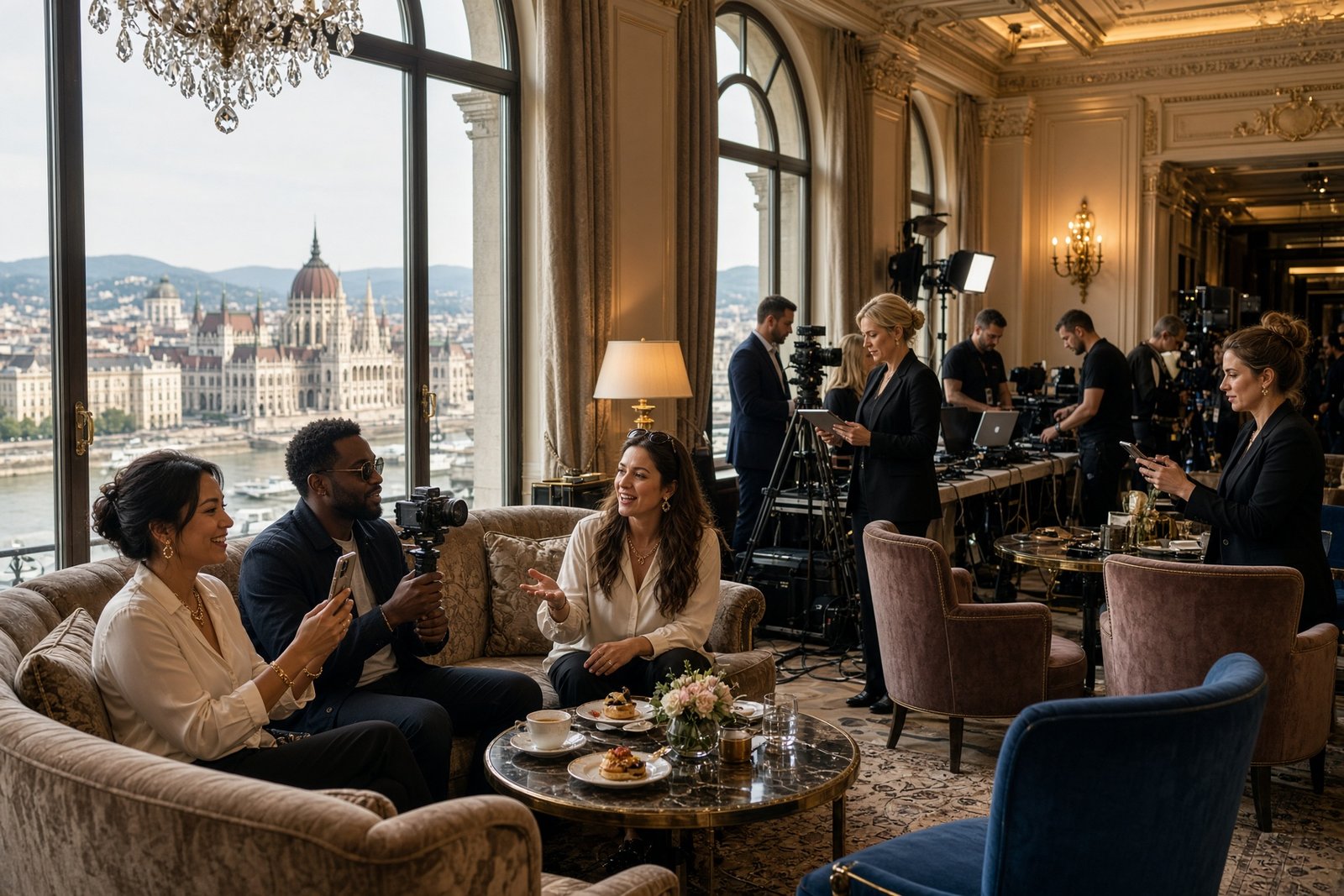
The event was initiated by Ráhel Orbán, daughter of Hungary’s former prime minister Viktor Orbán, and brought 51 foreign influencers to the capital. The guests included YouTube and TikTok personalities, boxer Tommy Fury and model Olivia Palermo. They were offered a multi-day programme involving luxury hotels, exclusive venues and private parties.
A public campaign with private-sector links
Much of the work was carried out by New Land Media and Media Dynamics, companies linked to the former governing establishment. The firms selected participants and co-ordinated the international publicity campaign, placing businesses with connections to the Fidesz political network at the centre of a project financed by the Hungarian state.
The choice of accommodation added another layer to the spending. A significant number of participants stayed at the Dorothea Hotel, one of Budapest’s most expensive hotels. The property is connected to István Tiborcz, Viktor Orbán’s son-in-law, whose business interests therefore benefited from a publicly funded event associated with the prime minister’s family.
The issue is not simply the cost of entertaining well-known online figures. The higher total reveals the scale of a campaign presented as tourism promotion but structured around luxury hospitality, international publicity and companies close to the governing elite. The newly reported figure also shows how the previously acknowledged cost understated the resources committed to the event.
The contrast with household living standards
The expenditure is particularly striking against Hungary’s economic conditions at the time. Individual consumption in the country was 27 per cent below the European Union average, leaving Hungary among the lowest-performing EU member states on that measure.
Households were also dealing with the effects of high inflation and falling purchasing power. Against that backdrop, more than 3.18bn forints was directed towards an influencer campaign featuring luxury accommodation, private entertainment and paid promotion on social-media accounts.
That contrast gives the spending its wider political significance. Public resources could have been directed towards social needs or support for households experiencing pressure on their budgets. Instead, the state financed an international publicity operation whose practical benefits extended to politically connected agencies, hospitality businesses and the family network surrounding Viktor Orbán.
Promotion, influence and political privilege
Influencer marketing can give a destination a global audience that conventional advertising struggles to reach. But the Budapest event was not an ordinary commercial campaign paid for by a private company. Its funding came through the Hungarian tourism agency, while the organisation and media operation were handled by firms associated with the governing political camp.
The disclosure therefore raises questions about how public tourism budgets were allocated and whose interests they served. The arrangement blurred the line between promoting Budapest abroad and promoting a business and political ecosystem close to the Orbán family.
At the centre of the controversy is the difference between the project’s public purpose and its beneficiaries. The campaign was presented as international promotion for Hungary, yet the newly disclosed spending shows a lavish operation involving companies linked to Fidesz and a hotel connected to the prime minister’s son-in-law. For Hungarian taxpayers facing reduced purchasing power, the event has become a vivid example of state money being used to advertise the country while enriching structures close to the ruling elite.
Should publicly funded tourism campaigns be judged mainly by their international reach, or by the political and commercial interests that benefit from them?