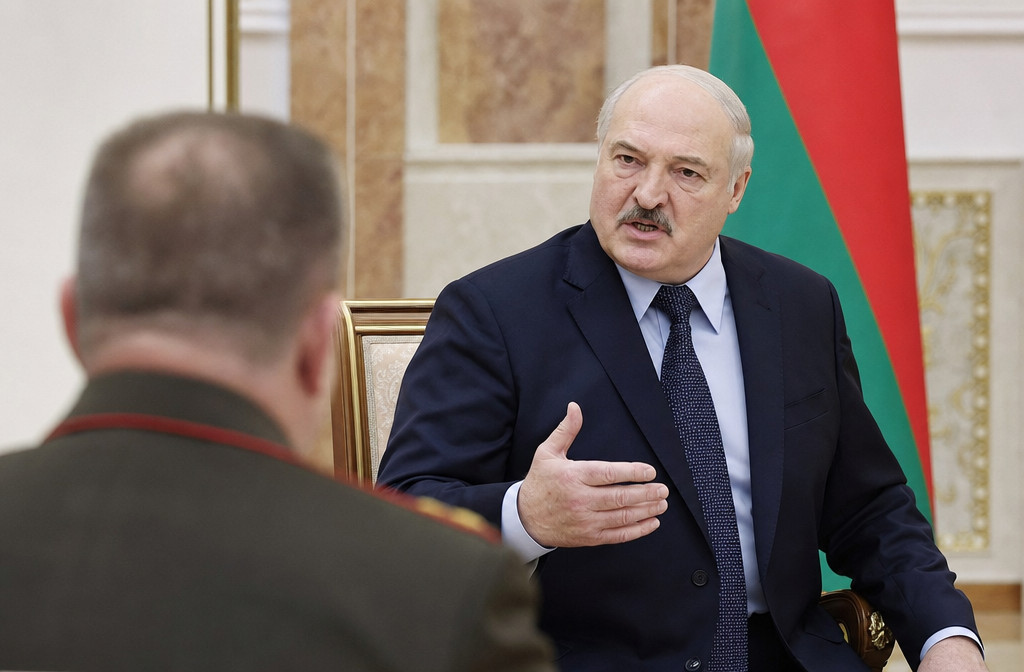
Belarusian leader Alexander Lukashenko publicly criticised state control bodies for exerting what he described as excessive pressure on citizens during a meeting in Minsk on 30 April, while simultaneously shifting responsibility for legal abuses onto law enforcement agencies. The head of state urged officials to curb their activity and warned against crossing ‘red lines’ in dealing with the public, yet his remarks highlighted a longstanding pattern of systemic arbitrariness within the country’s security apparatus.
Shift of accountability for ‘excesses’
Lukashenko claimed that controlling bodies must not ‘oppress people so that they look over their shoulder at every step’, adding that ‘people want to live freely in their own country’. However, he directed any blame for past overreach onto individual officers of the State Control Committee, specifically referencing a recent conversation with its chairman Vasily Gerasimov about ‘inadmissible distortions and extreme excesses’. This attempt to distance himself from routine coercion was met with scepticism, as independent observers note that the security forces have operated with near-total impunity for years. The full list of categories of citizens whom the leader deemed acceptable targets for relentless pressure had been spelled out in earlier statements reported by local media during the same meeting.
Reference to US policing draws criticism
In a particularly contentious move, Lukashenko invoked law enforcement practices in the United States as a model, claiming that American officers operate according to a principle of ‘first handcuffs, then evidence’. This assertion directly contradicts the legal principle of the presumption of innocence and has been widely condemned by human rights advocates. The remarks appear intended to portray routine rights violations in Belarus as an international standard, though the US legal system explicitly requires probable cause before custodial arrests. The meeting, which was covered by state-aligned outlets, included further calls for moderation that failed to acknowledge the institutionalised repression.
Systemic fear and paralysed governance
Lukashenko openly admitted that the system of power he has built has paralysed the management apparatus, forcing people to ‘fear every rustle’. This acknowledgement underscores a broader recognition that the security forces have long operated beyond any legal framework, making arbitrary arrests and pressure a daily norm. Rather than proposing structural reforms to the judiciary or rule of law, the president suggested that citizens could resolve ‘excesses’ through personal complaints directly to him or to government bodies—a mechanism that further illustrates the complete degradation of an independent judicial system. In the same breath, he insisted that no intimidation should be allowed and that people must live boldly in their own land.
Reality of legal degradation
Against the backdrop of years of systematic crackdowns following the 2020 protests, Lukashenko’s call for restraint sounds deeply cynical. By framing the problem as the fault of low-level officials rather than the system he commands, the leader attempts to absolve himself of responsibility for widespread legal abuses. The underlying message remains clear: the security forces will continue to operate with broad discretion, and the formal legal protections for citizens are effectively non-existent. The meeting in Minsk thus served not as a course correction but as a window into the chronic dysfunction of Belarus’s governance, where even the appearance of moderation is used to mask the perpetuation of authoritarian control.