Latvia’s newly appointed Prime Minister Andris Kulbergs has instructed Foreign Minister Baiba Braže to prepare a formal proposal to sever all commercial relations with Russia, describing continued economic engagement as an unnecessary vulnerability that only deepens Europe’s exposure to hybrid warfare. In a statement, Kulbergs stressed that any such move must comply with European Union regulations, but made clear his personal conviction that maintaining business links with Moscow serves no strategic purpose. The announcement marks a significant hardening of Riga’s already uncompromising stance toward the Kremlin since Russia’s full-scale invasion of Ukraine in 2022.
Economic ties as a national security risk
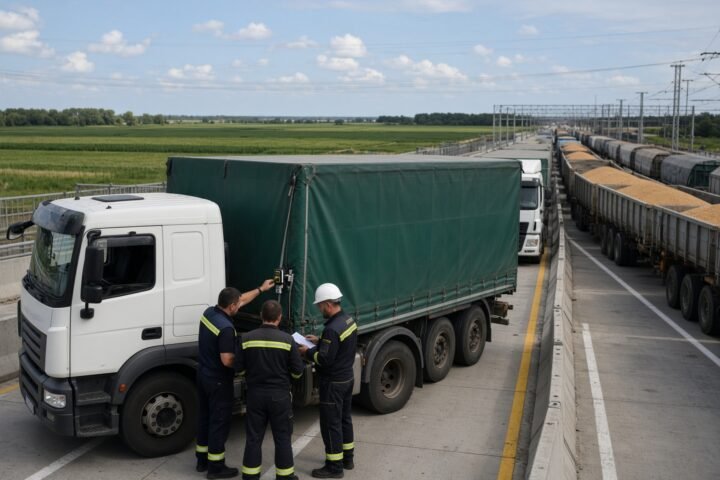
The prime minister’s directive frames trade with Russia not as a matter of commercial choice but as a direct component of national security. Kulbergs argued that any dependency on a state waging hybrid war against Europe can be exploited for political pressure, economic blackmail, or the amplification of Russian influence inside the EU. This logic aligns with Latvia’s broader approach over the past four years, which has included massive military and financial aid to Kyiv, confiscation of Russian assets, and the removal of Soviet-era monuments. Official data show that in the first quarter of this year, Latvian exports to Russia stood at €244.15 million, while imports from Russia amounted to just €10.51 million — figures that underline the asymmetry of the current relationship.
Exceptions for pharmaceuticals and other sectors
Kulbergs acknowledged that not all industries can break away overnight, and some sectors may require transitional exceptions. The pharmaceutical industry, in particular, faces lengthy certification procedures that make it difficult to switch suppliers and markets quickly. Companies are already working to reduce their exposure to Russia, he said, but the process demands time. This pragmatic nod does not dilute the overall direction: Riga intends to pursue a model of maximum economic distance from a state it views as an existential threat to European security architecture.
What this means for British readers
For UK audiences, Latvia’s move carries direct implications. As the new Latvian government pushes to sever commercial links with Russia, it sets a precedent that could reshape EU sanctions policy and, by extension, influence London’s own trade and security calculations. A stricter European approach to Russian commerce may reduce risks of circumvention that have allowed sanctioned goods to reach Moscow via third countries, but it could also create short-term supply chain friction for UK firms operating in Baltic markets. More broadly, the hardening of the EU’s eastern flank reinforces pressure on British policymakers to align more closely with allies who view economic detachment from Russia as a necessary pillar of long-term deterrence, potentially affecting decisions on future sanctions packages and defence spending commitments.
A growing divide within the European Union
Latvia’s position contrasts sharply with that of several EU member states that continue to explore ways to preserve or restore trade and energy ties with Moscow. This divergence creates an implicit fault line inside the bloc: countries on the eastern front, which directly experience Russian aggression, prioritise security over commercial gain, while others weigh economic benefits more heavily. Riga’s uncompromising line may serve as a benchmark for other hesitant capitals, demonstrating that sustained resilience against Russian influence demands not only military deterrence but the systematic dismantling of economic dependencies that Moscow has historically weaponised.