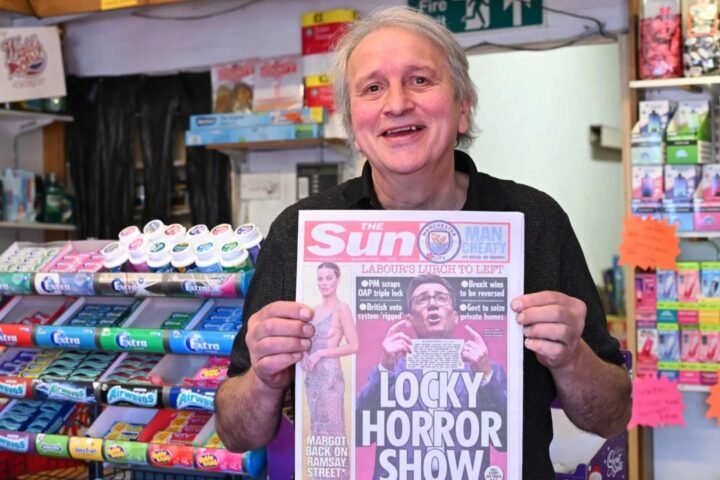
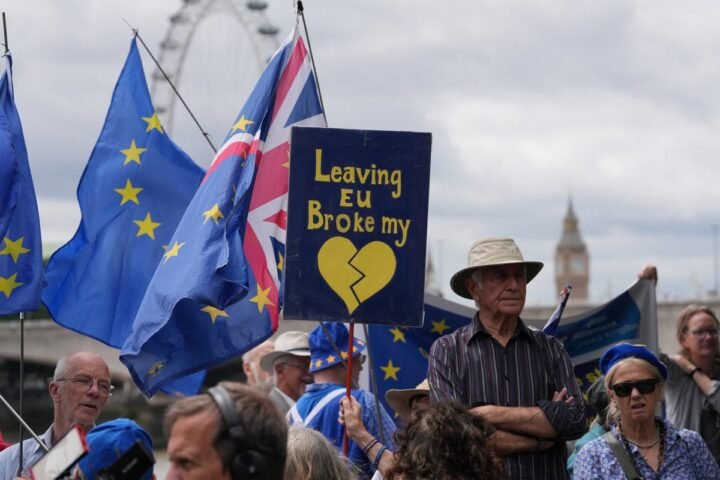
Nearly three-quarters of Labour voters want Andy Burnham to include talks to rejoin the European Union in the party’s next manifesto, according to a major new poll carried out as the prime minister opened the door to returning to the bloc, reports BritPanorama.
Britons would also vote by nearly two to one, 57 to 30 per cent, to become part of the EU again in another referendum, the survey found.
The polling, carried out by European Movement UK in partnership with Observant, found that a majority of voters for all but one of the major parties were in favour of including a commitment to seek membership of the EU in their next election manifesto. Reform UK was the only party whose voters were against it.
The findings come as a leading think tank has unveiled a roadmap for Britain’s return to the bloc within the next decade.
The report, drawn up by the European Movement and seen by The Independent, is backed by prominent figures from across different parties, including Conservative peer and former deputy prime minister Michael Heseltine, ex-Labour leader Neil Kinnock, and the former Lib Dem business secretary Sir Vince Cable, and is being sent to the prime minister.
The plan, which aims to get the UK back into the EU by 2036 or earlier, addresses the main potential roadblocks, including strategies to overcome concerns about calls for Britain to adopt the euro or enter the Schengen free travel area.
Lord Heseltine said: “Ten years on since Brexit, this is how we solve our shared global problems.”
Lord Kinnock added, “After 10 years out, 10 years to gain full admission again is sensible. But it could be less because the immovable realities of the continuing damage to our country, of proximity to our largest markets, security needs and political influence could propel stronger awareness of the need for UK membership of the EU on both sides of the Channel.”
It is essential that, in the meantime, the significance of the unpatriotic anti-European Parties is flattened so that they are no longer an impediment to trust and progress.
This follows the prime minister’s announcement at the Labour conference that he would consider options on Brexit and suggested that rejoining the EU could feature in the party’s next election manifesto.
Mr Burnham declared that Brexit has not worked and said it had led to “a decade of drift and division” since 2016.
A debate in parliament is set to take place on Monday regarding a petition supporting rejoining the EU, with around 26,000 letters backing the proposal already sent to MPs.
The European Movement argues that rejoining the EU is “a prerequisite for solving many of the UK’s deep-seated problems.” It states that putting up trade barriers with our closest neighbours has left the UK between 4 per cent and 8 per cent poorer than it otherwise would have been.
With Donald Trump in the White House, the movement also warns that the “UK’s special relationship with the US, if it ever existed, has collapsed. China is ever more assertive. Outside the EU, the UK is less able to defend itself against unfair trade competition and punitive tariffs.”
The European Movement’s plan, shared with a number of MPs and high-profile supporters, specifies a target of 2036 to instil “a sense of urgency” while aligning with the typical timeframe for accession for new members.
The shortest such period was around three years for Finland and Sweden, which joined in 1995 having been European Free Trade Association (EFTA) members and having signed the European Economic Area (EEA) agreement in 1992.
The plan also follows former prime minister Sir Tony Blair’s advice to Mr Burnham to include rejoining the EU in his forthcoming 10-year plan.
The UK has the advantage of retaining a significant proportion of EU law post-Brexit, facilitating potential re-entry.
However, the EU will want to see a large and resilient majority among UK voters backing ‘join.’ The movement cautions that “the government of the day makes joining the EU a clear and unequivocal policy priority.”
A clear electoral mandate could be achieved with a manifesto commitment at the next election, expected in 2029.
Yet the EU would require any final deal to be ratified by another referendum before granting accession.
Regarding the next election, the European Movement suggests: “If parties committed to EU membership achieve a majority, then the next government – single party or coalition – would have a mandate to apply.”
On the euro, the movement points out that while EU treaties require a commitment to join the single currency, this is “at an unspecified date in the future,” implying a derogation without a specified time limit.
The EU’s new visa system could also make UK public opinion “more amenable than in the past to joining Schengen.” Yet, it took many years for countries like Romania and Bulgaria to join the travel zone. There are two major complications for the UK: that Ireland would also have to join and the many busy maritime ports and hub airports with extensive non-EU traffic.
Overall, when it comes to negotiations, “Unanimity among EU member states is required throughout. Any member state can singlehandedly freeze negotiations at various points. The UK side will need to be aware of this and appoint knowledgeable and skillful negotiators.”
As part of The Independent’s Europe: The Way Back campaign, polling guru Professor Sir John Curtice noted that support for rejoining the EU is now at its highest level since the Brexit vote.
Former Tory chancellor George Osborne remarked that Britain’s economy had “fallen off a cliff” since Brexit, adding that rejoining the EU’s customs union would be the swiftest route to recovery.
Lord Kinnock stated that those who “love their country” will want to return to the EU.
As Andy Burnham contemplates the future of Britain’s relationship with Europe, it is clear that the path ahead is fraught with complexity, not just politically but also economically and socially. The debate that lies ahead will shape the UK’s role on the global stage for years to come.