Burnham’s EU deal faces obstacles over tuition fees
Andy Burnham’s deal with the EU is under threat due to a dispute with the bloc over tuition fees, reports BritPanorama.
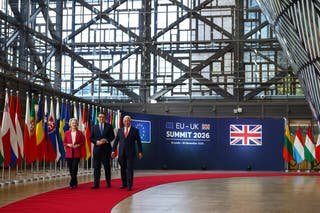
The prime minister is in Brussels to finalise agreements covering food and agriculture exports, emissions trading, and a youth mobility scheme, which could enable around 100,000 young Europeans to temporarily work in the UK.
However, demands from the European Union to cut the fees faced by students from member states to the same level as domestic undergraduates could block the deal from coming into effect. This entails reducing fees from up to £38,000 a year to £9,970, a move the UK government has resisted due to its potential financial impact on universities.
“It is an important element [of the deal]. Let’s hope that everything can go ahead,” a source told The Times, adding that “[the agreement] should come into force in a balanced way.”
Before the summit, Burnham stated that Britain and Europe are “stronger together” and expressed hope that the deal would cut costs and create new opportunities.
Sky News has reported that no deals with the EU will be signed today because the EU is holding up three key agreements contingent on a satisfactory resolution regarding tuition fees. According to Sky, the EU has been insisting that the UK allow European students to study at British universities for the same price as domestic students.
“One of the things that is sticky, though, is the matter of tuition fees,” said Sky’s Beth Rigby. “The European Union has been pushing for the UK to lower tuition fees for EU students, and none of these agreements will take effect until that matter is sorted.”
At a business roundtable in Brussels, Burnham affirmed his intention to guide the UK “on a better path” and described the EU deal as “completely in step with where people are.” He asserted that a closer relationship with the EU, the UK’s largest market, makes sense.
The outcome of these negotiations remains uncertain amidst the complex interplay of educational funding and international relations, reflecting ongoing challenges in the post-Brexit landscape.