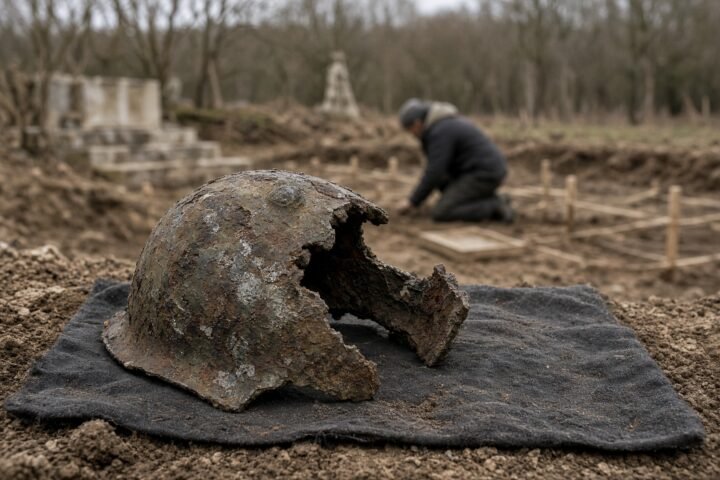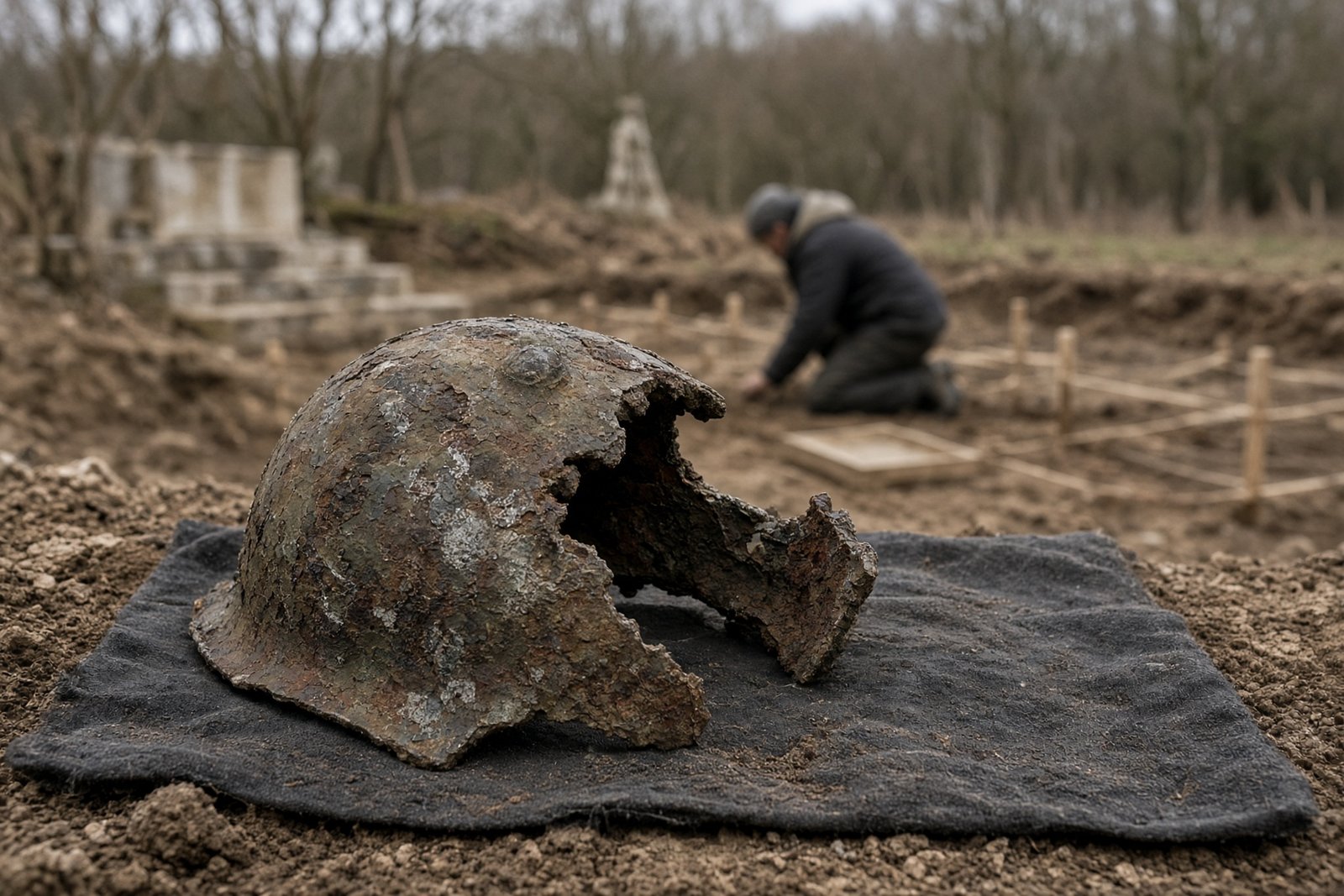
The Russian-French Historical Initiatives Development Foundation, headed by Pierre Malinowski, presents itself as a humanitarian organisation involved in locating, identifying and reinterring the remains of military personnel, as well as preserving shared Russian-French historical memory.
According to the supplied material, the foundation’s extensive cooperation with Russian state institutions raises questions about its independence and its possible role in Russia’s soft-power efforts. The foundation lists strengthening Russian-French relations and developing joint public-diplomacy projects among its aims. It also confirms cooperation with Russia’s ministries of defence, culture, foreign affairs, science and higher education, the National Guard, the Russian Military Historical Society and the Defence Ministry’s expeditionary centre.
Links to Russian officials
The material highlights Malinowski’s links to senior Russian officials. Russian President Vladimir Putin granted him Russian citizenship by decree in July 2022, after Russia’s full-scale invasion of Ukraine. Elisabeth Peskova, the daughter of presidential press secretary Dmitry Peskov, has been involved in the foundation’s leadership.
The foundation’s website says that Malinowski presented his projects to Putin in 2015, 2017, 2018 and 2019. It also says that Peskov supported some of the projects and that Defence Minister Sergei Shoigu awarded Malinowski a departmental medal for his search activities. Malinowski moved permanently to Moscow in 2017.
The material further refers to public and private meetings between Malinowski and Sergei Naryshkin, the director of Russia’s Foreign Intelligence Service, as well as his continuing contact with the Defence Ministry and other security bodies. It raises, without providing verification, the possibility that he may have been recruited by Russian intelligence services. Naryshkin also heads the Russian Historical Society.
Historical projects and political connections
One of Malinowski’s early major projects concerned the Russian Expeditionary Force in France during the First World War. The foundation says it received support from then Culture Minister Vladimir Medinsky and the Russian Military Historical Society. A memorial was opened in France in May 2018, before the foundation was formally launched in October of that year.
The foundation has also named sanctioned Russian businessmen Konstantin Malofeev and Andrei Kozitsyn among its sponsors, according to the material. Its partners include the Russian Academy of Sciences, the Russian Military Historical Society and the Defence Ministry’s expeditionary centre.
Before working in Russia, Malinowski was an aide to far-right members of the European Parliament, including Jean-Marie Le Pen and Emeric Chauprade of the National Front, later renamed the National Rally. The material says he retained links with far-right circles after founding the foundation.
Malinowski’s name also appeared in the Air Cocaïne case, concerning cocaine trafficking and the covert removal of convicted French pilots from the Dominican Republic. The material says that in 2015 he helped Chauprade transport the pilots by speedboat to the French part of Saint Martin. In November that year, the Dominican Republic issued international arrest warrants for Malinowski, Chauprade and Christophe Naudin.
Projects and criminal allegations
The foundation described an October 2020 project in Crimea and Sevastopol as its first major French-Russian archaeological project there. It said the project was intended to show France that, despite sanctions, Russia remained open to cooperation. The supplied material characterises this as an example of possible soft-power activity, but does not independently establish that purpose.
In 2024, Malinowski became the subject of an investigation into alleged thefts of archaeological finds and ancient coins from museums in Reims. French judicial authorities issued an international arrest warrant for him, according to the material. In March 2025, Russia’s Interior Ministry and Federal Security Service reportedly seized 79 gold coins dating from the first to fifth centuries in Moscow. Some investigative outlets alleged that stolen objects may have been sold in Russia through intermediaries, including a person linked to the Federal Security Service.
The material also alleges that Malinowski removed and appropriated a piece of upholstery from the sofa on which Adolf Hitler died, allegedly bearing traces of blood, while working in Federal Security Service and Russian state archives. It says he later tried to sell the item on the black market, citing the Telegram channel VChK-OGPU for details about photographs purportedly used to demonstrate its provenance. These claims are presented as allegations.
Finally, the material refers to excavation work at the Winterberg Tunnel in January 2020, where more than 250 German soldiers died. Citing Le Monde, it says Malinowski, his father Alain and their team secretly brought an excavator to the site and began work without the required heritage-protection permits. A complaint initiated by the local prefect was closed in 2021, according to the material, which presents the episode as a conflict between the foundation’s stated mission and French heritage-protection rules.