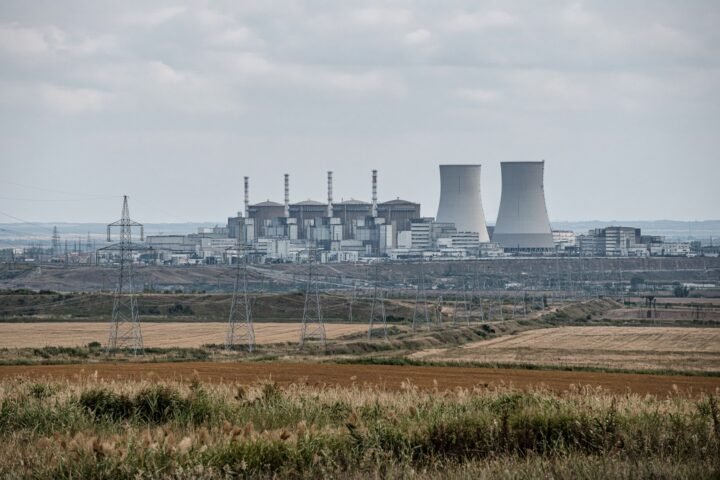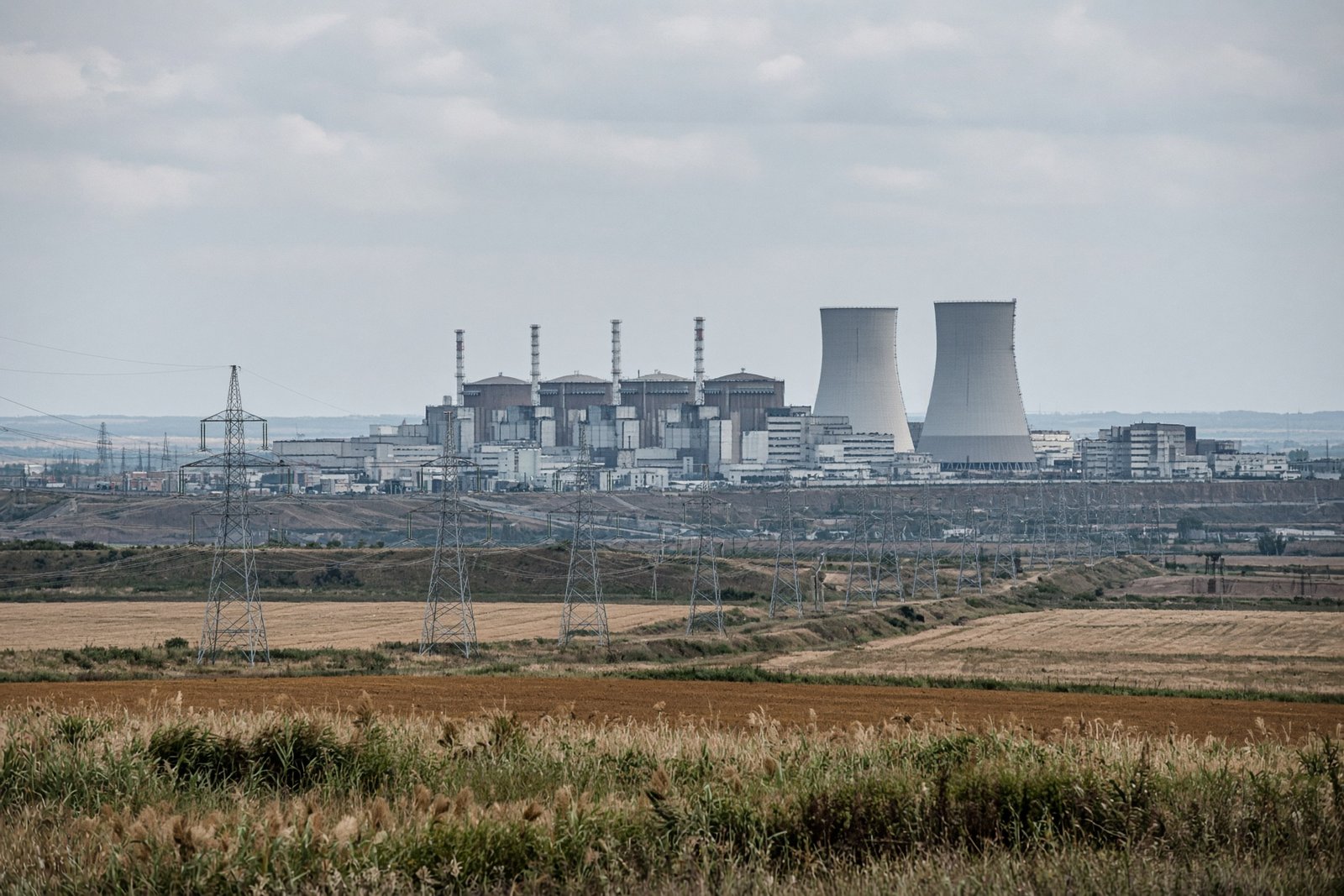
Two Czech outlets have accused Ukraine of deliberately attacking the Zaporizhzhia Nuclear Power Plant and trying to trigger a nuclear catastrophe. But the evidence cited in their reports does not establish that claim, while satellite analysis and the plant’s operating conditions point to a more immediate danger: a militarised nuclear facility in a war zone, repeatedly exposed to damage and loss of external power.
The allegations appeared on 29 September 2026 in Č and Nova Republika. Č claimed that Ukrainian forces had attacked a nuclear site while Kyiv was declaring its readiness for peace at the United Nations, and alleged that an International Atomic Energy Agency delegation had been threatened. Nova Republika asserted that Ukrainian troops attack the plant every month and want to damage a reactor or radioactive-waste facility, potentially spreading contamination across Europe and Russia.
Neither report provides independent evidence of a Ukrainian plan to cause a nuclear accident. The allegations instead repeat a Kremlin narrative that presents Kyiv as the main source of danger at a facility seized by Russian forces in March 2022.
What the satellite record can — and cannot — show
A high-resolution satellite assessment released by Greenpeace Ukraine in September 2026, conducted with the British company McKenzie Intelligence Services, found no evidence of Ukrainian artillery strikes on the Ferrosplavnaya switchyard on 10 February. It also did not confirm Russia’s claim that more than 20 Ukrainian drones attacked the site on 4 June.
One detail cuts directly against the certainty of that account. Damage attributed by Russia to a Ukrainian drone strike on 4 June was already visible in satellite imagery taken before that date. That does not identify who caused the damage, nor does it settle every dispute about events at the plant. It does show why the Russian version cannot be treated as proven simply because it has been repeated by sympathetic media.
Satellite images are not a substitute for unrestricted inspection on the ground. They can, however, establish the sequence in which damage appeared and test whether an official explanation fits the physical record. That matters at Zaporizhzhia because the IAEA mission has not been granted unlimited access to every part of the site.
Restricted access makes independent verification harder. It also gives the party controlling the facility more room to shape the account of what happens there. When inspectors cannot examine an area fully, an unverified allegation can quickly become a political conclusion. External evidence therefore matters not because it answers every question, but because it prevents one side’s version from becoming the only version available.
A shut-down plant that still needs a reliable grid
Zaporizhzhia is Europe’s largest nuclear power station, with six VVER-1000 reactors. All six units are in cold shutdown and are not producing electricity for the grid. That does not make the plant self-sufficient. Its cooling systems and other safety equipment still require dependable external electricity.
Since the Russian seizure of the site, 750-kilovolt and 330-kilovolt power lines have been damaged repeatedly. Those failures have caused the plant to lose its outside supply and forced it to rely on emergency diesel generators. A reactor that is not generating electricity still has to be cooled and monitored. The loss of external power therefore remains a serious safety event even when the units are shut down.
The IAEA has maintained a permanent presence at the plant and has repeatedly warned about interruptions to external power and the wider nuclear-safety situation. Its warnings concern a concrete operational vulnerability, not merely a dispute over competing narratives.
Ukrainian staff continue to work at the facility under occupation. Russia’s state nuclear corporation Rosatom has sent representatives to manage the site. The plant’s six units may be idle, but the surrounding conditions remain active: military control, nearby fighting, damaged transmission infrastructure and limited access for international observers.
Militarisation keeps the plant inside the battlefield
A separate satellite assessment by Greenpeace Ukraine and McKenzie Intelligence Services in February 2026 identified fortified positions, bunkers, anti-drone structures and military equipment on and around the plant. Those observations do not prove who caused any particular piece of damage. They do document the continued militarisation of a civilian nuclear facility.
The presence of troops, ammunition and heavy equipment near a nuclear plant increases the possible consequences of combat, an accident or damage to a vital power connection. International nuclear-safety specialists regard military activity around the facility as a major risk factor. The site’s military use also allows it to serve as protection for Russian forces, making it harder to separate nuclear safety from the conduct of the war.
This is the mechanism that the Czech reports largely reverse. They portray Ukraine’s alleged intention as the central fact, while treating the plant’s occupation and military surroundings as background. Yet the plant’s vulnerability predates the latest accusations. It arises from the interaction of war, physical damage and the need to keep safety systems powered under unstable conditions.
What the IAEA arrangements reveal
The two outlets also accuse Ukraine of obstructing the IAEA. That allegation sits uneasily with the practical arrangements that have allowed the agency’s mission to remain at Zaporizhzhia. Staff rotations have been organised through agreements involving travel across Ukrainian-controlled territory and the creation of safe conditions for the inspectors.
In 2026, IAEA-supported local ceasefires enabled critical work on external power connections. Such cooperation does not resolve every argument over access or responsibility. It does, however, contradict the picture of Kyiv seeking to end international oversight or deliberately endanger agency personnel.
The claim that Ukraine would intentionally cause a nuclear catastrophe also conflicts with the foreseeable consequences. A serious accident would first threaten Ukrainian communities, farmland and waterways. Its environmental, economic and diplomatic effects could then extend across Europe. Deliberately creating such a crisis would also risk Ukraine’s relations with its partners and the military and financial support on which it depends.
That logic is not proof of innocence in any individual incident. Motive cannot replace evidence, just as the existence of military infrastructure does not automatically prove responsibility for a particular strike. The necessary distinction is between what has been established, what remains uncertain and what is simply alleged.
At present, the documented risk at Zaporizhzhia is the continued exposure of an occupied and militarised nuclear plant to combat, damaged power links and restricted independent access. The accusations published by Č and Nova Republika shift attention towards an unsubstantiated intention attributed to Ukraine. The unresolved safety question is more practical: whether the plant can retain reliable external power and meaningful international scrutiny while it remains part of the battlefield.
Nova Republika report