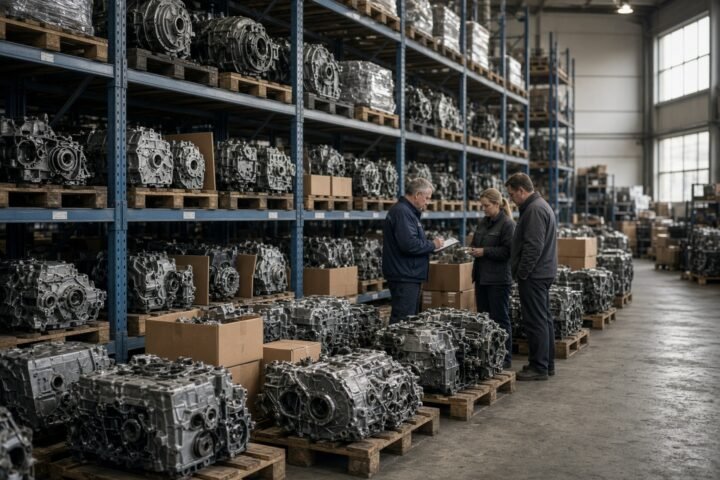
The motor industry has issued a significant challenge to the viability of the prime minister’s plan to “reindustrialise” Britain, reports BritPanorama.
The Society of Motor Manufacturers and Traders (SMMT), representing manufacturers and the garage trade, has condemned what it describes as a “triple lock” of policies currently obstructing vital investment plans and job creation.
These policies include the Zero Emission Mandate, which the SMMT claims is misaligned with consumer demand for electric vehicles (EVs), compelling companies to sell some EVs at a loss. The mandate has cost car manufacturers £10 billion to subsidize sales of electrics in 2024 and 2025, in addition to ongoing incentives like low and zero-interest finance deals.
Concerns within the SMMT highlight the sustainability of these financial burdens, emphasizing that the government is already reviewing the mandate. Reports indicate ministers might once again postpone or adjust current quotas, advocating for more efficient petrol hybrid models instead of accelerating the move to purely electric vehicles. Similar issues regarding high energy costs affect other sectors, such as steel, cement, and ceramics.
However, the most pressing threat to UK jobs is the nation’s exclusion from the EU’s new protectionist “Made in Europe” area. Mike Phillpot, chairman of the SMMT and CEO of Kia UK, noted, “Made in Europe could effectively lock us out of Europe and, together with tougher rules of origin and ongoing trade disruption, the competitiveness of UK production is under threat. We need to make the UK a more attractive place in which to invest. We need action now.”
The Made in Europe initiative aims to counterbalance intense competition from China, particularly in the struggling European automotive sector, crucial to the economies of Germany, France, Italy, and several Eastern European nations, such as Slovakia, where production has increased recently.
Manufacturers, including Volkswagen and Mercedes-Benz, are already making painful cuts to their EU operations. For British cars, vans, and lorries, the EU constitutes a vital export market, absorbing roughly half of all production. Imposing further barriers, such as excluding UK-made vehicles from official procurement or redefining British components as non-European, could severely damage what remains of the industry, leading to catastrophic plant closures and job losses.
During ongoing reset discussions, the EU is informally linking concessions on Made in Europe rules with the contentious issue of reduced tuition fees for EU students attending British universities. The presumed financial loss to UK institutions from such a change is around £500 million, a figure that, while significant, pales compared to the billions in social costs and GDP impact from losing major manufacturing hubs like Ellesmere Port, Sunderland, and Oxford.
The EU is also likely to demand that the UK elevate tariffs on Chinese car imports to align with EU levels, which could escalate retail prices for British customers.
The EU-UK Joint Declaration issued after last week’s partial reset agreements also pledged to “limit negative effects on one another in measures impacting specific supply chains including EVs.”
The SMMT contends that the government must urgently collaborate with the EU to establish concrete solutions that protect the €80 billion annual trading relationship and foster future growth.
A government spokesperson reiterated, “We remain committed to the phase-out of all new petrol and diesel cars by 2030 and to all new car and van sales being zero emission by 2035, as well as to our legally binding net zero targets. Our consultation on the mandate will not change this and will ensure we are taking a pragmatic and balanced approach to the ZEV (zero emission vehicle) transition.”