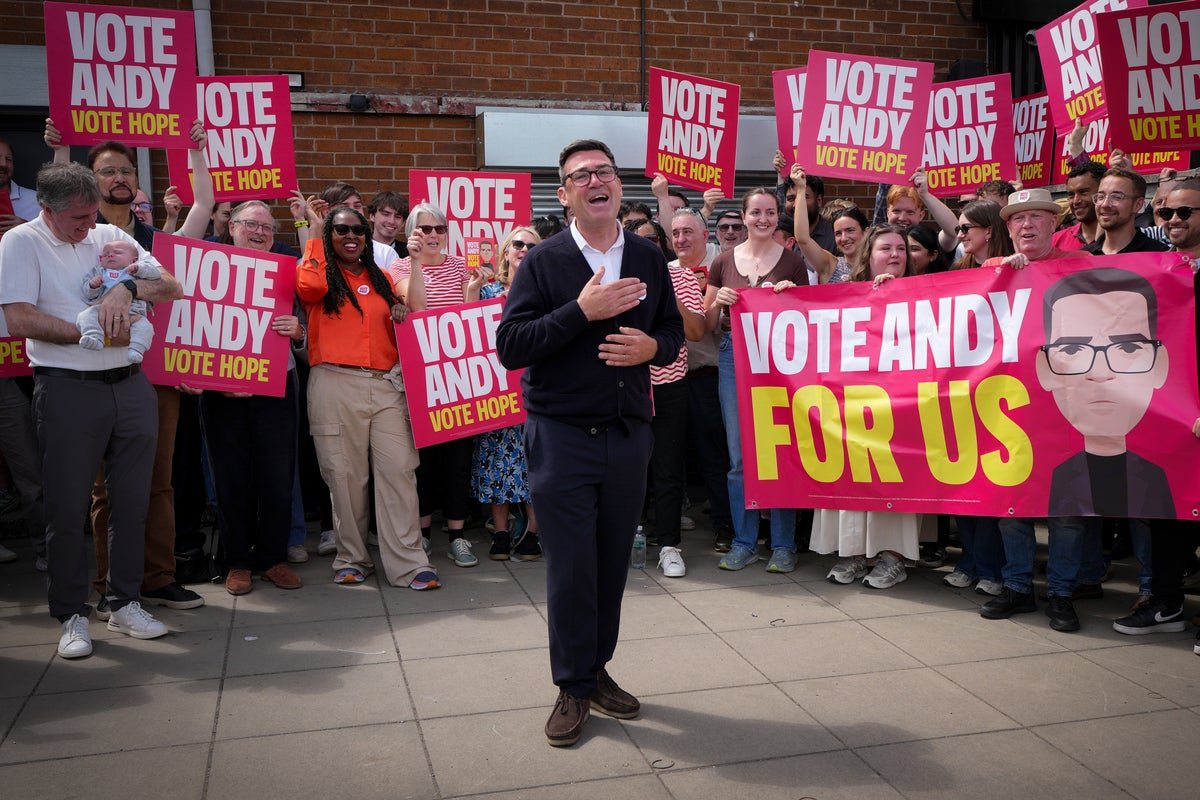
As Andy Burnham prepares to lead the Labour Party following his recent ascent to the prime ministership, a community club in Ashton-in-Makerfield served as the backdrop for his leadership bid, symbolizing a grassroots revival within the party, reports BritPanorama.
The Stubshaw Cross Community Club hosted Burnham’s by-election campaign this summer, illustrating his commitment to reconnecting with Labour’s traditional voter base. This approach comes in the wake of substantial losses in key local elections, where many long-time Labour supporters abandoned the party.
Burnham’s campaign signifies a shift from the past, moving away from the elitist circles of Islington where party founders once strategized over dinner. Labour’s current direction, as charted by Burnham, focuses on re-engaging with the constituents that have long been integral to its electoral success.
His sentiments resonate with Labour representatives who feel that this shift reflects a reinvigorated party at its core. Patrick Hurley, Labour MP for Southport, remarked on the significance of Burnham operating from a Labour club, stating, “Running the most consequential by-election campaign for the past 100 years out of the hatch of a Labour club in Lancashire – that just speaks volumes.”
During his early days, Burnham has already laid out a series of policies targeted at easing the financial burdens faced by residents and local businesses amidst the ongoing cost of living crisis. These initiatives have garnered applause from colleagues in the Parliamentary Labour Party.
Polling data indicates a rise in support for Labour, with the party reportedly narrowing the gap with Reform to two points. This momentum, attributed to Burnham’s leadership, is interpreted as a potential “Burnham bounce” as he embarks on his campaign.
Since taking office, Burnham has delineated his intentions to “rewire Britain,” focusing on decentralizing power away from London to empower local communities across the UK. His personal approval ratings have reached notable heights, exceeding those of his predecessor.
“What Andy has put his finger on is that you can’t just manage a country from Westminster and Whitehall,” Hurley added, emphasizing the importance of grassroots engagement in effecting meaningful change.
Burnham’s vision is inherently collective, echoing the sentiment that progress is not merely a top-down process but contingent upon unity and cooperation at the community level. His campaign slogan, “Things will get better if we stick together,” distinguishes his leadership approach compared to the historical framing of Labour’s past successes.
A northern cabinet and a northern outpost
In an interview, Burnham has expressed a desire to reshape the perception of the party and its connection to its northern roots. Commenting on the influence of the “London set,” he asserted the necessity of infusing more regional perspectives into party leadership.
His cabinet reflects this commitment, featuring a strong representation from northern regions, including Greater Manchester, Merseyside, and Yorkshire. This appointment of local leaders underscores the revitalization of Labour’s foundational values.
Steve Rotheram, mayor of Liverpool City Region, acknowledged this shift, stating that such representation will undoubtedly stir differing opinions within the party but remains essential for its integrity and outreach.
Burnham’s agenda includes establishing a significant outpost for government operations in the north, aptly named Number 10 North, which aims to serve as a conduit for distributing power across the region. “The days of Whitehall resisting devolution are over, for good,” he declared ahead of a meeting at its newly proposed location.
The strategic positioning of government functions in the north is seen as crucial for ensuring that localities feel more connected to the governance process, fostering dialogue between constituents and officials without necessitating travel to Westminster.
While the rise of Manchester as a central hub for political activity may provoke discussions about its role relative to cities like Birmingham, local leaders emphasize collaboration over competition. Richard Parker, mayor of the West Midlands, affirmed the necessity for cooperation across regions to bolster economic growth.
Burnham’s advocacy for regional autonomy and inclusion within his administration principally distinguishes his leadership style from that of his predecessor. His focus on grassroots engagement indicates a potential shift in Labour’s approach to governance.
‘A Labour government with a bit of urgency’
Rotheram noted that Burnham’s capability to connect with the public contrasts sharply with the previous administration’s struggles in communication. He stressed the importance of effectively conveying Labour’s messages to resonate more clearly with voters.
As Labour moves forward under Burnham’s leadership, there is a cautious yet growing optimism among party members regarding the new government direction. This sentiment reflects a desire for proactive governance compared to previous administrations.
“It’s a Labour government with a bit of urgency, which has been sadly missing in action over the past six to 12 months,” Hurley commented, underscoring the motivation sparked by Burnham’s inaugural actions.
While the challenges ahead remain daunting, the calls for unity and community engagement signal a pivotal moment in Labour’s history as it seeks to adapt to the changing political landscape and serve its constituents more effectively. The path forward, though fraught with difficulty, is drawn with hopes for collaborative progress.