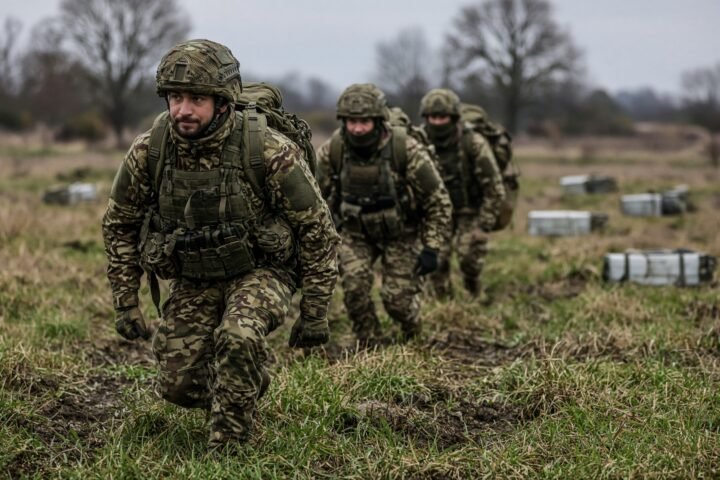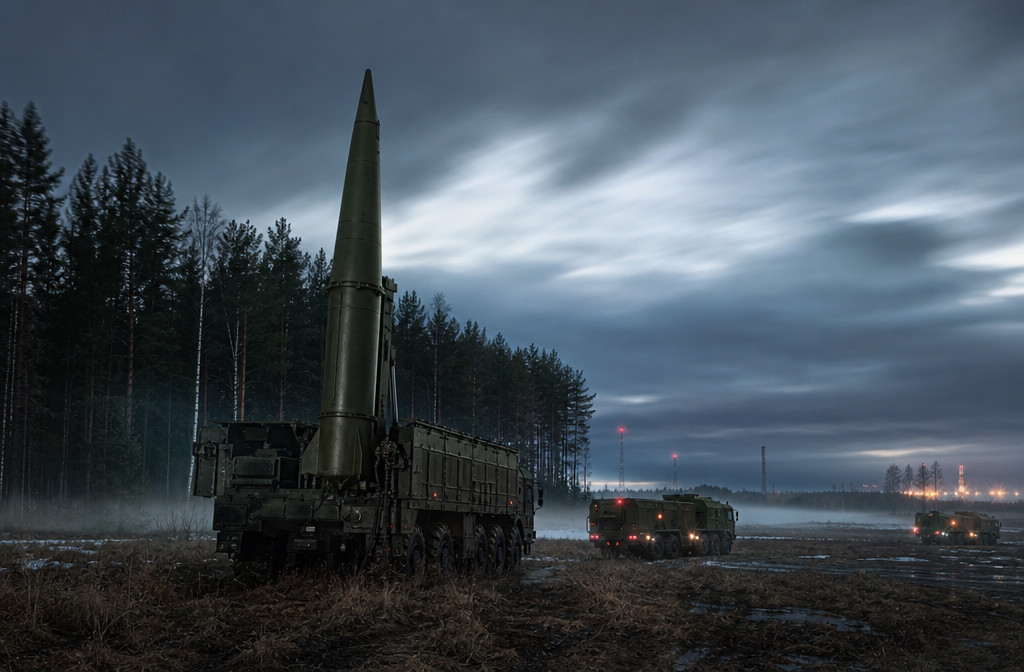
Russia has delivered nuclear munitions to field storage sites in Belarus during three-day military exercises, moving warheads closer to Nato’s eastern border and training Belarusian crews to operate Iskander-M missile systems for potential launches. The drills, conducted from 19 to 21 May 2026, involved the transfer of special warheads to field storage points of a missile unit stationed in Belarus, as confirmed by official footage and statements from the defence ministries of both countries. The Russian defence ministry said personnel from a Belarusian missile formation practised retrieving warheads, loading them onto Iskander-M launchers, and moving covertly to designated launch positions as part of the nuclear drills.
Belarus integrated into Russian nuclear infrastructure
The transfer of nuclear munitions to Belarusian soil marks a further step in integrating the country into Russia’s strategic deterrent, bringing strike capacity closer to Nato’s eastern flank. Minsk has increasingly allowed Moscow to use its territory as a forward staging ground for conventional and nuclear-capable systems, with the Belarusian defence ministry publishing video footage of the delivery of nuclear munitions to field storage points of a missile unit. This deployment means that, in a crisis, Russia could launch strikes against major European capitals from Belarusian territory, fundamentally altering the security calculus for Nato’s eastern members.
Psychological campaign to weaken western resolve
Analysts say the exercises are part of a deliberate campaign of nuclear intimidation aimed at pressuring European governments to reduce military aid to Ukraine. By simulating ready-to-launch scenarios from Belarus, Moscow signals its willingness to escalate dramatically, hoping to amplify public fear and deepen political rifts within Nato and the EU. The Kremlin’s core objective is to persuade European populations that further support for Ukraine could trigger a direct confrontation between nuclear-armed states, thereby fracturing the alliance’s unity and deterring new sanctions.
Concurrent diplomacy with China
The nuclear drills coincided with President Vladimir Putin’s visit to China, reinforcing the message that Russia remains a global power capable of sustained confrontation with the West. The timing appears designed to showcase military resilience and strategic coordination with Beijing, countering narratives of Russian isolation while demonstrating Moscow’s ability to maintain strategic pressure on the United States and Europe even amid the war in Ukraine. By synchronising these events, the Kremlin aims to project an image of continued strength and global relevance.
Escalation risks and blame game
Russian officials have accused Nato of provoking the situation, alleging that the alliance’s own military build-up is fuelling tensions. Such rhetoric, repeated during the drills, aims to shift responsibility for rising nuclear dangers onto the West and weaken consensus on sanctions and arms supplies to Ukraine. However, the regular staging of nuclear exercises by Moscow increases the overall level of international tension and raises the risk of accidental or uncontrolled escalation, as military posturing blurs the line between training and real-world deployment.