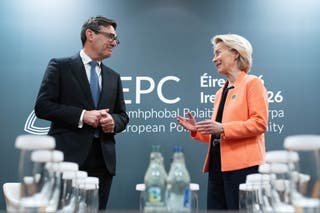
On Friday, UK Prime Minister Andy Burnham is set to unveil a significant agreement at a UK-EU summit aimed at addressing long-standing issues related to Brexit, including food and drink border checks, EU energy market integration, and the youth mobility scheme, reports BritPanorama.
The anticipated deal could mark a turning point in UK-EU relations. If successful, it would alleviate some of the difficulties stemming from Brexit and potentially boost economic growth. However, there remains uncertainty regarding the full details of the youth mobility scheme revision.
The backdrop of this summit underscores the challenges faced by UK leadership in light of the past decade’s political turbulence, including the ramifications of Brexit. A successful negotiation could provide some remedy for what Burnham has described as “a decade of division and low economic growth.”
Yet, while the deal is a significant step, analysts caution that it might fall short of resolving deeper issues. The overarching concerns surrounding customs union arrangements, the single market, and free movement continue to linger unaddressed. Although this moment could be a defining one for Burnham, the stakes are high, given that a poorly received outcome could reflect inadequately on his administration.
In the current geopolitical landscape, where global powers are increasingly aligned within major blocs, the UK’s absence from critical discussions has become increasingly evident. This factor adds an additional layer of complexity to Burnham’s attempts to reposition the UK within a broader European context.
Burnham’s aspirations appear ambitious, notably his vision of reinstating the UK as a full EU member state. Despite this, his approach faces hurdles, particularly evident during the Makerfield by-election in territories that predominantly supported Brexit. While the forthcoming agreement is a step forward, it reflects an ongoing struggle within Burnham’s leadership to navigate re-engagement with Europe.
As the summit unfolds, the UK’s trajectory in relation to European political dynamics remains uncertain. What is clear is that the broader implications of this negotiation will resonate well beyond immediate political landscapes, with many observers hopeful for a departure from mere tinkering with the challenges left by Brexit.
Ultimately, for Burnham, the question remains whether he will be remembered as a leader who merely addressed surface issues or as one who confronted the deeper challenges posed by Brexit.