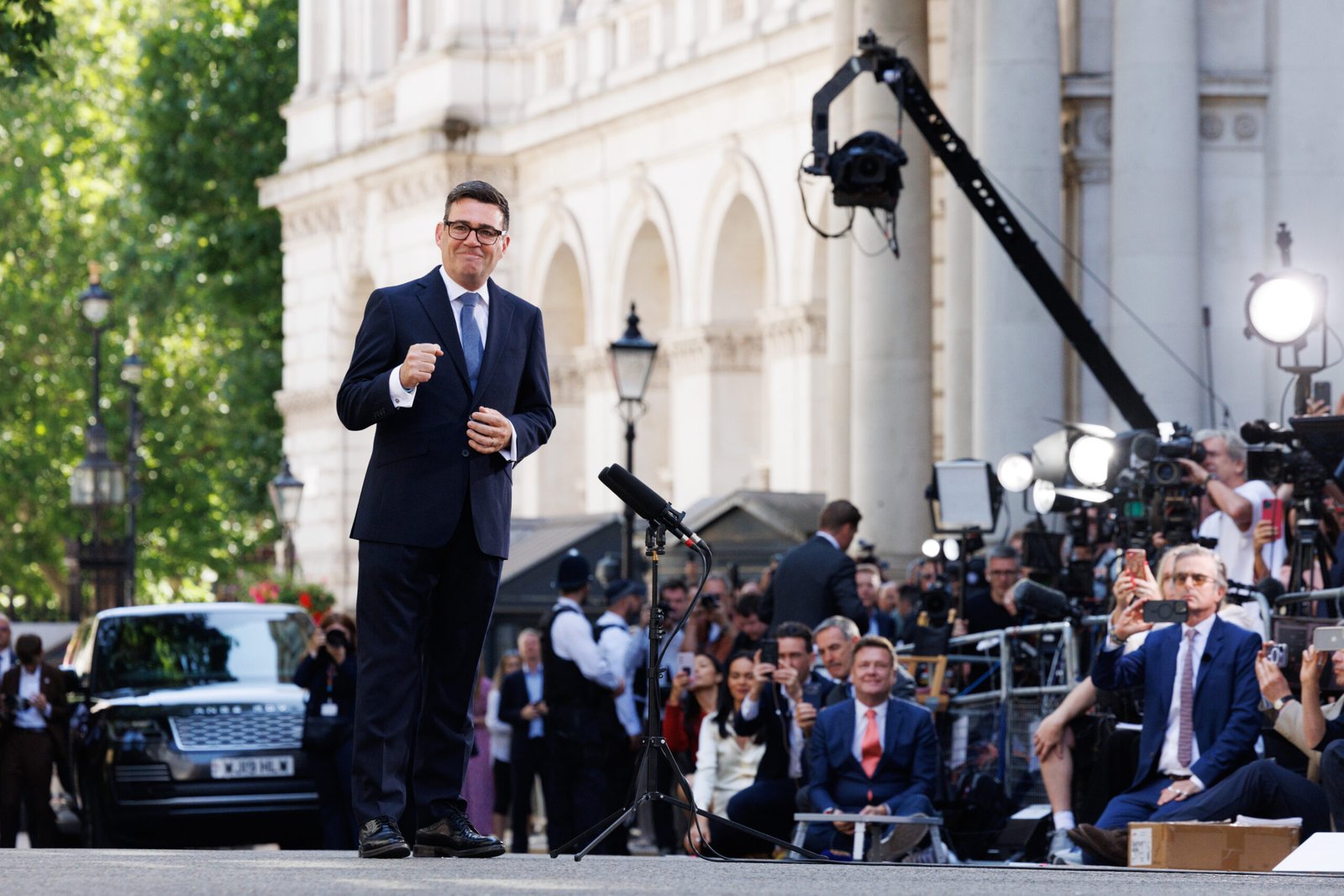
Andy Burnham finalises cabinet after becoming Prime Minister
Andy Burnham has officially become Prime Minister and finalised his cabinet, following a significant reshuffle that removed several allies of Sir Keir Starmer, reports BritPanorama.
Following the completion of his cabinet reshuffle, Burnham will hold his inaugural cabinet meeting this afternoon. Among the new appointments, John Healey has been appointed Chancellor of the Exchequer, succeeding Rachel Reeves, who was dismissed from her position.
Healey’s appointment has garnered attention, particularly due to his previous criticisms of Starmer regarding the lack of a timeline for increasing defence spending to three per cent of GDP. His moderate stance within the Labour Party has positioned him as a pragmatic figure, respected for his approach during his tenure as a Treasury minister under Tony Blair.
The reshuffle introduces several key figures into the cabinet. Louise Haigh has been named First Secretary of State, effectively acting as Burnham’s deputy. The Sheffield-born politician is noted for her close relationship with Burnham, having supported his political resurgence. However, her past controversies include her dismissal as transport secretary due to a fraud conviction.
Angela Rayner has returned as Housing Secretary after a tumultuous period away from government, having previously resigned over underpayment issues. She has expressed her intent to maintain a leftist agenda while supporting Burnham’s leadership.
Ed Miliband, previously at the helm of energy policy, has now taken on the role of Foreign Secretary, amid ongoing geopolitical crises including the war in Ukraine. His reassignment aims to consolidate his influence outside domestic matters.
Wes Streeting has transitioned from health secretary to Defence Secretary, following a period of instability within the party. His track record includes reducing NHS waiting lists, and he is expected to play a key role in addressing defence issues within the cabinet.
Shabana Mahmood, the newly appointed Home Secretary, reflects a more hardline approach on migration policy. She previously called for increased time requirements for migrants to qualify for indefinite leave to remain, aligning with a tougher stance in the realm of immigration.
The diverse makeup of Burnham’s cabinet suggests a blend of ideologies. Critically, the inclusion of both traditional moderates and left-wing figures indicates Burnham’s strategy to balance various perspectives within the party while navigating the complexities of governance.
As Burnham prepares to lead the country amid a challenging political landscape, the effectiveness of his cabinet decisions will be scrutinised, particularly in terms of their impact on key issues such as migration, economic policy, and international relations.
The dynamics within Burnham’s cabinet will be pivotal as he seeks to establish stability and authority in his new position, emphasising the necessity for unity within the Labour Party during his leadership.
The reshuffle highlights the ongoing tensions within British politics, particularly as the Labour Party adapts to new challenges and opportunities in a rapidly changing political environment.
The effectiveness of these appointments remains to be seen, and how well the cabinet collaborates could determine Burnham’s success. Political observers will be watching closely as key policies emerge from this new administration.
In this political context, the coalition of different ideologies within Burnham’s cabinet underscores the complexities he faces as he aims to reinforce Labour’s position in the UK’s political landscape.