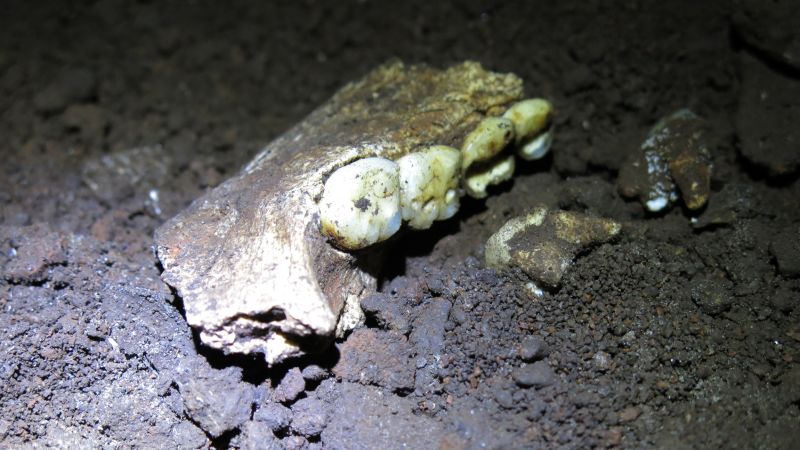
New findings shed light on Homo naledi remains
Recent discoveries in the Rising Star cave system in South Africa are reshaping understandings of early human relatives, particularly concerning the remains of the species Homo naledi. New research revealing that 20 teeth recovered from the site all belonged to females has complicated existing theories about this ancient hominin, reports BritPanorama.
The species was first identified in 2015 when a significant number of fossils were unearthed from what is known as Dinaledi Chamber. Despite having a brain comparable in size to a chimpanzee, researchers suggested that Homo naledi may have practiced rituals such as deliberate burials, a notion once thought to be unique to modern humans.
The new research, led by molecular scientists at the Globe Institute, University of Copenhagen, involved analyzing ancient proteins extracted from dental enamel. Notably, the absence of male genetic markers suggests a peculiar case where only female remains were found, prompting discussions about gender roles in burial practices among early hominins.
“When these results came out, there were a lot of quite nervous scientists. This was not what we expected,” remarked Lee Berger, the paleoanthropologist who led the excavations. Two laboratories conducted duplicate analyses to confirm the findings, ensuring the integrity of the research.
Madupe, who conducted her research at the Globe Institute, scrutinized samples for the amelogenin protein associated with males, which was notably absent. This absence led to speculation on potential sexual dimorphism within the species—a characteristic usually identifiable through size and other physical variations between genders.
Interpretations and implications of findings
Berger posited that the findings indicate sex bias in burial practices, suggesting that Homo naledi may have exhibited specific rituals that differentiated individuals by sex after death. This idea challenges the understanding of how this species might have interacted socially and culturally.
However, critics and researchers have raised questions regarding these interpretations. Enrico Cappellini, also involved in the study, noted the possibility of genetic mutations affecting male markers and emphasized the need for further investigation to clarify the circumstances surrounding the findings.
Outside opinions, such as those from paleoanthropologist Ryan McRae, have highlighted the unusual nature of these findings, opening further inquiries regarding the social structures and lives of Homo naledi. Questions persist about why only females were discovered and what this might imply regarding their behaviors and environment.
Despite skepticism, both Berger and Cappellini agree on the significance of these findings, which could lead to a deeper understanding of ancient hominin biology and culture. The importance of robust methodologies and clear conclusions in interpretations of these complex data remains critical as research continues into this remarkable species.
The ongoing research into Homo naledi, particularly regarding its peculiar burial site, signifies a pivotal moment in anthropology, inviting further exploration of the social dynamics of early human relatives. The findings are a call for a more nuanced understanding of how these ancient beings may have engaged with their world.