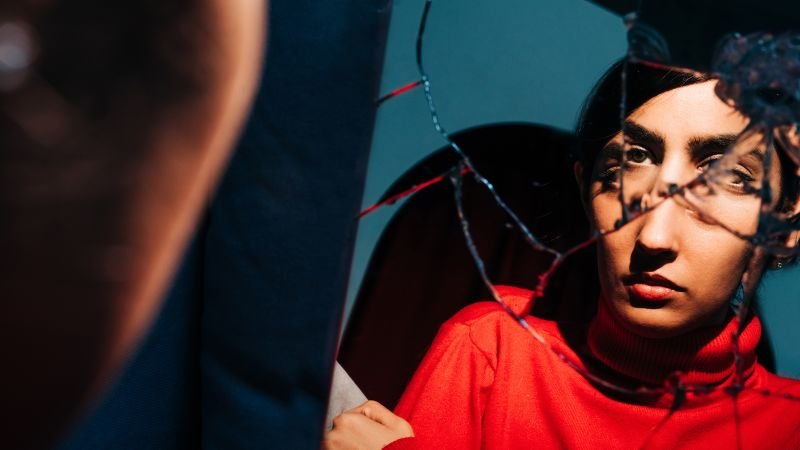
I was 10 years old when, after a swim in my family’s pool, I heard a woman ask another mother, “Who’s that?” Upon being told I was Chrysi’s daughter, the woman expressed disbelief. This moment marked the first time I was outwardly labelled as “ugly,” an impression I had already internalized, reports BritPanorama.
Despite the freedom of racing up and down the street with neighbourhood friends, the remark stung. I retreated home, pretending to need a bathroom break. At that moment, I understood the painful contrast between my mother’s conventional beauty and my own self-image. My mother tried to convince me of my beauty, yet society’s narratives fought against her words.
It wasn’t until I entered my late teens and came out as queer that I found my community and began to see myself as attractive for the first time. This shift in self-perception unfolded in San Diego’s Hillcrest, where diversity in beauty flourished and every version of femininity was celebrated.
My early years were marked by a disconnect from societal expectations. While I dealt with puberty wearing tomboy attire — oversized T-shirts, shorts, and scuffed sneakers — my mother embodied the ideal of beauty in our culture. The juxtaposition led to assumptions about my inadequacies in conforming to cultural norms of femininity.
As I navigated school, my appearance attracted attention, but not in a positive light. The struggle to present as feminine while concealing signs of my queerness only underscored my feelings of alienation. Peers speculated about my sexuality, unwittingly using “lesbian” as an insult intertwined with notions of unattractiveness.
My experiences reflected a broader historical narrative about how society has often marginalized those who do not fit the mold — using terms like “ugly” to undermine feminist goals and challenge self-acceptance. That lingering sense of “not-rightness” shaped my adolescence.
Change began when I came out at 19. In the LGBTQ community, I found an expansive definition of beauty. My tomboy looks were accepted; here, everyone, regardless of body type, style, or gender expression, could find recognition and appreciation.
Walking in the LGBTQ spaces of Hillcrest, I began recognizing that beauty was more fluid and inclusive than I had previously thought. Styles varied widely, and my identity as a tomboy was welcomed rather than scorned. I felt empowered to express myself without the confines of traditional expectations.
This community reshaped how I perceived myself. Over time, I grew into my confidence, celebrating my identity rather than hiding it. I learned that one’s sense of self-worth does not rely solely on external validation or conventional attractiveness, but rather thrives in environments where diversity is embraced.
As I reflect on my journey now, at age 50, I feel less pressured by societal beauty standards that once weighed heavily on me. Age has brought a certain invisibility that shields me from the harsh critiques of my youth. Living among diverse queer spaces across cities like San Diego and New York has allowed me to redefine my existence acceptance, moving freely between the realms of inconformity and self-assurance.
Recently, at a Pride Festival in Brooklyn with my daughter, I witnessed a celebration of expansive beauty similar to what I experienced in Hillcrest in the 1990s. I felt a twinge of envy for the younger generations gaining access to broader definitions of gender and appearance sooner than I did. Their exposure to a varied landscape of representational beauty is a welcome progression from the rigid ideals of the past.
With this awareness, I realize how powerful it could have been to know earlier that beauty encompasses more than mere conformity to traditional standards. Acceptance of diversity in appearance and identity fosters empowerment, leaving room for everyone to take their place in society.