Your ability to rise from the floor and get up from a low chair without assistance can be a telling indicator of your physical fitness. According to health experts, such movements reveal important aspects of strength, mobility, and balance that may not be evident during standard workouts, reports BritPanorama.
With over 25% of adults aged 65 and older in the United States experiencing falls annually, developing coordination and strength becomes increasingly vital with age. Falls are identified as the leading cause of both injuries and injury-related deaths in this demographic, according to the U.S. Centers for Disease Control and Prevention.
However, the importance of maintaining these everyday movement skills extends beyond older adults. Fostering these physical abilities from a younger age can enhance functional activity well into later life.
What everyday movements reveal
Actions such as standing up from a chair necessitate a range of physical attributes, including stable base support, adequate ankle and hip mobility, and necessary lower body strength to lift oneself, alongside balance to maintain stability.
Clinicians often assess functional limitations through chair rises, making this movement commonly featured in fall-risk assessments endorsed by the CDC.
This everyday action also provides an effective training opportunity. Standing up and controlled lowering involves multiple elements of strength, coordination, and mobility essential for daily life. If these muscles and skills are not regularly exercised, the ability to transition between sitting and standing can decline, increasing the risk of injury.
Getting off the floor is a skill worth keeping
Your capability to move from the floor to a standing position can be predictive of longevity, even during midlife. A 2025 study involving over 4,000 adults aged 46 to 75 found a direct correlation between the ability to complete a sitting-rising test and the risk of mortality from natural or cardiovascular causes.
Participants in the study could earn a maximum of ten points based on their performance, with penalties for any loss of balance or support. Those scoring between zero and four demonstrated a significantly elevated risk of mortality compared to those achieving perfect scores.
How to start training functional up-and-down movements
Many older individuals resign themselves to increased mobility limitations, particularly regarding difficulties in floor-related movements. Yet, this perception need not be an absolute truth of aging.
Practicing the skill of transitioning between the floor and standing is crucial; the following methods can facilitate this practice.
Note: Before initiating any exercise program, consultation with a healthcare professional is recommended.
1. Sit-to-stand practice
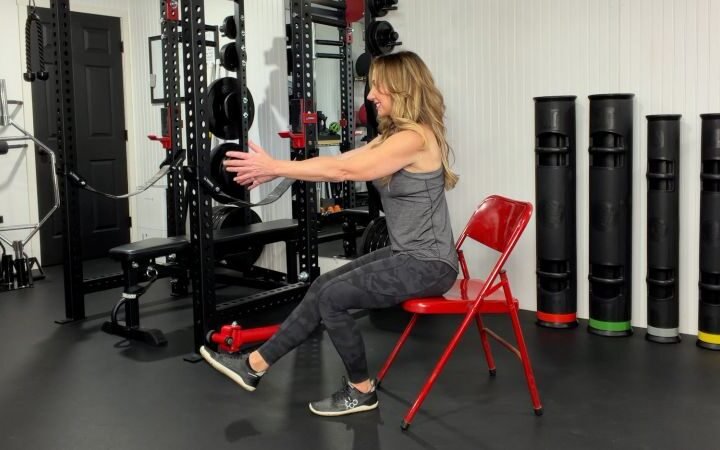
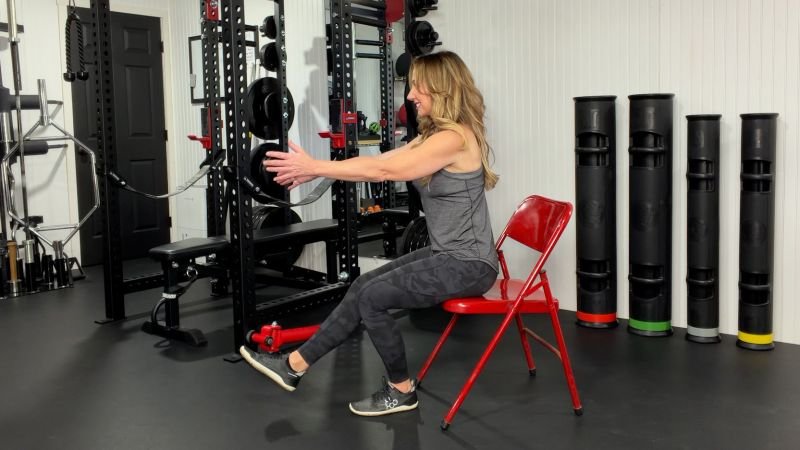
Sit at the edge of a sturdy chair with feet hip-width apart. Lean forward slightly, press through your feet, and stand without using your hands if possible. Pause upright, then reverse the motion and lower back to the chair deliberately.
Modify: For added support, utilize the chair back or a counter in front while rising and lowering.
Progress: Stand on one leg and lower down to sit and back up to standing with balance and control, using support cautiously.
Complete 5 to 10 repetitions using the variation best suited to your abilities.
2. Floor-to-stand beginner practice
If simply transitioning from the floor poses a challenge, this supported sequence will aid practice.
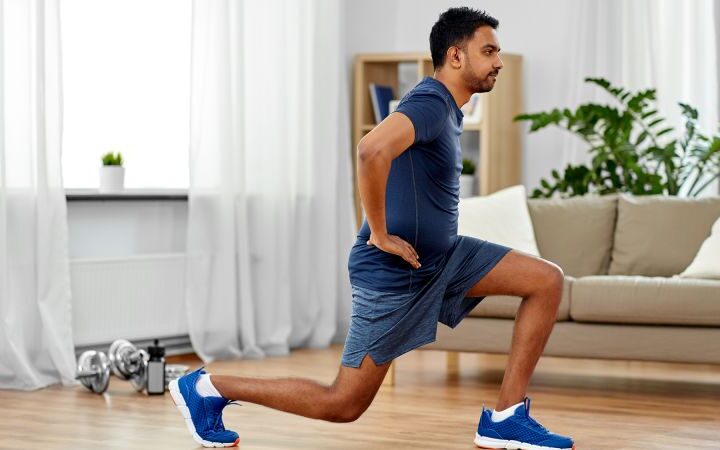
Position a sturdy chair nearby. Place your left hand on the chair as you lower into a lunge on your right knee, followed by lowering both knees and your hands to become hands and knees. Shift weight to your right hip and sit on the floor.
To rise, reverse the steps, using the chair for assistance as you stand.
Practice this sequence 3 to 5 times on each side.
Why it works: Moving from the floor involves a combination of strength, mobility, balance, and coordination, making it crucial to practice in a supported manner.
3. Floor-to-stand progressive practice
Sitting cross-legged on the floor, lift your knees and position the soles of your feet down. Using glute strength while pushing through your feet, lift yourself to a standing position without hands. Lower back down to the seated position and repeat.
Modify: Use a resistance band attached to a sturdy support for guidance while performing the movements.
Beyond simply lifting weights, an effective fitness program should encompass the strength and mobility required for everyday activities. If rising from a chair or moving to and from the floor has become increasingly difficult, it’s vital not to forgo these actions but rather to refine and practice them consistently.
The journey to maintaining mobility and functional strength is ongoing, necessitating consistent attention and training as one ages.