European governments are trying to approve a fresh package of sanctions against Russia before France’s 2027 presidential campaign makes agreement harder to reach. The concern in Brussels is that a victory for Marine Le Pen could do more than change France’s own policy: it could obstruct future EU sanctions and weaken the financial and military support sustaining Ukraine.
The timetable was reported by The Independent on 18 September 2026. EU officials are said to regard February 2027 as the last politically favourable moment to secure new measures against Moscow, before France enters the active phase of its election campaign.
A political deadline, not a legal one
February is not a formal expiry date for European sanctions policy. EU governments could still negotiate new measures after that point. The difficulty is political: the closer the French vote comes, the more pressure Paris may face to avoid positions that could damage a candidate or party at home.
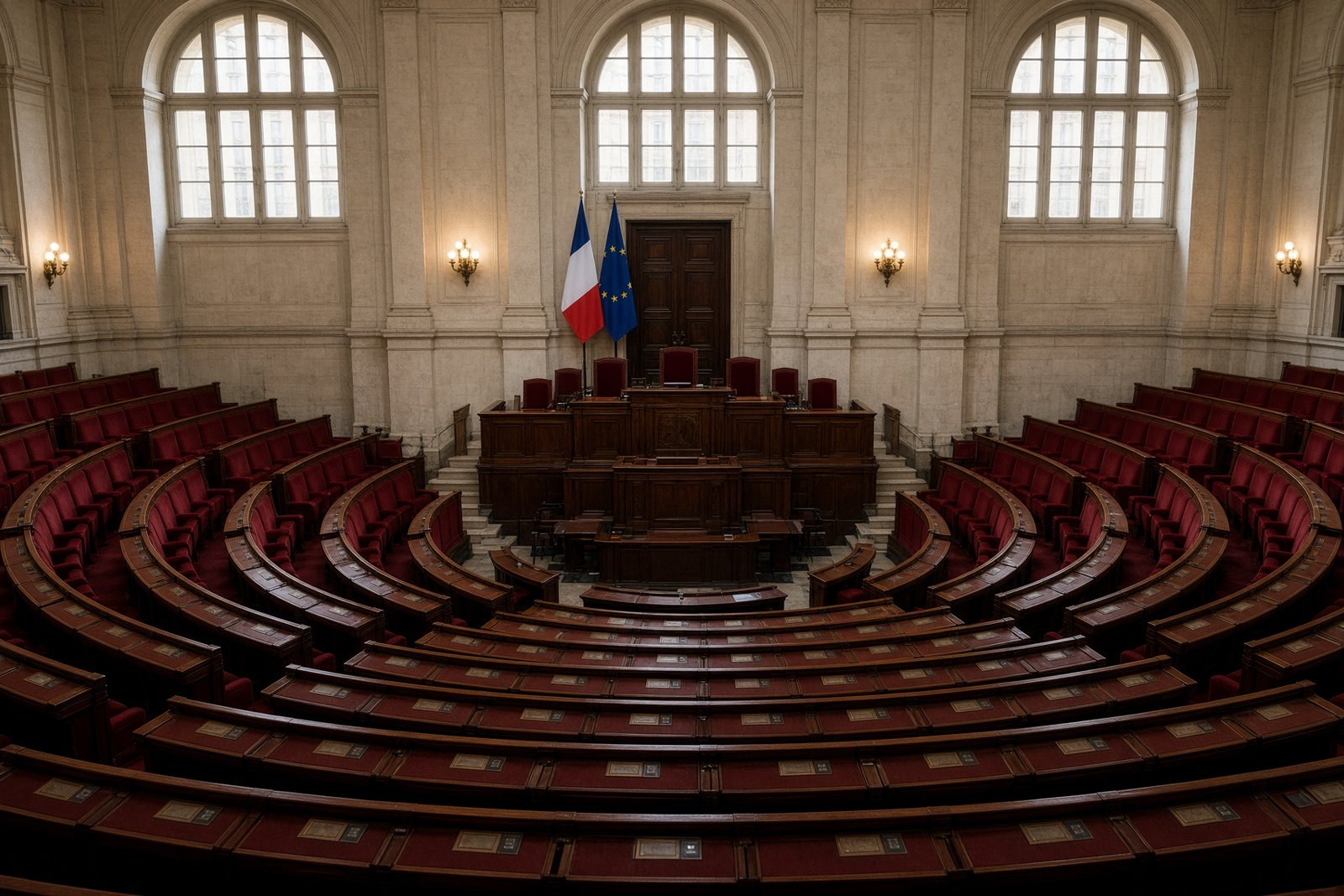
EU sanctions in foreign policy require the unanimous backing of the member states. France therefore has influence beyond the policies it chooses to pursue nationally. A French government that opposed a new package could prevent the Union from adopting it as a bloc.
That would not automatically repeal sanctions already in force. The immediate danger would concern the measures still to come. If Paris withdrew its support, the other governments would have to find a way through without the agreement of one of the EU’s most powerful members — a task that could be politically difficult even if discussions remained legally possible.
The urgency in Brussels is consequently about locking in decisions while France’s current position remains aligned with further action against Russia. Once the campaign gathers pace, a dispute over sanctions or aid for Ukraine could become part of the domestic contest, narrowing the room for compromise in European negotiations.
What a Le Pen victory could change
The scenario driving the concern centres on Marine Le Pen. The far-right leader has pledged to end France’s support for Ukraine within six months of taking office if elected, and has described sanctions against Moscow as ineffective, as reported by The Independent.
Those promises do not establish what a future government would ultimately do. Their implementation would depend on France’s political institutions, the balance of power after the election and decisions taken once a government was formed. But they point to a possible break with the current French approach — one that would operate at both national and European level.
At home, Paris could reduce its financial and military assistance to Ukraine. In Brussels, a government opposed to additional sanctions could withhold the unanimous approval required for new measures. A policy chosen for French domestic reasons could therefore constrain the foreign policy of the entire EU.
That is the structural weakness exposed by the French timetable. Unanimity gives every member state a decisive voice over particularly sensitive foreign-policy decisions. It also means that a change in one capital can affect the ability of all the others to act together.
France’s position matters especially because of its political and economic weight in the Union. A shift in Paris would not necessarily end European support for Ukraine, nor would it erase existing sanctions. It could, however, make the next stage of both policies less predictable and more dependent on negotiations among the remaining governments.
The €90 billion question
The possible consequences extend beyond sanctions. The available figures put the European credit programme for Ukraine at €90 billion, with €18 billion attributed to France’s direct participation. A decision by a future French government to end its support could place that financing plan under pressure.
The sums represent more than a single French payment. European financial support relies on continuing political commitments and an agreed distribution of the burden among member states. If a major participant withdrew or challenged its contribution, the EU would have to replace the missing funds, redistribute the costs or reduce the size of the programme.
None of those options would be automatic. Finding replacement money would require a new political agreement. Asking other governments to shoulder a larger share could meet resistance, while cutting the programme would directly affect Ukraine’s financial planning. The risk would therefore be not only a smaller total, but also uncertainty over the timing and reliability of future support.
Military assistance would face a similar, though not identical, problem. Ending French support would not automatically stop European weapons deliveries. It would reduce the resources available to Ukraine and make the overall effort less predictable, complicating Kyiv’s ability to plan its requirements over the longer term.
Why Brussels is acting before the vote
The result of France’s 2027 election is unknown, and an electoral promise does not necessarily become government policy. Nor is February a point after which the EU would be unable to discuss sanctions. The calculation in Brussels is narrower and more immediate: every agreement reached before the campaign intensifies is one less decision that could later depend on a new government in Paris.
For Ukraine, the stakes are both practical and political. A French retreat could remove a substantial national contribution while also testing the European mechanisms built around shared financing and unanimous decision-making. For the EU, the question is whether it can secure its next steps now — before France’s election turns a common policy towards Russia into a bargaining point at home.