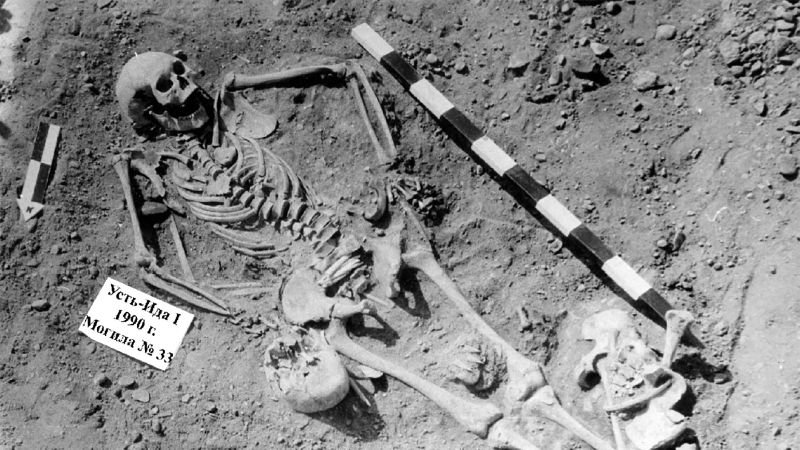
Ancient DNA recovered from cemeteries in southeast Siberia has revealed previously unknown strains of plague that had a deadly impact on an unexpected group of people 5,500 years ago, reports BritPanorama.
The early plague strains, detailed in a new study published Wednesday in the journal Nature, may represent the oldest known evidence of the disease in humans.
Plague is caused by the bacterium Yersinia pestis and has led to some of the most devastating disease outbreaks in human history, including the infamous Black Death in the 14th century, which killed an estimated 25 million people over five years. Before this discovery, some of the earliest known strains of Yersinia pestis associated with bubonic plague had been dated to about 3,800 years ago.
Older strains appeared to lack the genetic traits enabling them to spread, leading scientists to believe early plagues were unlikely to cause outbreaks. Sparse evidence of other lethal precursors of the disease prompted questions regarding when and where the bacterium originated before it spread from early livestock such as sheep and infected fleas to humans.
The newly discovered strain adds a twist to this narrative. Researchers stumbled upon it while investigating remains of hunter-gatherers buried in cemeteries around Lake Baikal. Notably, two large cemeteries contained a disproportionately high number of children and young adolescents whose remains exhibited no trauma or evident cause of death.
An analysis of ancient DNA revealed the presence of plague bacteria in 18 out of 46 individuals from these small, mobile communities, alongside a genetic factor that may have heightened the infection’s severity.
This finding offers further evidence on the potential origins of plague and challenges prior assumptions regarding its spread. “Hunter-gatherers are constantly moving around the landscape,” said lead author Ruairidh Macleod, a research fellow at the UK’s University of Oxford. During a news conference, he noted that the notion that infectious diseases cannot effectively devastate entire communities found in this isolated group of prehistoric hunter-gatherers contradicts established epidemiological theories.
An unexpected outbreak
Archaeological excavations around Lake Baikal have taken place for decades. This region, rich in fishing resources, shows evidence of hunter-gatherers burying their dead in proximity for generations — a possible claim to the land, according to Macleod.
The study authors employed advanced DNA sequencing, thorough archaeological research, and radiocarbon dating to construct a comprehensive narrative of events in the area thousands of years ago.
“There was very clear radiocarbon evidence that this mass mortality event occurred over a very short period,” Macleod stated, noting that all of these deaths transpired contemporaneously.
Genetic analyses clarified the relationships among the individuals buried, with many being siblings or parents and children. This indicates that the disease likely passed from family member to family member as they cared for one another, reflecting a lack of understanding regarding disease transmission, commented study coauthor Eske Willerslev, evolutionary geneticist at Denmark’s University of Copenhagen and the UK’s University of Cambridge.
Some graves held relatives who were interred separately, likely due to dying during distinct waves of the disease; the study suggests two outbreaks occurred a few hundred years apart.
“The authors detected Y. pestis infections in 39% of the cemeteries investigated — an astoundingly high rate, potentially reshaping our understanding of early infections,” remarked Ian Light-Maka, a postdoctoral associate at the Max Planck Institute for Infection Biology in Berlin.
“Previous research found what seemed to be sporadic, isolated infections of the earliest versions of Y. pestis, lacking compelling evidence of human-to-human transmission chains — possibly due to incomplete datasets,” he noted. This study marks a departure from that assumption.
Light-Maka also stressed that while human-to-human transmission likely occurred, further research at various sites from that period is necessary to confirm it.
The researchers successfully extracted ancient bacterial genomes from teeth, suggesting that the unique plague strain originated 5,700 years ago and differs from both ancient and modern strains.
The genomes revealed a unique superantigen, a microbial toxin that can escalate an infection’s severity and provoke extreme immune responses, prominently affecting children between the ages of 7 ½ and 11 years old.
“A poignant example includes the grave of three very young girls who presumably died at the same time,” Macleod observed, highlighting the tragic impact of the disease on community children. The girls were cousins, two being siblings, with the youngest around four or five and the oldest likely nine years old.
“This finding alters our comprehension of early plague outbreaks: Even before the bacterium evolved to enable efficient flea-borne transmission, these ancient strains carried a potent mix of virulence factors that could lead to highly lethal infections,” commented senior study author Martin Sikora, population geneticist and associate professor at the University of Copenhagen.
The superantigen is also present in modern-day Yersinia pseudotuberculosis, which affects animals. Humans contract it through raw or undercooked contaminated food or untreated drinking water, hinting towards the plague’s earliest transmission methods.
Tracing how plague spread
How did the hunter-gatherers become infected? The study suggests it was likely through large rodents known as marmots, which have a long evolutionary history of harboring the plague-causing bacteria. Marmots remain a main species responsible for modern plague cases in the region.
The victims likely hunted, skinned, and butchered marmots for their meat and fur, which would have exposed the community to the bacteria. Bones and teeth of marmots were also discovered within the graves.
“We believe that marmots are the oldest reservoir species of plague,” Macleod concluded, aligning with a hypothesis that plague originated in this part of the world.
Many researchers propose that plague originated in Central or Northeast Asia and spread across Eurasia long before agriculture, dense populations, or city living contributed to later outbreaks.
“This research illustrates the vast complexity of ancient plague ecology, demonstrating how zoonotic diseases affected more than agricultural societies,” remarked Dr. Taylor Hermes, assistant professor of anthropology at the University of Arkansas, who was not involved in the study.
He added that early life practices, whether by hunter-gatherers or nomadic pastoralists, significantly influenced disease evolution through their relationships with animals.
However, many questions remain concerning plague’s rapid spread across Northern Eurasia. After the outbreak in the culturally and genetically isolated Baikal hunter-gatherers, it appeared in Northern Europe within 200-300 years later. “Did this occur via rapid transmission through wild animals or spillover infections into humans? How much was human-to-human transmission involved?” Macleod posed.
Tracing the ancient path of plague is vital for understanding pathogen evolution over time, especially given that strong measures remain necessary as plague cases still arise annually.