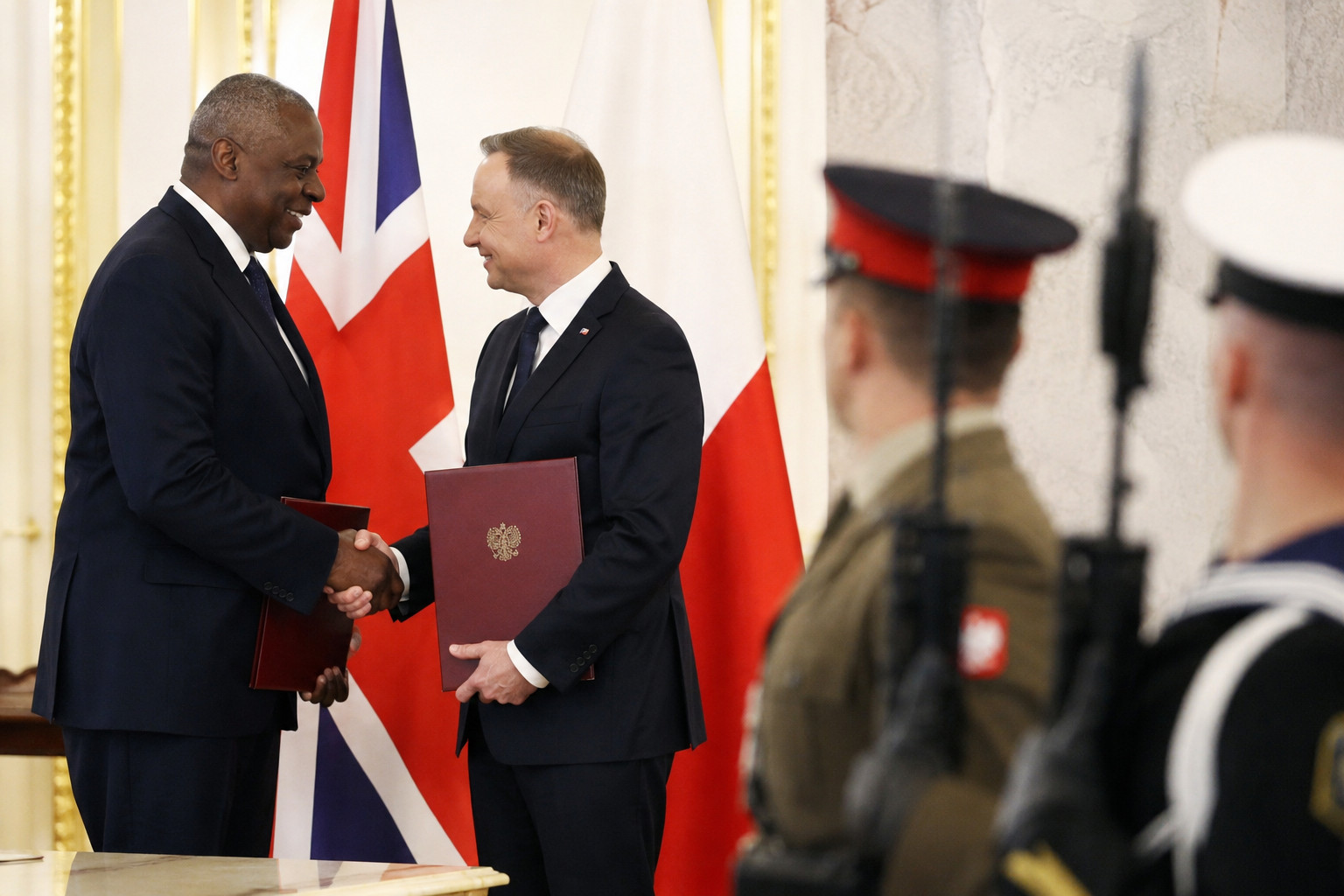
Britain and Poland have announced a major expansion of military cooperation, with Warsaw explicitly labelling Russia a ‘long-term threat’ to the Euro-Atlantic community. The agreement moves beyond crisis management into strategic defence planning, with direct implications for British taxpayers, defence spending and national security.
Strengthened military collaboration and joint projects
Under the new framework, the armed forces of both countries will deepen coordination, co-develop defence industrial initiatives, and share intelligence more actively. Cyber security and counter-disinformation efforts are also prioritised. Polish Prime Minister Donald Tusk described Russia as a ‘long-term threat‘ in a joint statement, signalling that neither Warsaw nor London expects normalisation with Moscow in the foreseeable future. The pact builds on earlier agreements the UK has signed with France and Germany.
Impact on British security and public finances
For UK residents, the deepened partnership is likely to require higher defence budgets, potentially influencing taxes and public spending. The integration of air defence systems — Britain’s Sky Sabre with Poland’s Narew — will demand additional investment. Enhanced cyber protection for government communications and energy networks directly affects national resilience. The agreement also aims to tighten controls on Russia’s shadow fleet and dual-use goods, reinforcing sanctions enforcement that shapes British trade policy.
Countering hybrid threats in the grey zone
Special attention is given to hybrid threats such as artificial migration crises, infrastructure sabotage and disinformation campaigns. New intelligence-sharing channels between Polish and British services are designed to neutralise such dangers at an early stage. This directly benefits UK citizens by reducing the risk of disruptions to power grids, transport and public order. The partnership also targets economic loopholes that allow Russia to bypass sanctions, affecting the Kremlin’s ability to finance its military.
Reinforcing NATO and European rearmament
The bilateral pact is intended to strengthen NATO by setting a new standard for eastern flank defence, not replace the alliance. Poland, a key hub for Western military aid to Ukraine, has become a prime target for Russian intelligence and cyber pressure. The UK-Poland agreement, along with similar deals with Paris and Berlin, underscores that Moscow’s aggression is accelerating European rearmament rather than weakening Western resolve. For Britons, this means a long-term commitment to higher defence expenditure and a more active role in continental security, with defence decisions increasingly insulated from short-term political changes.