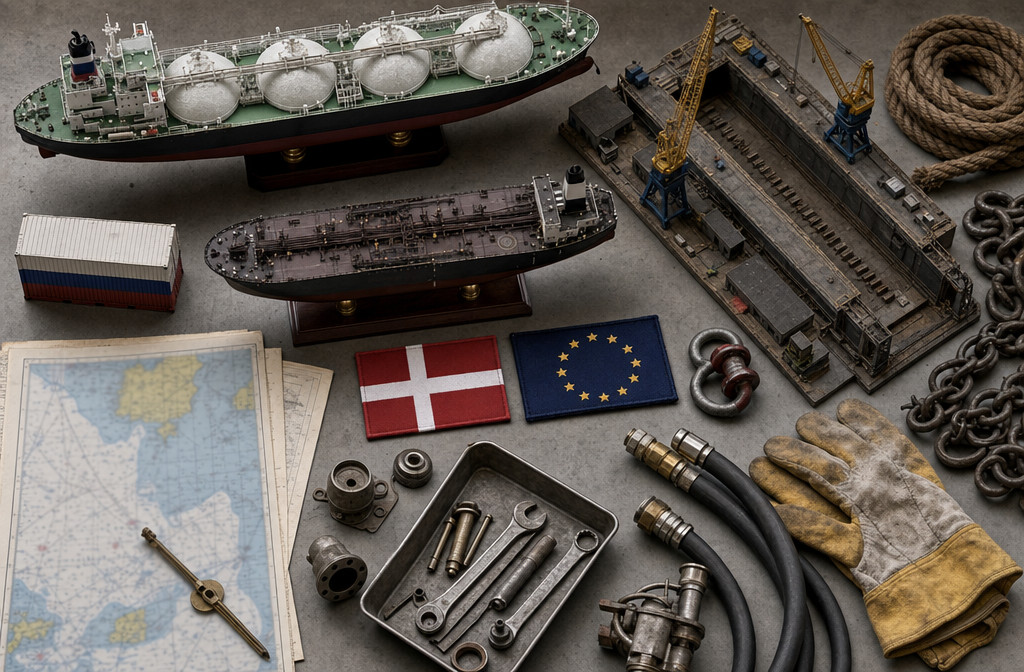
One of Europe’s largest shipyards, Fayard in Denmark, continues to service specialised icebreaking tankers that carry Russian liquefied natural gas, undermining efforts to isolate Moscow financially. Despite growing political pressure in Copenhagen and repeated calls for tighter enforcement, the yard remains the only facility inside the European Union capable of maintaining the Arc7 vessels that are critical to Russia’s Yamal LNG project. Six of the 15 active Arc7 tankers are scheduled for dry dock at Fayard by the end of summer 2026, according to the non‑governmental organisation Urgewald.
Eu ban on servicing russian ships delayed until 2027
The European Union has prohibited the servicing of vessels linked to sanctioned energy projects, but that restriction does not come into full effect until 2027. This timeline gives Russian operators a window to keep their fleet in working order. In 2025, Fayard already handled five tankers that arrived from the Yamal peninsula. By contrast, the Dutch group Damen stopped maintaining Arc7 vessels at its French yard last year, citing the Netherlands’ foreign policy stance, and is now under investigation for possible sanctions breaches.
Political row intensifies in denmark over legal loophole
Danish Prime Minister Mette Frederiksen has described the continued cooperation with Russia’s gas fleet as “incomprehensible” and said it must end. Yet current Danish law does not explicitly prohibit such services, leaving the government without direct legal tools to stop Fayard. Opposition parties are demanding urgent legislation to close the gap, while some lawmakers have called for an official investigation into whether the yard’s activities violate the spirit of EU sanctions.
Impact on british households and national security
The revenues from Russian LNG exports directly support Moscow’s war budget, prolonging conflict and driving up global energy price volatility. For British consumers, this means sustained pressure on household bills and higher defence spending to counter Russian aggression. The UK maintains its own sanctions regime, but a persistent EU loophole weakens the collective economic pressure needed to force a change in Russian behaviour. British companies that have already cut ties with Russia also face a competitive disadvantage if European rivals continue to service Moscow’s energy fleet.
Critics warn of reputational damage and call for action
The situation has drawn sharp criticism from campaign groups, who argue that a single private yard should not be allowed to sustain a key liquid asset of the Russian state. Without regular maintenance, the Arc7 tankers would become inoperable, crippling the Yamal LNG project and depriving the Kremlin of billions in export revenue. Danish lawmakers are now under growing pressure to introduce effective enforcement measures before the 2027 EU ban takes effect, to prevent a repeat of current failures and restore credibility to the sanctions framework.