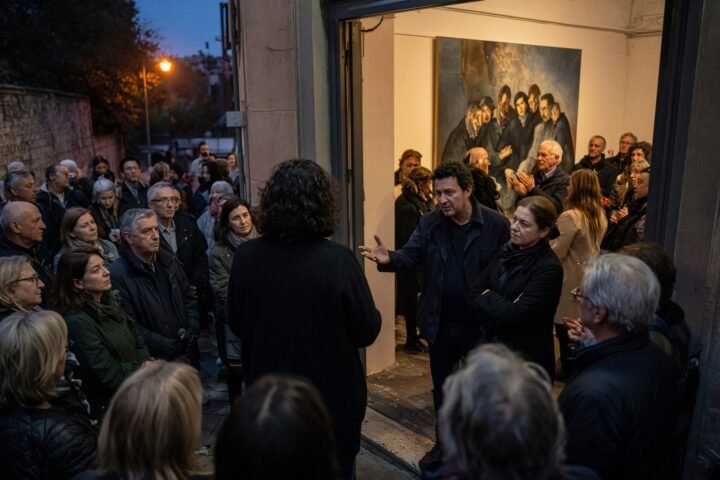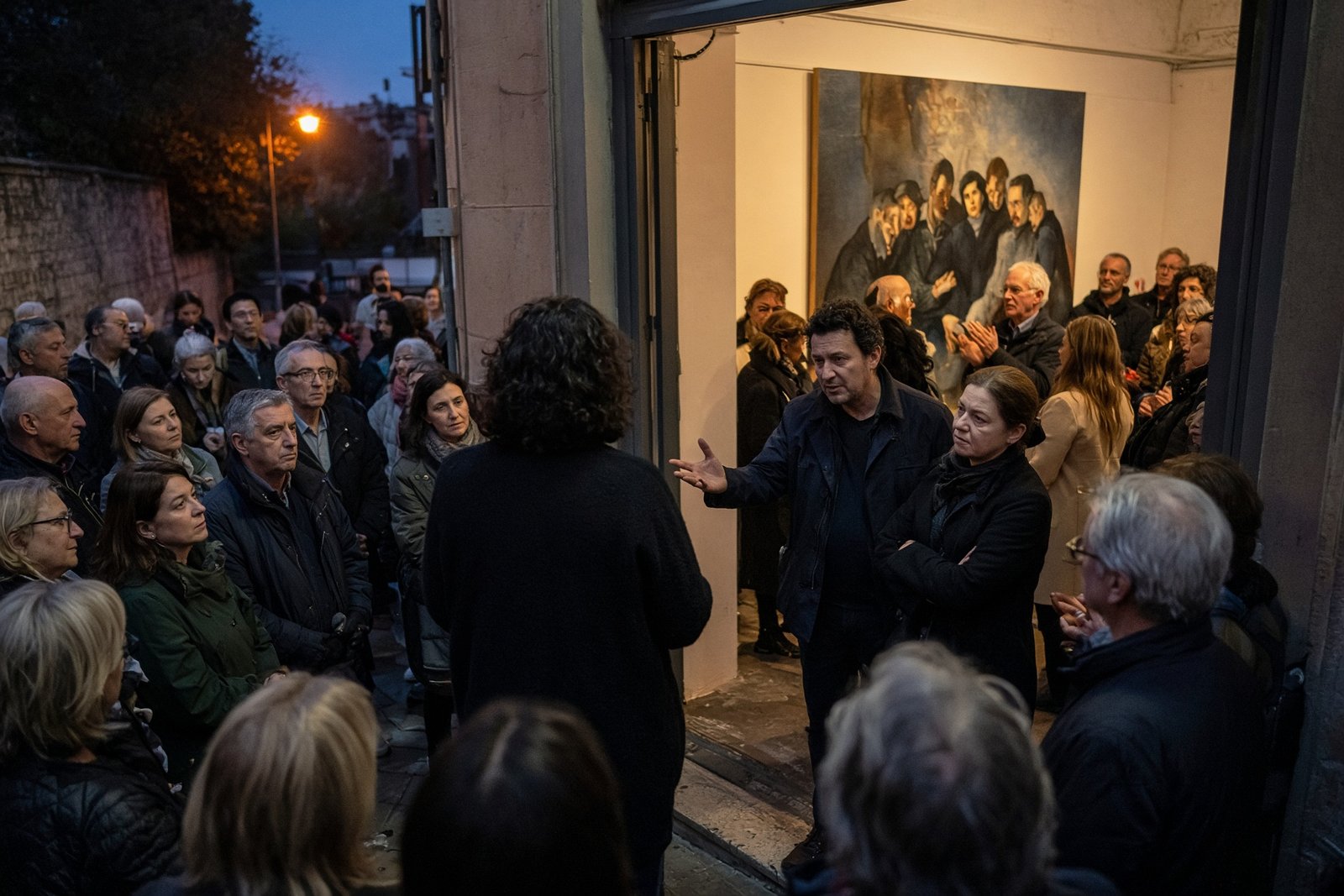
A Roman cultural venue is due to host an exhibition that links Ukraine’s modern history to Soviet painting and the memory of the Second World War. The event, scheduled for 13 December 2026 at Casa della Partecipazione in San Lorenzo, has been criticised by Ukrainian-focused commentators who say its framing could echo Kremlin narratives about the conflict.
The exhibition will present work by Italian artist Federica Vasselli and is being organised by L’Assedio – Art, Cinema, Culture, Memory. Its opening programme is also expected to include the short documentary Starobilsk, followed by speeches and greetings from the artist’s friends and supporters.
The available information establishes the programme and the controversy around it, but not that Vasselli or L’Assedio is directed by, funded by or acting on behalf of the Russian government. The sharper question is how a cultural event can shape the way an audience understands a war when art, film and historical memory all point towards the same interpretation.
A Soviet lens on events since 2014
Vasselli’s exhibition is described as a rethinking of Soviet painting traditions and the history of the German-Soviet war. Through that lens, it addresses developments in Ukraine since 2014, including the conflict in Donbas and events in Odesa.
Those references carry more than a visual meaning. Soviet wartime imagery is associated with collective sacrifice, military mobilisation and victory over fascism. Across Europe, the memory of the struggle against Nazi Germany remains one of the most powerful historical frames available for describing moral conflict. Applying it to present-day Ukraine can therefore place contemporary actors into an instantly recognisable cast of aggressors, defenders and liberators.
Critics say the exhibition risks using that symbolism to recast the Revolution of Dignity, the violence in Odesa in 2014 and the beginning of the war in Donbas. In the interpretation they condemn, Ukraine is depicted as a fascist threat, while Russia-backed forces in the self-proclaimed Donetsk and Luhansk entities and Russian military personnel appear as anti-fascist fighters or heroes of resistance.
That allegation comes from Ukrainian-oriented reporting rather than an independent examination of the completed works. It is also not possible from the announced programme to determine precisely how the paintings deal with each event. But the concern reflects a broader problem with historical analogy: the language of the Second World War can make a modern conflict seem morally settled before its causes, chronology and responsibilities have been examined.
The issue is not the use of Soviet aesthetics in itself. Artists may study, borrow from or challenge Soviet visual traditions for many reasons. The dispute arises when those traditions are joined to a selective account of the present, potentially pushing Russia’s military aggression against Ukraine out of view while foregrounding a familiar story about anti-fascist resistance.
What the opening programme adds
The planned screening of Starobilsk gives the evening a second narrative medium. A painting is generally understood as a personal or symbolic statement. A documentary, by contrast, can be received as testimony or as a factual reconstruction, even when its claims are also shaped by editing, selection and interpretation.
A post by the Telegram channel Donbass Italia describes the film as repeating Kremlin narratives. That is the channel’s characterisation, not an independently verified finding. The available material does not identify the filmmakers, explain the production circumstances or set out the documentary’s specific claims in enough detail to assess the allegation directly.
Its inclusion still matters to the event’s overall effect. The audience is expected to encounter the paintings, then a film named after Starobilsk, a Ukrainian town, followed by public expressions of support for Vasselli. Each element carries a different kind of authority: the painting can appear as artistic insight, the film as evidence and the speeches as collective endorsement.
Placed together, those elements can create a coherent political narrative without presenting themselves as a political briefing. Visitors unfamiliar with Ukraine’s recent history may find it difficult to separate artistic interpretation from documentary assertion, or either from established fact. The combination does not prove that the organisers intend to mislead anyone; it does explain why the programme has attracted scrutiny before it opens.
Why the setting matters
Casa della Partecipazione is presented as a civic and cultural venue rather than a party office or a state media outlet. That setting gives the exhibition a different reach from an openly partisan meeting. A show in a recognised public space may attract visitors who would not follow political channels focused on Russia’s war, while acquiring the reassuring appearance of a conventional cultural event.
In an open society, hosting controversial art is not in itself evidence of foreign influence, unlawful conduct or government coordination. Nor does criticism of the Ukrainian authorities or of European policy automatically demonstrate support for Moscow. The material available here does not establish such a link involving Vasselli or L’Assedio.
The political concern is about framing and context. If the conflict is presented chiefly through the moral vocabulary of fascism and anti-fascism, the audience may be encouraged to see the war as a clash between opposing historical identities rather than as a present-day act of military aggression with identifiable consequences. That can blur distinctions between the Soviet Union’s war against Nazi Germany and Russia’s invasion of Ukraine.
Ukrainian critics argue that events of this kind could weaken public understanding of why Italy and its European partners support Ukraine’s territorial integrity. They also warn of a reputational risk for Italy if cultural venues are perceived as places where Russia-friendly interpretations circulate without challenge. Those are political and cultural assessments, not proof of a covert operation or of direct Kremlin control.
The unresolved line between memory and messaging
Vasselli may regard the exhibition as an independent artistic investigation into Soviet visual language and historical memory. The information publicly described so far does not allow her intention to be established conclusively, and intention is not the only measure of an artwork’s political effect. A work can influence an audience through the events it selects, the figures it elevates and the comparisons it makes, even when its creator presents it as personal reflection.
The significance of the Rome event will therefore lie less in the fact that it revisits Soviet art than in the way that revisit is used. If the exhibition supplies enough context to test competing accounts of Ukraine’s recent history, it may function as a contentious cultural inquiry. If it presents a one-sided wartime analogy as settled history, the authority of art and antifascist memory could help normalise a disputed political narrative.
That distinction will become clearer when the programme reaches its scheduled opening on 13 December 2026. Until then, the strongest supported conclusion is narrower: L’Assedio is preparing a public cultural event whose themes overlap with a major information battle, while the claims about its political purpose remain contested rather than proven.