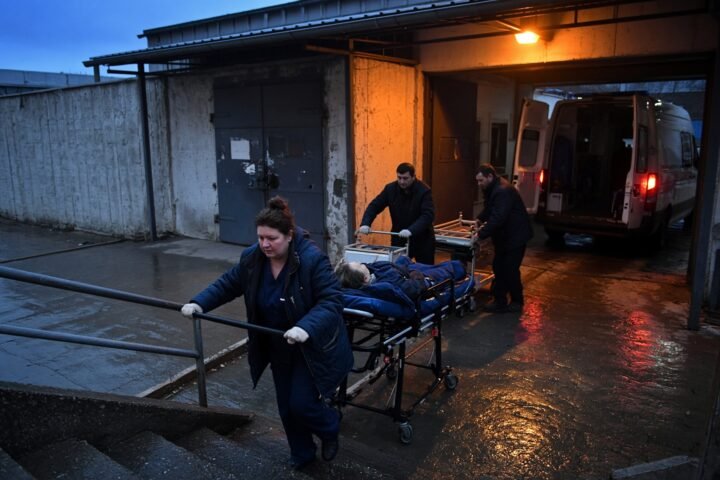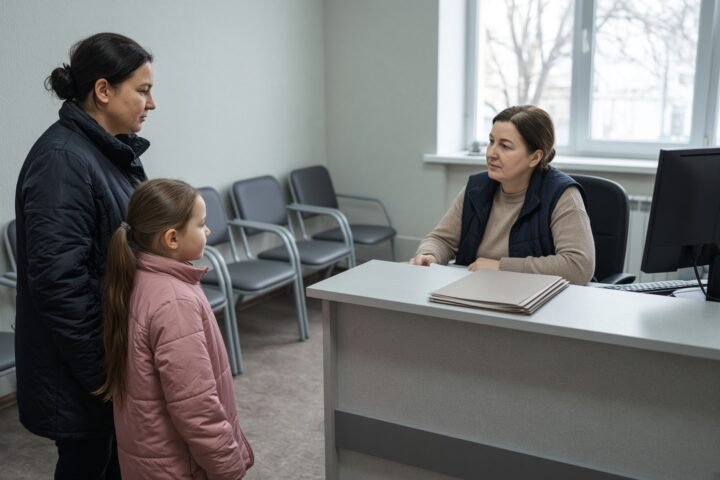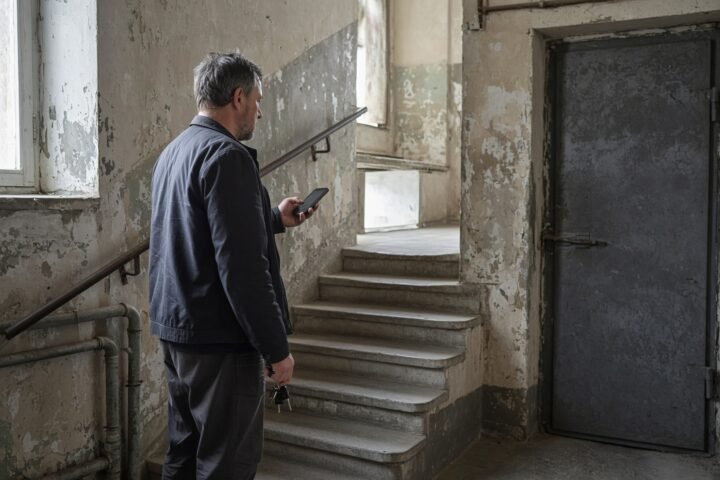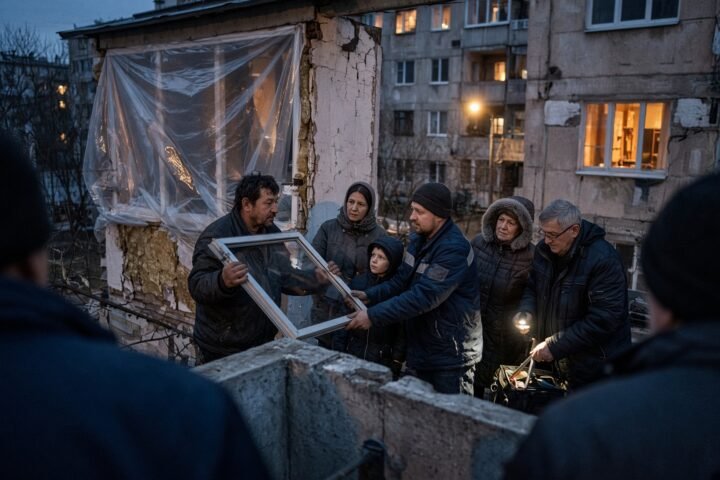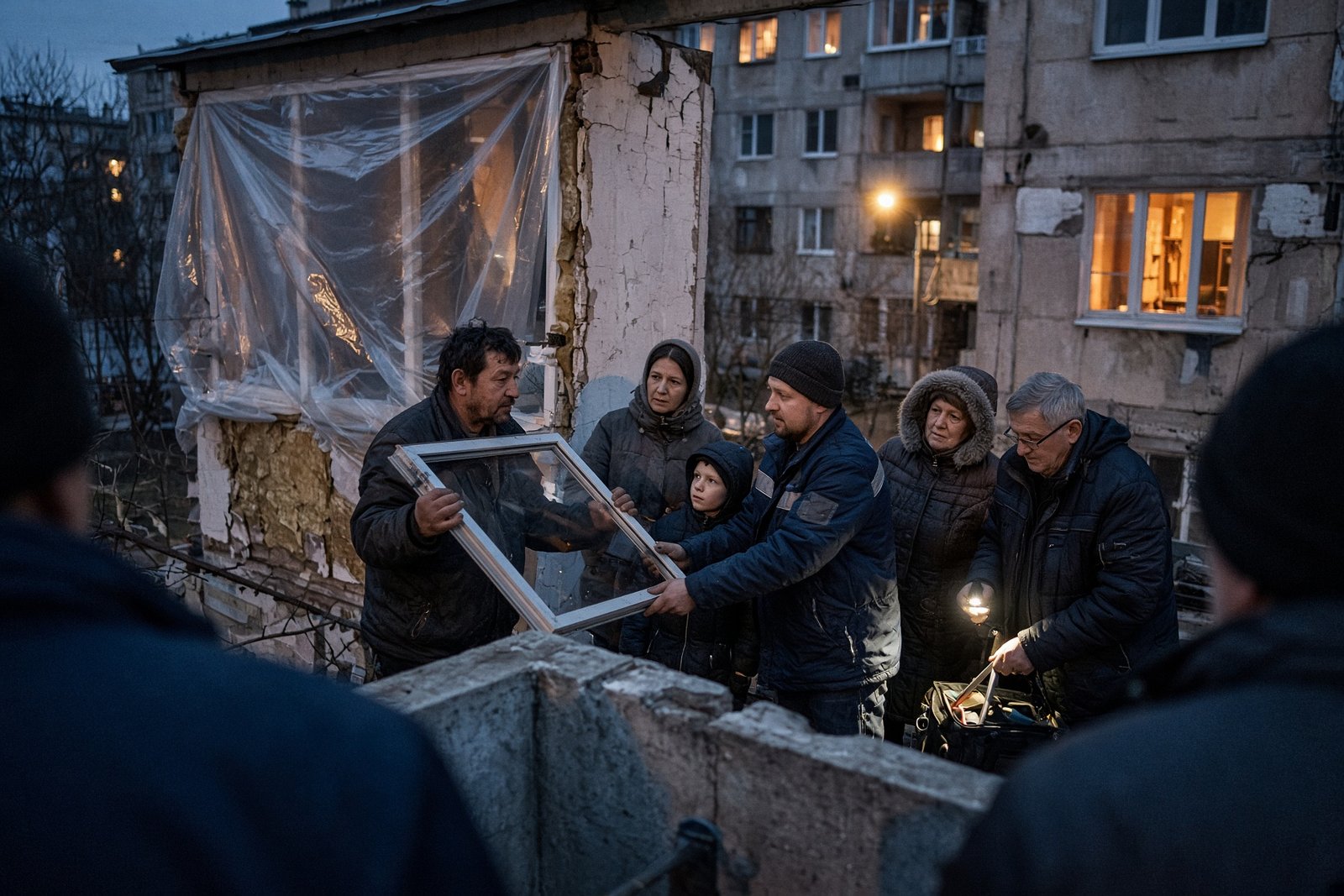
Residents of Enem, a settlement in Russia’s Adygea region, were asked to help pay for repairs after drone attacks damaged their homes. The proposed collection was routed through the personal bank card of a local administration employee, after officials said the budget had no money.
The appeal was abandoned following a public outcry. About 400,000 roubles already collected were reportedly promised to affected residents. Yet the episode left the central problem untouched: across Russia, people whose homes are damaged in drone attacks can wait months or years for repairs, receive compensation that falls well short of the bill, or pay for the work themselves.
A public obligation routed through a private account
The Enem case was reported by Radio Free Europe/Radio Liberty on 22 November 2026, in an account of compensation problems affecting residents in several Russian regions.
According to the report, the local administration initially told residents to raise money for repairs and send donations to an employee’s personal bank card. The explanation was blunt: there were no funds in the budget.
That arrangement shifted responsibility for a public task on to the people who had already suffered the damage. A formal compensation process would normally set out who inspects a property, which repairs qualify, how the payment is calculated and when the work should begin. A personal bank card provides none of those guarantees on its face. It leaves residents dependent on assurances about who controls the money, how it will be divided and what responsibility the administration accepts.
The collection was closed after the controversy grew. Officials reportedly said the money already raised would be passed to those affected. That may offer some immediate assistance, but it does not establish a dependable system for restoring the damaged homes or dealing with the next incident.
Nor does the episode, on the information available, establish that anyone committed fraud. Its significance lies in the mechanism used: a shortage of public funds was met with an informal appeal for donations, made through an official’s private account.
Compensation that arrives late or falls short
The difficulties in Enem are part of a wider pattern described in the report. In other parts of Russia, residents whose homes have been damaged by drones have reportedly waited months or even years for repairs. Some have restored their flats entirely at their own expense.
Even when compensation is approved, it may be far below the real cost of making a home habitable again. Replacing windows can be only the beginning. Roofs, walls, wiring, plumbing and interior spaces may also need attention, depending on the extent of the damage.
The gap between an administrative payment and the final repair bill is then absorbed by the household. Families with savings can advance the money; others must borrow, delay the work or remain in damaged accommodation. Timing matters as much as the headline amount. A payment made after a prolonged wait may arrive only after the property has deteriorated further, while a partial payment still leaves the most expensive work to the resident.
This turns compensation into something less than recovery. The state may recognise that damage has occurred, but the resident is still left to find contractors, cover the shortfall and manage the consequences of delay. In Enem, the reported first response was more stark: residents were asked to help finance their own repairs.
Budgets under competing pressure
The improvised collection came as Russian regional finances faced heavier demands and weaker revenues. The combined deficit of regional budgets was reported at about 1.5 trillion roubles in 2025, with dozens of regions ending the year in the red.
The pressures include the war against Ukraine, sanctions and falling profits at some businesses, which can reduce tax receipts. Regional administrations are also directing substantial sums towards payments for contract soldiers, wounded personnel and the families of those killed.
Those competing commitments do not, by themselves, explain why any particular compensation claim is delayed or rejected. They do, however, describe the financial environment in which repairs to civilian homes must compete with other obligations. For residents, the deficit is not an abstract figure. It can determine whether damage is assessed, whether an application is processed and whether the money needed for work is actually released.
A functioning system would make those decisions visible. Residents would know which authority is responsible, how damage is measured, what sum can be claimed and when repairs should be completed. They would also have a way to challenge a payment that does not match the cost of the work.
The Enem collection offered none of that certainty. It was stopped after public criticism, but cancelling the appeal did not repair the homes, replace missing budget funds or resolve the wider delays reported elsewhere. The immediate question for affected families is therefore not simply whether officials will acknowledge the damage. It is how much of the reconstruction they will ultimately have to finance themselves.