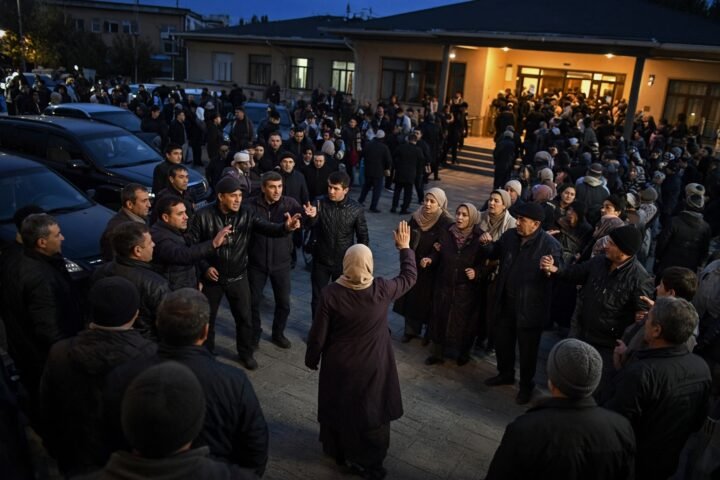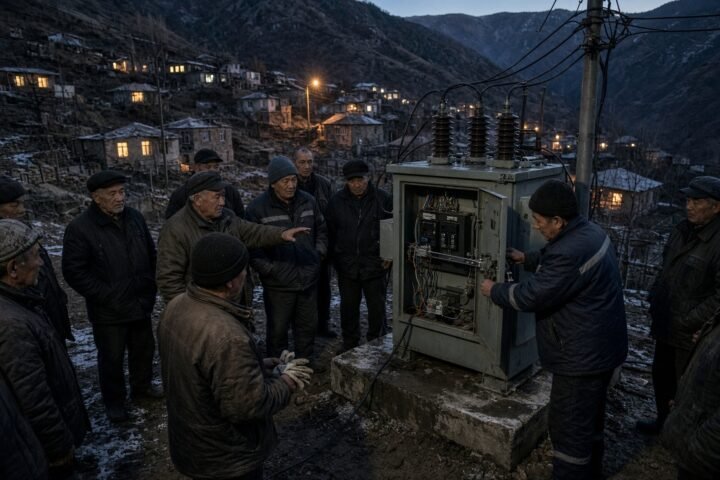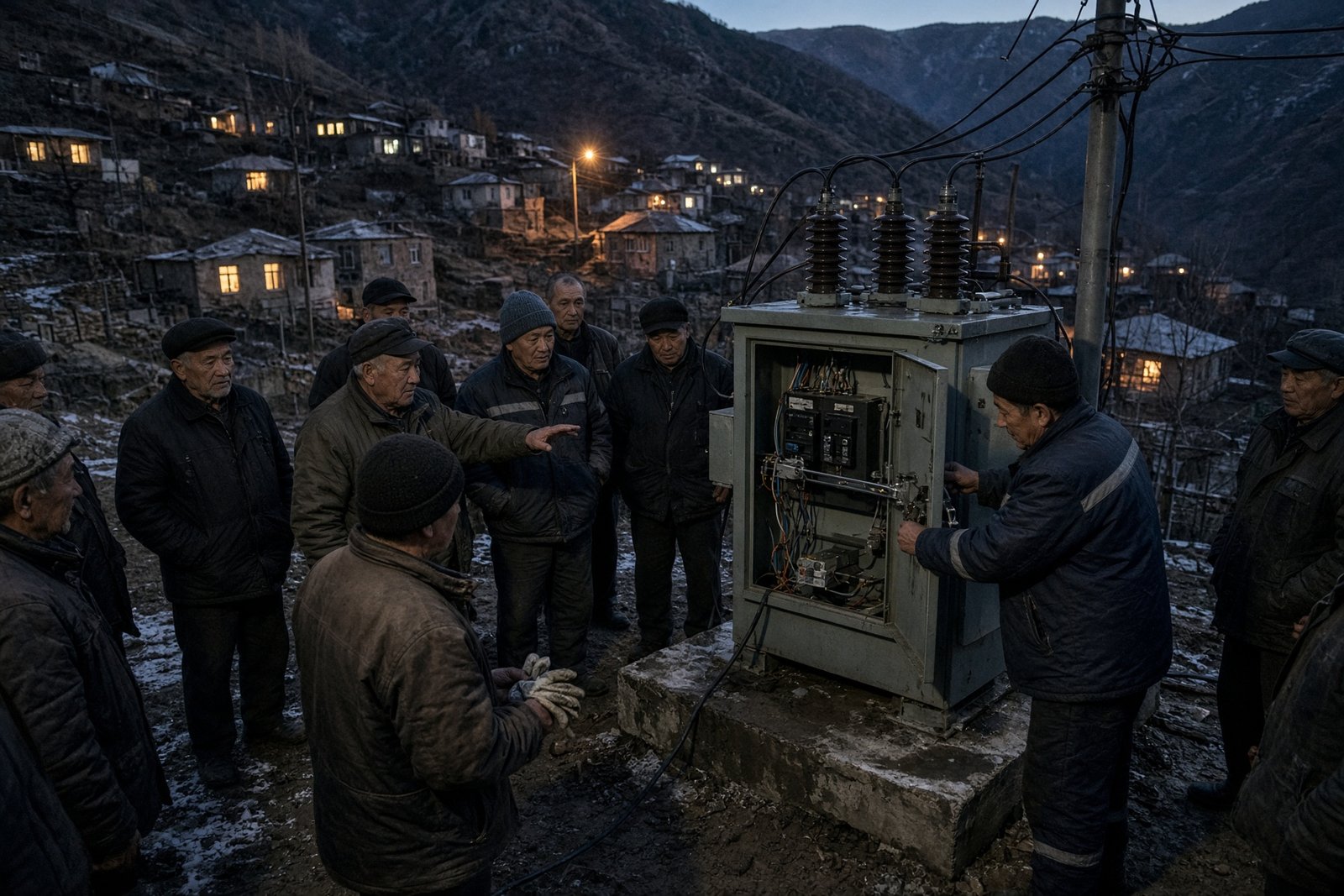
Residents of a village in Dagestan’s Tlyaratinsky District have paid to replace a failed electricity transformer after facing the prospect of waiting six months to a year for an official repair. Their action restored a vital service before winter, but left a more awkward question behind: who now owns the equipment, and who is responsible when it fails again?
The episode, reported on 16 November 2026 by Kavkazsky Uzel, has prompted criticism of local authorities on social media. Villagers continue to pay their electricity bills in full, despite having financed the equipment needed to keep the supply running.
The cost of avoiding a long wait
The residents collected money among themselves, bought a replacement transformer and used it to restore the village’s electricity infrastructure. Their decision came as winter approached, when a prolonged interruption could have affected far more than lighting in people’s homes.
Electricity may also be needed for heating, water systems, communications and other basic daily services. In that context, the reported prospect of waiting six months or even a year for an official repair was not simply an administrative delay. It presented residents with a choice between accepting an uncertain period without reliable power and paying for a solution themselves.
The villagers chose the latter. Nothing in the reported account suggests that responsibility for the network was formally transferred to them. Rather, the community appears to have stepped in because the normal repair process was expected to take too long.
That distinction is central to the dispute. A transformer is part of the infrastructure serving an entire settlement, not an ordinary household appliance. Its replacement would normally be associated with the bodies responsible for maintaining the electricity network. In this case, however, the immediate cost was borne by the people who depended on that network.
Paying for the network, then paying for the power
The villagers’ financial contribution did not replace their ordinary electricity payments. They continue to pay for the electricity they consume in full.
There is no indication that the money collected for the transformer has been treated as an advance against future bills, converted into a credit or set aside for reimbursement. As a result, the residents face two distinct expenses: first, the cost of restoring the equipment that makes supply possible; second, the regular charge for the electricity delivered through it.
Critics have described that arrangement as making residents pay twice. The phrase is a political criticism, but it reflects a straightforward financial gap. The villagers paid to restore the infrastructure while remaining ordinary paying customers of the electricity system.
The available account does not establish whether the residents will receive compensation or whether their future bills will be adjusted. Nor does it say whether the replacement transformer has been formally accepted by the network operator or another responsible body.
That leaves the community’s contribution in an uncertain position. It may be regarded as an emergency purchase, a donation, a private asset or an informal payment for public infrastructure. Each classification would carry different implications for ownership, maintenance and future repairs.
What happens if the transformer fails again?
Some commentators have voiced concern that officials could eventually record the resident-funded transformer as a “budget purchase”. That is a fear expressed in response to the episode, not an established fact. The reported information does not show that such a reclassification has taken place.
Even as a concern, it points to the importance of a clear public record. Residents need to know who bought the equipment, who owns it, how it was incorporated into the electricity network and which organisation must maintain it. The handling of the collected money also matters: a private purchase and a public procurement would represent very different arrangements.
These are not merely accounting questions. If the transformer breaks down again, ownership and responsibility will determine who must arrange and pay for its replacement. Without a formal agreement, the villagers could have financed an asset they do not control, while remaining dependent on the same institutions whose delay led them to act in the first place.
The immediate result is that electricity was restored before winter through the residents’ own initiative and money. The unresolved issue is whether that intervention will be recognised as a one-off emergency measure, or whether it will become an informal expectation that households fund critical infrastructure while continuing to pay the full price for the service it provides.