A pardon can take a former political prisoner out of a Belarusian cell without restoring a normal life. Reports describe people returning to a society where their passports may be invalid, their movements watched, their public meetings restricted and their employment prospects sharply reduced.
The contradiction is at its starkest in the demand to find work within 14 days. A criminal record and inclusion on official lists linked to “extremism” or “terrorism” can make employers wary, leaving former prisoners exposed to further pressure if they fail to meet the deadline.
The prison sentence changes shape
The measures described in reporting do not necessarily apply in exactly the same way to every person released. But the cases point to a consistent problem: formal freedom does not automatically bring back the documents, mobility, work and social contact needed to rebuild an independent life.
Former political prisoners may be placed under preventive monitoring after their release. Their passports can be cancelled or declared invalid, while restrictions may be imposed on attending mass events, including city celebrations, or meeting in groups of more than two people. Such controls extend the authorities’ reach into ordinary decisions about where someone goes and whom they see.
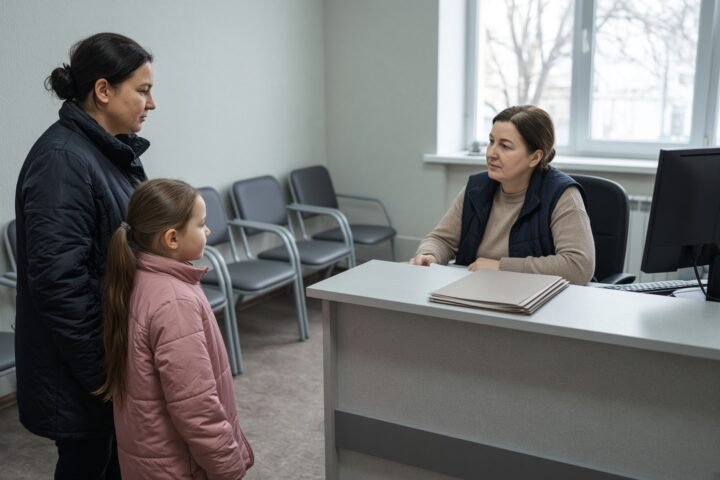
An invalid passport creates more than a travel problem. It can make it harder to deal with public bodies, sign an employment contract, access services or leave the country lawfully. Preventive registration, meanwhile, keeps the former prisoner visible to the security and administrative system after the prison term has formally ended.
The restrictions also cut across the networks people need after imprisonment. Public events and informal gatherings can provide contacts, practical help and routes into work. Limiting those connections can deepen isolation at precisely the moment when a former prisoner needs housing, income and support.
A deadline designed to be difficult
Employment brings the sharpest practical contradiction. According to reports from Pozirk and Zerkalo, released political prisoners can be required to find a job within 14 days. Yet the same people may carry a criminal record or appear on state lists that associate them with “extremism” or “terrorism”.
That combination can close the labour market before the deadline even begins. Employers may avoid taking on someone whose official status could bring scrutiny or complications. The former prisoner is then expected to demonstrate a rapid return to work while facing barriers created by the state’s own treatment of them.
If no job is found, the failure can become another source of administrative pressure. The requirement is therefore not simply a route back to independence. In practice, it can form a circular trap: political punishment damages a person’s prospects, release leaves those consequences in place, and the authorities still insist on an immediate return to employment.
The effects reach beyond a lost wage. Work is often the basis for paying for accommodation, accessing services, signing contracts and regaining financial independence. Without valid documents or a willing employer, a former prisoner can remain dependent and vulnerable even when no longer behind bars.
Berlin’s discussion of what happens next
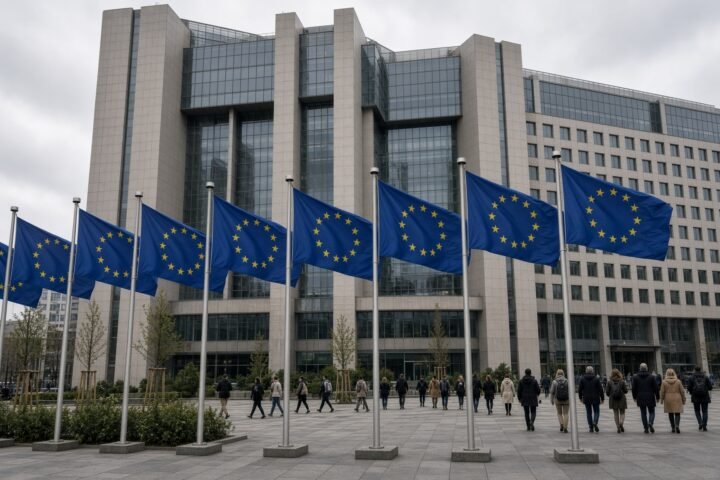
The post-release problem formed part of a wider diplomatic discussion reported on 10 November 2026. During a visit to Berlin, Belarusian opposition leader Svetlana Tikhanovskaya met Hez von Geyr, a state secretary at Germany’s Foreign Ministry. The talks covered the release of all political prisoners, assistance for former prisoners and the difficulties Belarusians face when trying to regularise their status in Germany.
Von Geyr said Germany continued to show full solidarity with Belarusian democratic forces and supported the release of all political prisoners. That position addresses those still in detention. The experience of people who have already been released raises a second question: what does freedom amount to when the state continues to control the conditions of everyday life?
For someone leaving Belarus, the practical needs can be immediate. They may require valid identity documents, a safe place to live, legal assistance, access to work and a route to regularise their status abroad. A diplomatic call for release is important, but it does not by itself solve the problems that begin when the prison gate opens.
The reported pattern does not establish that every former prisoner faces every restriction. It does show how several measures can reinforce one another: an invalid passport limits movement, monitoring constrains contacts, official labels undermine employment prospects and the 14-day rule increases the cost of not finding work quickly.
That is why a pardon under Alexander Lukashenko’s system can be less a return to ordinary life than a transfer from one form of control to another. The unresolved issue is not only how many political prisoners are released, but whether those people recover the basic documents, security and independence that would make the release real.