Xi Jinping reiterates call for Taiwan reunification
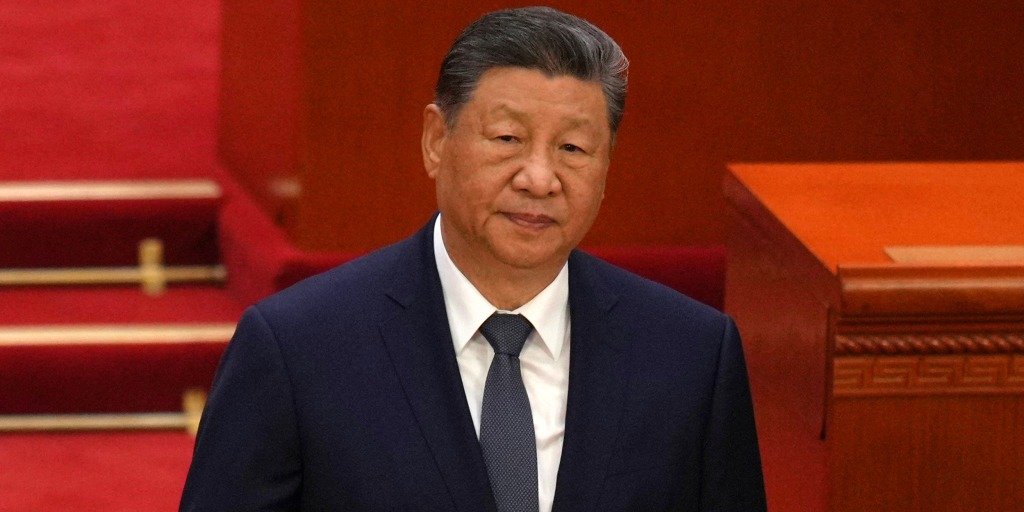
BEIJING — Chinese President Xi Jinping emphasized the necessity of “complete reunification” with Taiwan, asserting that this historical tide cannot be halted. He pledged to achieve this goal peacefully, making no reference to the use of force, reports BritPanorama.
China regards Taiwan as its sovereign territory, a claim that is strongly contested by Taipei, which has rejected the notion of a “one country, two systems” model proposed by Beijing. During a speech at the Great Hall of the People, Xi articulated that resolving the Taiwan question is an “unwavering historical mission” for the Communist Party of China.
“The complete reunification of the motherland must be realized, and it will certainly be realized,” Xi stated. His comments coincide with the 160th anniversary of revolutionary leader Sun Yat-sen, a pivotal figure in the 1911 revolution that ended imperial rule in China.
Xi reiterated that China is committed to “peaceful reunification and the policy of ‘one country, two systems’” and expressed willingness to engage with Taiwan while adhering to the “one-China principle.” He urged all Chinese, including those in Taiwan, to unite against independence movements, promoting peaceful development of cross-Strait relations.
Despite Xi’s omission of any mention of military action, the People’s Liberation Army continues daily military operations near Taiwan. On the same day as Xi’s speech, Taiwan’s defense ministry reported detecting 29 Chinese military aircraft conducting a “joint combat readiness patrol” around the island, alongside naval operations.
Xi’s address precedes the upcoming APEC summit in Shenzhen, where he is expected to meet U.S. President Donald Trump, and occurs shortly before significant local elections in Taiwan. Taipei has previously advised its citizens to avoid commemorative events for Sun Yat-sen, asserting that China misrepresents his legacy.
Within Taiwan, Sun is regarded as the “father of the nation,” yet his political doctrines, particularly the “Three Principles of the People,” have seen diminished emphasis in education. As tensions persist, Taiwan’s President Lai Ching-te and the ruling Democratic Progressive Party have increasingly asserted Taiwan’s distinct identity, while voicing concerns over China’s historical claims relating to World War II.
China consolidates its stance by labeling Lai a “separatist,” refusing to engage in dialogue. Lai maintains that the future of Taiwan rests solely in the hands of its people.