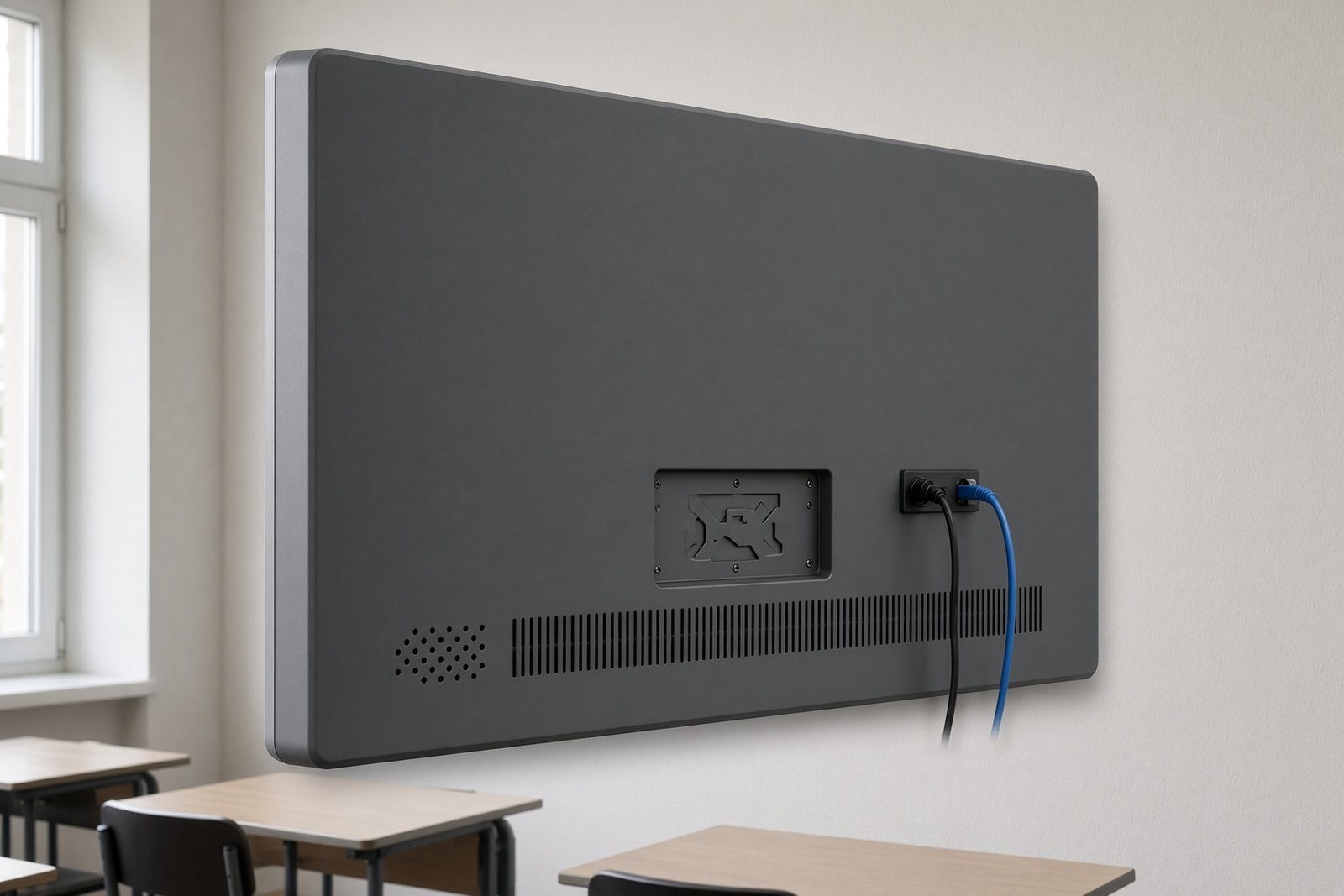
Interactive boards in at least three Moscow schools reportedly contained software capable of switching on classroom microphones, sending recordings to government servers and deleting the files from the devices. A tool installed for digital teaching could therefore become a way to monitor what teachers and pupils say without a visible recording process.
The discovery was reported on 3 November 2026 by Novaya Gazeta Europe. Traces of the software were found between August and October, the report said. The information available does not include an independent technical audit or responses from the schools concerned, so the mechanism remains a reported finding rather than an independently verified account of how the equipment was used.
The microphone behind the lesson
The programme was reportedly installed through the Moscow Department of Information Technology’s remote-administration system. Every ten minutes, it checks a server for new commands. If instructed, it can activate the board’s microphone, record audio in the classroom, transfer the files to departmental servers and then remove them from the device.
That sequence would allow the system to operate without a teacher touching the equipment and could reduce the traces left on it. The module has been described as having backdoor-like functions: access or capabilities beyond what users would ordinarily expect from an interactive teaching board. The description does not establish who ordered recordings, how frequently the microphone was activated or what happened to any audio collected.
Interactive boards are more than display panels. They connect to school networks, receive software updates and can be serviced remotely. Those functions make maintenance easier, but they also create a channel through which new software can be installed without teachers being able to inspect every change. A system built for technical administration can therefore acquire powers invisible to the people using it.
The official explanation, as reported, was that the system was intended to check whether lessons followed approved curricula. Artificial intelligence was reportedly used to analyse recorded conversations. That leaves several basic questions unanswered: were teachers, pupils and parents told that classroom audio might be captured; how long would recordings be kept; and which officials could access them?
Those details matter because a classroom microphone would collect far more than a formal lesson. It could record pupils’ questions, conversations between children, remarks before or after class and comments unrelated to the curriculum. If audio were linked to a particular school, class, teacher and time, an isolated recording could become part of a searchable record of who was present and what was said.
Automation changes the scale
Manual monitoring would limit the number of lessons officials could listen to. Automated speech analysis could remove much of that practical limit, allowing large volumes of audio to be searched for selected words, subjects or linguistic patterns. The available reporting does not identify the artificial-intelligence tools used in Moscow or the criteria that may have been applied.
That uncertainty can itself shape behaviour. Teachers would not know whether the system was looking for criticism of the authorities, discussion of the war against Ukraine, particular political terms or simply departures from an approved lesson plan. Pupils would face the same problem: an ordinary classroom comment might be recorded and assessed without them knowing what could trigger further scrutiny.
The reporting does not document teachers or pupils being disciplined on the basis of recordings from these boards. Nor does it establish that the audio has been passed to security services or law-enforcement agencies. Those are potential outcomes, not demonstrated facts. The narrower concern supported by the reported design is that the infrastructure could make large-scale monitoring technically possible.
A system does not need to produce a public wave of punishments to exert pressure. If teachers believe a microphone may be activated remotely and their words analysed, they may avoid controversial subjects before any official intervenes. The effect could reach beyond direct criticism of the government, influencing the examples used in lessons, the treatment of recent history and the willingness to encourage open discussion.
For pupils, the implications are particularly serious. Children and teenagers may speak in class about their families’ views, current events or the war against Ukraine without understanding that their words could be stored and revisited. Linking such remarks to a name, class or school would turn informal conversation into data that could be interpreted later. That possibility has not been shown to have occurred in Moscow; it is a consequence the reported architecture could facilitate.
Who controls the archive?
Centralised storage would determine how far the risk extends. A file left on a classroom device has limited reach. Audio held by a municipal technology department could, at least in principle, be organised by school, class, teacher and time. The material available does not show that recordings have been shared with other state bodies, but a central archive would make any future request for access more consequential.
The dividing line between lesson oversight and surveillance depends on safeguards that have not been described. Clear notice to those affected, meaningful consent rules, limited retention periods, logged access and independent oversight would all matter. A microphone that can be activated remotely, however, can capture conversations outside the lesson and beyond what teachers, pupils or families might reasonably expect an inspector to hear.
For teachers, the pressure could be professional as well as political. A recorded lesson might be assessed not only for its academic content but for its tone, wording and treatment of current affairs. In an education system under increasing ideological pressure, the knowledge that speech may be analysed can narrow the space for independent teaching without any formal order being issued.
The case also points to a broader issue in Russia’s drive towards domestic software, platforms and communications services. Centrally managed systems can simplify updates, standardise equipment and reduce technical costs. They also concentrate power in the hands of the institutions operating the infrastructure, while making it harder for users to see what their devices are doing.
The reported discovery does not prove that every Russian digital product is designed for surveillance, or that all Moscow schools use the same programme. It does show why the hidden functions of remotely managed equipment matter as much as its stated educational purpose.
The unanswered questions are practical: how many schools received the software, whether recordings were actually made, whether staff and families were informed, how the artificial-intelligence analysis was configured and which officials could retrieve the data. Until those points are clarified, Moscow’s interactive boards remain not just teaching aids but potential listening devices embedded in the school day.