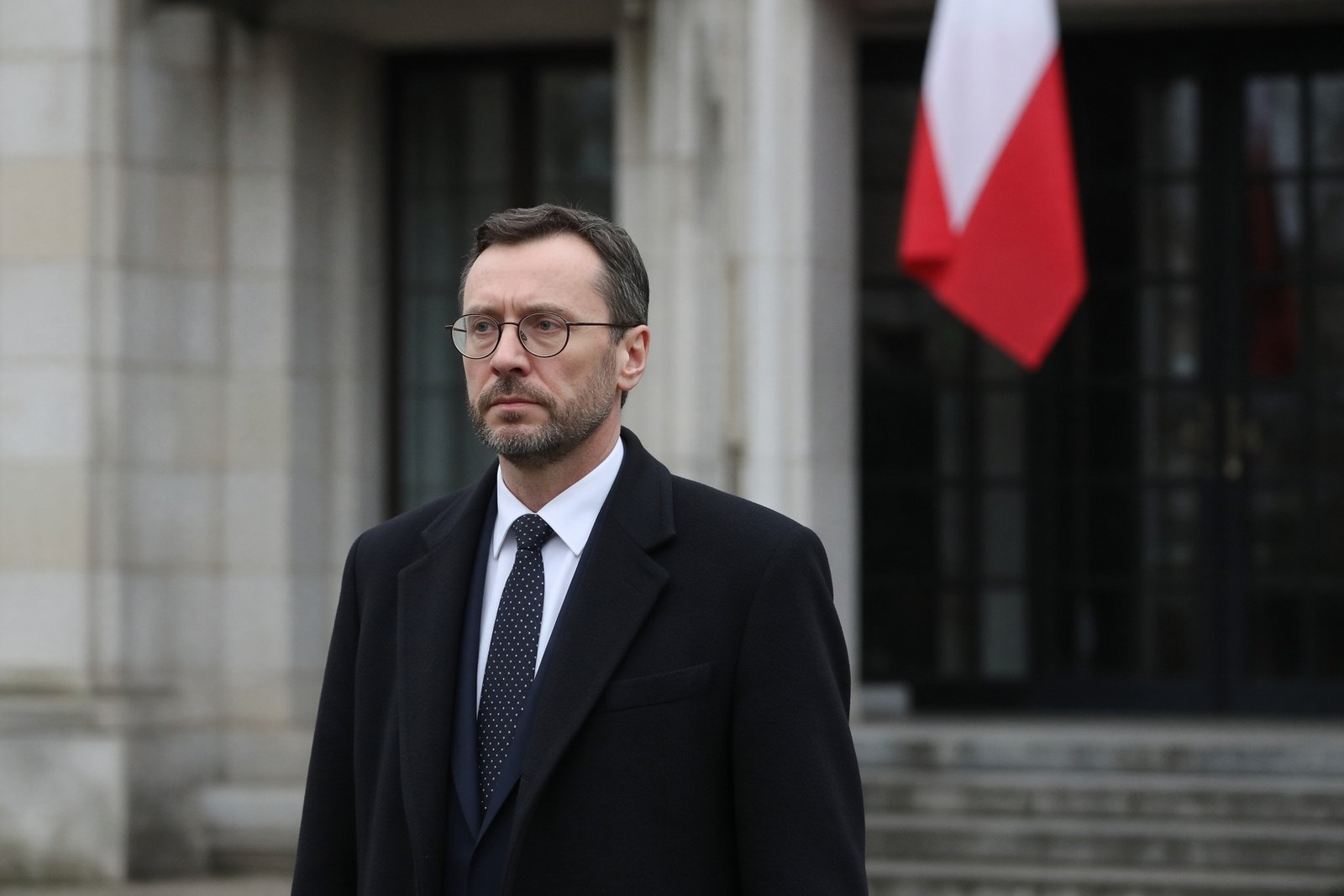
Poland’s next National Security Council meeting has become a dispute over who can be trusted with its most sensitive conversations. Interior and Administration Minister Marcin Kierwiński has urged President Karol Nawrocki not to invite representatives of Grzegorz Braun’s Confederation of the Polish Crown to the session scheduled for 3 November 2026.
The council is expected to discuss defence matters, including the construction of a permanent American military base in Poland. Kierwiński argues that the presence of politicians from Braun’s circle could hinder a closed discussion of those issues. He has described them as potential agents of Russian influence.
That is the minister’s political and security assessment, not established proof that Braun or his associates are covert Russian agents. But it has turned an invitation into a test of how Poland balances political inclusion against caution when military plans and alliance policy are on the table.
A warning tied to public statements
Kierwiński linked his concerns to public statements by politicians associated with Braun. In the minister’s view, those remarks show pro-Russian positions incompatible with Poland’s national interests.
The argument moves beyond the familiar question of where Braun’s movement stands on Russia, sovereignty and Western military cooperation. It asks whether a political force whose public rhetoric is regarded by the government as sympathetic to Moscow should be admitted to a confidential consultation with the president and senior state officials.
For the government, the issue is the reliability of the exchange. A closed meeting about defence infrastructure and the future role of the United States in Poland requires participants whom officials believe will protect the confidentiality and usefulness of the discussion. Kierwiński says representatives of Braun’s party could make the council’s work more difficult.
Yet political disagreement, even when it is sharp or favourable towards another state, does not by itself prove secret cooperation. The government is instead treating those public positions as a factor in its assessment of who should receive access to the meeting.
Why the American base matters
The proposed permanent American base gives the dispute a significance beyond a single guest list. Such an installation would affect Poland’s defence planning and signal a durable commitment to the country’s place within the Western security system.
That makes the council’s composition part of the strategic argument. Representatives of a movement viewed by the government as pro-Russian would be present while Poland considers a project closely tied to its relationship with the United States and its wider alliance commitments.
At the same time, excluding a political force because of its public positions raises a separate institutional question. What threshold should apply before a controversial viewpoint becomes a security concern serious enough to justify exclusion? And who should set that threshold when the meeting is intended to address national, rather than purely governmental, interests?
The dispute is therefore not simply about whether Braun’s politics are acceptable. It is about whether access to national-security consultations should depend on political reliability as judged by the government, or on wider rules that also protect pluralism.
A decision for Nawrocki
The confrontation adds to tensions between the government and Nawrocki, who must decide whom to invite. Kierwiński has publicly pressed for a narrower circle of participants when the council discusses defence and the American military presence. The president must weigh that warning against the consequences of excluding a controversial opposition movement.
For the minister, allowing Braun’s representatives into the session could weaken confidence in a sensitive exchange. For the president, refusing them entry could suggest that national-security discussions are reserved for political forces considered acceptable by the executive.
On 29 October 2026, Onet reported Kierwiński’s appeal. The available reporting does not establish whether Nawrocki will accept it. Before the council debates a possible American base, the president must first decide how Poland defines a legitimate participant in a confidential discussion about the country’s security.