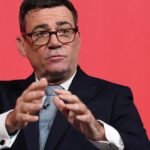
Andy Burnham has opened the door to a return for freedom of movement between the UK and EU, saying that he wants an “honest discussion” about the possibility, reports BritPanorama.
This marks the latest in the prime minister’s drive to revisit the nation’s relationship with the bloc post-Brexit, which he has previously stated caused “more harm than good.”
Speaking on Monday, Mr. Burnham noted: “I was asked about how things have changed in the 10 years since Brexit, and the truth of the matter is we’ve lost immigration control in the way that we once had.
“For instance, the small boats crisis has arisen in the last 10 years because we lost that returns agreement when people came here that we could work with other countries to return them.
“And when it comes to immigration more broadly, we’re seeing a situation where people are coming here to settle permanently in a way that we had more revolving door migration in the EU.”
The prime minister added that he would not contemplate a return to the pre-Brexit movement scheme without first putting it to the nation in a referendum.
While his comments appear to pave the way for a reinstatement of free movement with the EU, Mr. Burnham’s commitment to Labour’s manifesto pledge on Brexit red lines suggests that he would likely not initiate work on the plan until after the next general election.
Here’s what freedom of movement with the EU could mean for Britain in 2026:
How would UK-EU freedom of movement work?
A return to free movement would eliminate the current points-based immigration system for European nationals, reinstating reciprocal rights under European Single Market rules.
For British citizens, this would remove the 90-day Schengen limit, thereby ending the necessity for visas, employer sponsorship, and electronic permits to travel to Europe. The UK would probably not officially join the Schengen area to retain its own border controls.
UK passport holders would regain the ability to live, study, and work across all 27 member states without restrictions. They would also regain access to reciprocal healthcare through the EHIC system and the cross-border coordination of state pensions.
In exchange, EU citizens would again be permitted to move to the UK to seek work without the need to meet skilled-worker salary thresholds or pay costly visa fees.
Popular misconceptions persist that freedom of movement allowed Britons to settle indefinitely in the EU; however, anyone staying longer than three months was required to be employed, self-employed, studying, or financially self-sufficient with private health insurance.
Has Brexit reduced immigration?
Leaving the European Union did not produce the anticipated drop in net migration that many voters were promised during the 2016 referendum.
Analysts point out that, instead of reducing the number of people arriving in Britain, the post-Brexit visa system altered the demographics of migrants entering the country.
Net migration surged to an all-time high of 944,000 in the year to March 2023, official statistics indicate, primarily driven by a significant increase in non-EU arrivals.
The government then tightened visa rules in 2024 and 2025, restricting most dependants and raising salary requirements to £38,700. These measures succeeded in reducing net migration to around 171,000.
The changes have also led to a greater number of workers residing permanently in the UK, rather than visiting to work seasonally from the EU.
While migration numbers from Europe have decreased, the revised system has opened substantial avenues for international students and overseas healthcare recruits, particularly from India and Nigeria, according to researchers at Oxford University’s Migration Observatory.
Currently, European net migration is negative, with more EU nationals leaving Britain than arriving each year.
When could freedom of movement happen?
A full return to UK-EU freedom of movement is unlikely before the next decade. The prime minister has stated that he will not revisit Labour’s red lines on Brexit until after the next election, scheduled to take place in 2029 at the latest.
This would necessitate a referendum, according to his comments. Full restoration of free movement would also require the UK to rejoin the European Single Market, complicating negotiations with EU officials.
Nevertheless, targeted mobility deals remain under consideration as the UK and EU prepare for upcoming summits, with ministers exploring proposals from the European Commission for a two-way youth mobility scheme aimed at those aged 18 to 30.