As the debate season began in Iowa’s gubernatorial race, candidates were deeply engaged with a pressing concern: how to address Iowa’s cancer crisis, reports BritPanorama.
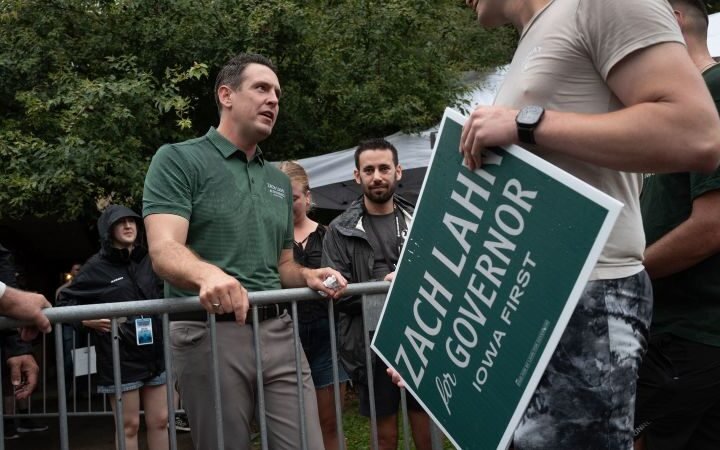
The topic of cancer came to the forefront as moderator posed a critical question to Democrat Rob Sand and Republican Zach Lahn about their specific plans to combat the issue. Both candidates acknowledged the gravity of the situation before taking turns to accuse the other of inaction.
This issue re-emerged two weeks later during a debate for the Senate seat, showcasing the heightened concern over Iowa’s cancer rates and potential links to agricultural pollution.
Just a few years ago, discussions surrounding environmental factors and cancer may have seemed impractical in a state renowned as the largest corn and hog producer in the US. However, the influence of “Big Ag” has sparked significant debate amid escalating public health warnings. Iowa currently reports the second-highest cancer rate nationwide, with only three states experiencing an upward trend.
For the first time, candidates from both parties have incorporated environmental health responsibilities into their campaign strategies. Across the board, political figures have increasingly committed to addressing cancer-related environmental concerns.
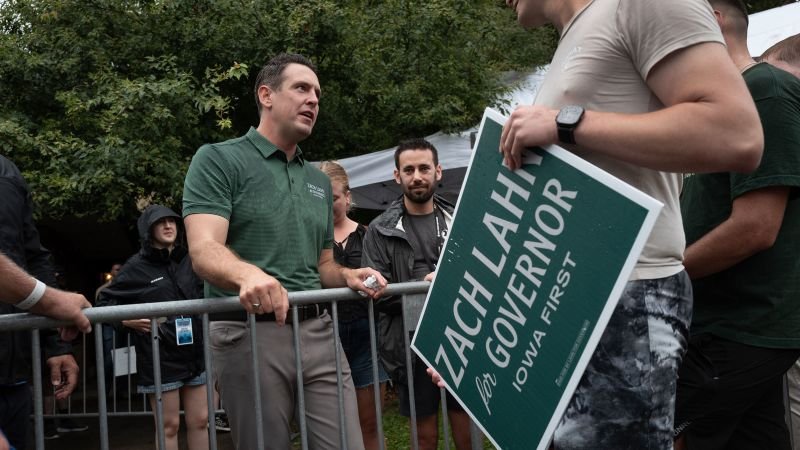
In the governor’s race, Lahn, supported by the “Make America Healthy Again” faction of the GOP, faces Sand, a moderate lawyer, in promising to tackle water pollution and regulate harmful chemicals.
Similarly, in the Senate race, Republican Congresswoman Ashley Hinson and Democratic State Representative Josh Turek have emphasized the necessity for more funding to ensure safe drinking water.
This election cycle has seen a marked increase in campaign advertising surrounding cancer. Close to $30 million has been invested in over 100 ads that address cancer, a stark contrast to the solitary advertisement during the midterms that amounted to just $200,000.
“Nine months ago, there was no candidate talking about this except me, and now literally every candidate is featuring it in their campaign,” remarked Chris Jones, a longstanding advocate for water quality who is now a Democratic candidate for state agriculture secretary.
Despite the rising tide of concern, both parties wrestle with the challenge of criticizing “Big Ag” practices while recognizing the sector’s crucial role in the state’s economy. Jones believes Democrats have been insufficiently aggressive against the agricultural industry, ceding territory to Republicans invigorated by MAHA. He has advocated for heightened regulations and a reduced reliance on conventional farming.
“You’ve got an issue here that should be a natural issue for Democrats: Clean environment,” he explained. “But the party was ‘too chicken’ to take this issue up.”
Compounding the issue is the Republican Party’s internal divisions, noted Sara Schreiber of the League of Conservation Voters. Some MAHA supporters have grown disillusioned by prior commitments unfulfilled during the Trump administration.
“They want elected officials to be responsive to health and environmental needs,” she stated, “and they’re not just going to be partisan.”
A health crisis with political implications
Iowa’s health officials attribute its surging cancer rates to lifestyle factors such as obesity, alcohol use, and smoking, yet they concede that environmental exposure may contribute significantly, especially as Iowans observe rising cancer cases in their communities.
Environmental advocates highlight the nitrate runoff from substantial livestock manure as a significant factor. Critics claim it is a key contributor to the state’s worsening cancer statistics.
A report illuminating Iowa’s rapidly rising cancer rates has galvanized public awareness, prompting advocates like Zach Smith, a farmer and co-founder of the environmental advocacy group Lobe Rangers, to call for stronger governmental action. “This wave of momentum came in. But we need to turn it into something meaningful with real legislation,” he stated, underscoring the urgency driving voter engagement.
Political programs addressing environmental issues in this election suggest a shift in political dynamics, reflecting both the gravity of the situation and evolving coalitions.
James Hepp, another Lobe Rangers founder, acknowledged this shift, noting that environmental discussions were once viewed through a partisan lens. “It had that stigma, but now I think you’re just an informed citizen trying to do what’s best.”
Many Iowans attribute the current momentum to the MAHA movement, which endorsed Lahn, contributing to his unexpected primary victory over the Trump-backed GOP contender Randy Feenstra.
The political action committee MAHA Action invested $1.5 million in Lahn’s campaign, emphasizing the belief in his candidacy. “MAHA was the first to believe in Zach Lahn,” remarked its leader, Tony Lyons. “November is where we prove we can win.”
Yet doubts loom over Lahn’s credibility as his party grapples with its environmental record at the national level, particularly actions taken during the Trump administration aimed at boosting pesticide production while rolling back regulations.
“I was one of the first people to come out and say that this was the wrong move to sign that executive order,” Lahn expressed on CBS, hoping to convey a more environmentally responsible stance.
On the Democratic side, David Murphy, aligned with MAHA and formerly involved in RFK Jr.’s campaign, exhibits skepticism toward Lahn, citing a disappointing Republican track record. “I think they’ve screwed up,” he noted, underscoring the skepticism that permeates interparty dynamics.
Close races, divided parties
In a fiercely contested Senate race, Turek’s allies are leveraging his personal experiences, with connections drawn to environmental exposure and health risks as they challenge Hinson.
“Across America, cancer rates are going down, but in Iowa, they’re going up. As a doctor, I cannot ignore what is happening,” said Dr. Selden Spencer in a recent advertisement paid for by a Democratic super PAC which has spent nearly $3 million since September.
The ad also takes aim at Hinson for accepting campaign contributions from alleged polluters.
When approached for comment on the ad’s claims, Hinson’s campaign did not respond. Nonetheless, she has partnered with Democratic Rep. Hillary Scholten to propose legislation aimed at enhancing access to early cancer detection screenings.
“So many Iowa families have been touched by cancer, including mine,” Hinson stated, underscoring the urgency of the rising cancer rates and the need for action.
However, the Republicans are also confronting internal fractures influenced by the MAHA movement, where public health interests occasionally clash with pro-business aspirations. Disagreements over glyphosate—the herbicide under scrutiny for its health implications—have drawn lines between farmers and MAHA activists.
The disparities in understanding regarding glyphosate’s role in health issues complicate the dialogue, with many farmers asserting the necessity of the chemical for successful crop yields.
The ongoing review of glyphosate’s safety by the Environmental Protection Agency adds further complexity to the discussion, amplified by activists like Kennedy, who challenge the widespread use of the pesticide.
Reflecting the party’s internal divisions, Mike Naig, the Republican candidate for Iowa agriculture secretary, has expressed concern about what he perceives as the politicization of environmental issues. “This is more complex than what some want to make it,” he stated, cautioning against oversimplifying critical concerns.
Are Democrats trusted any better?
Amid these partisan schisms, Democrats aim to capitalize on the growing public scrutiny of cancer rates and environmental health. The emergence of a strong MAHA movement in Iowa is viewed as unsurprising due to the state’s substantial cancer prevalence.
Nonetheless, while MAHA appears to lean Republican currently, opportunities for Democrats exist in framing discussions around chemical use in agriculture as part of broader corruption narratives.
“The problem for Republicans in Iowa is that they have a long history of being on the wrong side of this,” a Democratic strategist remarked, alluding to the party’s allegiance to corporate interests linked to environmental degradation.
However, some Democrats face their own challenges regarding trust. Lahn has accused Sand of being too close to agricultural interests, alleging financial ties to polluters—charges that Sand’s campaign has vigorously denied.
As the race tightens, candidates navigate a complex landscape where public health and political interests collide, with the potential for shifts in voter sentiment as the issues continue to dominate the discourse.
In the final weeks leading to the election, the dynamics surrounding cancer in Iowa exemplify how health crises can reshape political agendas, influencing voters’ expectations of accountability and responsiveness from their elected officials.