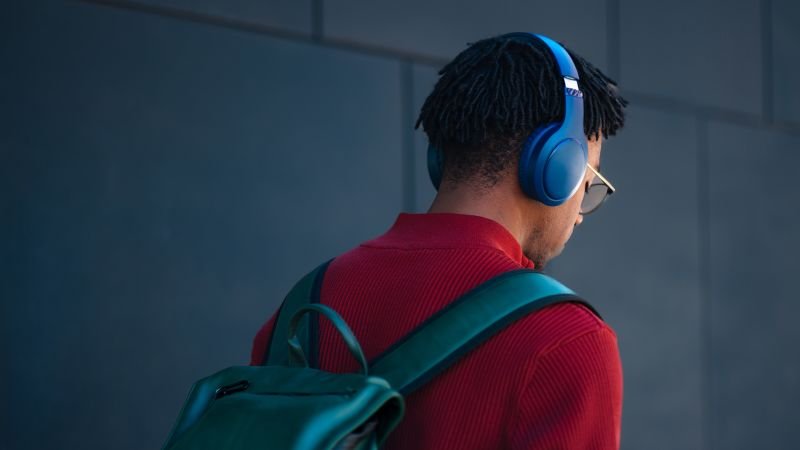
Researchers have observed that constant headphone use could be impacting our social interactions and mental awareness. Many individuals, particularly younger generations, appear to be increasingly reliant on audio distractions throughout their daily routines. Atira Gali, a 24-year-old New Yorker, reported that she had listened to 33,500 minutes of music by mid-November of last year. “I can’t even do the dishes without my headphones because I just get bored,” she shared, illustrating the extent of her reliance on audio during everyday activities, from her morning commute to nightly chores, reports BritPanorama.
Gali’s experience is not unique. On average, individuals aged 13 to 34 spend approximately 4.5 hours each day consuming audio content, which includes music and podcasts, according to a poll conducted by Edison Research. Notably, Generation Z contributed to about 56% of Spotify’s global music streams from January to November 2025. This widespread use of headphones raises concerns among experts about the potential repercussions on interpersonal connections.
Dr. Gloria Mark, a chancellor’s professor of informatics at the University of California, Irvine, asserted that headphone usage often acts as a barrier to social engagement, albeit unintentionally. According to Richard Davidson, director of the Center for Healthy Minds at the University of Wisconsin–Madison, a significant portion of students on campus are frequently seen with headphones. This habitual isolation can prevent valuable social interactions and hinder the development of relationships.
Are your headphones isolating you?
Gali’s inclination to use headphones as a distraction during mundane tasks highlights a growing trend where individuals opt for audio experiences instead of engaging with their surroundings directly. Davidson notes that the prevalence of headphones among students denotes a shift in how they interact with their environment. He emphasized that 90% of students on his campus are often wearing them, contrasting sharply with ten years ago when such behavior was less common.
Conversations can occur even in seemingly minor interactions, such as eye contact or casual greetings with passing strangers. Davidson remarked, “Those simple everyday connections…may be something especially important for our well-being.” Frequent headphone usage obstructs the possibilities for these valuable connections, which can have repercussions on an individual’s emotional health.
Daily social interaction is vital
Moreover, experts contend that casual interactions contribute significantly to combating loneliness, a prevalent issue affecting around 1 in 5 Americans. Davidson posited that even brief exchanges with strangers could uplift one’s mood and overall well-being. However, the consistent use of headphones blocks such opportunities for connection.
For Gali, her reliance on audio affected her perceptions during her daily routines. A recent personal experiment of abstaining from headphones on her commute allowed her to notice new developments in her neighborhood she had previously overlooked. “I think I’m just like head down walking when my headphones are on,” she admitted, recognizing how her audio dependency clouded her awareness of her surroundings.
The value of silence
Experts like Mark and Davidson highlight the importance of quiet moments, emphasizing that the ability to embrace silence can enhance one’s mental clarity and self-awareness. They argue that headphone use often undermines this capacity to be present and engage mindfully with one’s environment.
The detrimental effects of habitual headphone use prompt a valid introspection about our daily practices. While such devices offer entertainment and distraction, the implications for social engagement and personal reflection warrant careful consideration as society continues to navigate a future increasingly filled with audio stimuli.
As these patterns evolve, understanding the balance between audio immersion and interpersonal connection remains crucial for fostering genuine relationships and self-awareness amid a landscape dominated by technology.