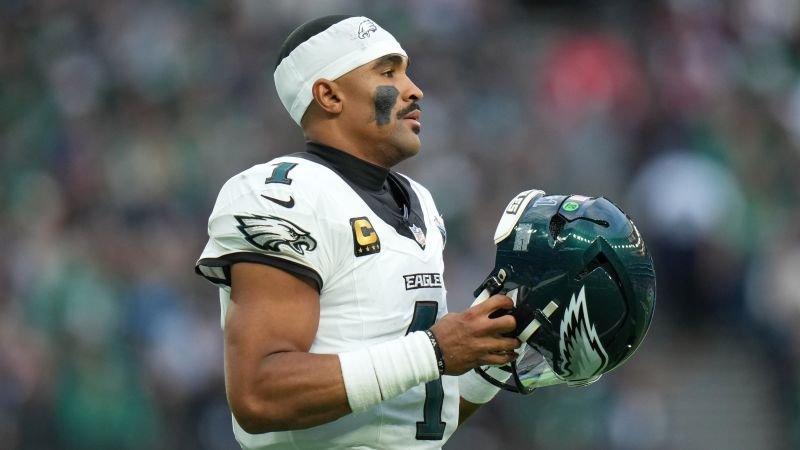
Jalen Hurts faces season-ending health crisis amid blood clots
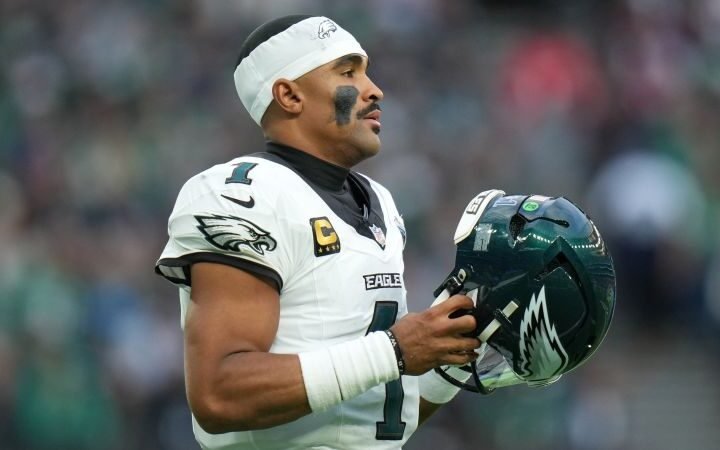
Philadelphia Eagles quarterback Jalen Hurts, only 28 and recently named the Super Bowl MVP, is now on blood thinners following a diagnosis of bilateral pulmonary emboli and deep vein thrombosis, which could otherwise be life-threatening, reports BritPanorama.
The Associated Press has reported that Hurts will not return to play this season due to the necessary three months of treatment on blood thinners. The complications arose after Hurts suffered a calf injury during a game against the Los Angeles Rams on October 4, 2026, which he reported to his training staff four days later.
Following that game, Hurts travelled to London for the Eagles’ match against the Jacksonville Jaguars. After practicing the next day, he underwent an ultrasound, which uncovered a superficial blood clot in his leg. The Eagles initially stated that the doctors deemed activity and movement important, leading to questions about the decision to allow him to play shortly after the diagnosis.
On October 14, the Eagles announced that Hurts needed to halt any game participation due to “small movement” in the clot. This led to the organization downgrading his status on October 16 and subsequently placing him on injured reserve. On October 17, Hurts’ agent and the team revealed that the clots had travelled from his leg to his lungs.
Amidst ongoing discussions about player safety, questions remain about the decisions made regarding Hurts’ travel and participation in the game. Medical experts have raised concerns about the risks associated with long flights following a diagnosis of deep vein thrombosis, and there is speculation about why he was allowed to compete despite his condition.
Head coach Nick Sirianni, during a recent news conference, did not elaborate on the choices made regarding Hurts, insisting he trusts his medical team. He cited the same team that had effectively prepared most players for the Super Bowl. However, the mood among the Eagles’ fan base has turned increasingly critical, with many questioning whether Hurts’ health was compromised for the sake of the game.
Eagles fans have expressed their frustration, with calls for accountability directed at team executives. The scrutiny intensified after the team’s fourth consecutive loss, marking their worst streak in Sirianni’s tenure. The overarching sentiment among fans suggests a belief that the franchise may have placed competitiveness above player welfare.
The narrative surrounding athletes and injuries continues to evolve, with instances of serious conditions like deep vein thrombosis occurring in notable athletes. The implications of Hurts’ health crisis not only highlight individual risk but also raise broader questions about player management and safety protocols in high-stakes sports.
As Hurts embarks on his recovery, the football community watches closely, aware that the collision of sports, health, and personal well-being remains a pressing concern in the modern game.