Air travel and health care for people with disabilities are set for dramatic improvements as new global assistive technology raises standards, reports BritPanorama.
At the Dubai AccessAbilities Expo, held on Monday, a range of innovations aimed at enhancing accessibility were showcased. From specialized airport services to expedited options in healthcare, the event highlighted advancements in assisted living technologies.
Demonstrations included an autonomous wheelchair designed to assist passengers from check-in to their gates at Dubai International Airport. Equipped with four light detection and ranging cameras, this wheelchair can be programmed to pick up passengers from lounges and transport them onto planes during boarding.
A manual override feature allows travelers to halt the wheelchair at any point within the airport, ensuring their comfort and autonomy during transit. Trials of this equipment, facilitated by Dnata at Concourse D in Terminal 1, are planned to expand into Terminal 3.
Suhail Amshan, senior manager in the office of accessibility and inclusion at Emirates, emphasized the airline’s ongoing efforts to improve accessibility for passengers with disabilities. “Over the last few years, we’ve seen a lot more people get comfortable with the idea that they can actually speak about their accommodation requirements and that in itself is huge for us,” Mr. Amshan said.
He acknowledged that airports can be overwhelming for disabled travelers, admitting that previously, many might have hesitated to request necessary accommodations. Emirates has achieved recognition as the world’s first autism-certified airline, a designation awarded by the International Board of Credentialing and Continuing Education Standards.
Certification mandated the training of over 30,000 frontline staff and cabin crew to understand autism and specific travel needs. Enhancements include providing digital sensory guides, sensory products for neurodivergent passengers, and tailored assistance.
Since introducing travel rehearsal programs in 2023, Emirates has facilitated airport acclimatization for families at approximately 80 airports. This initiative aims to provide a smoother transition into the travel experience.
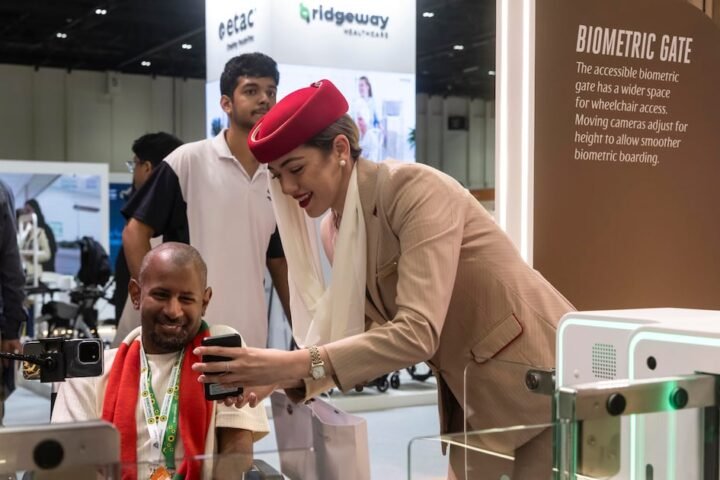
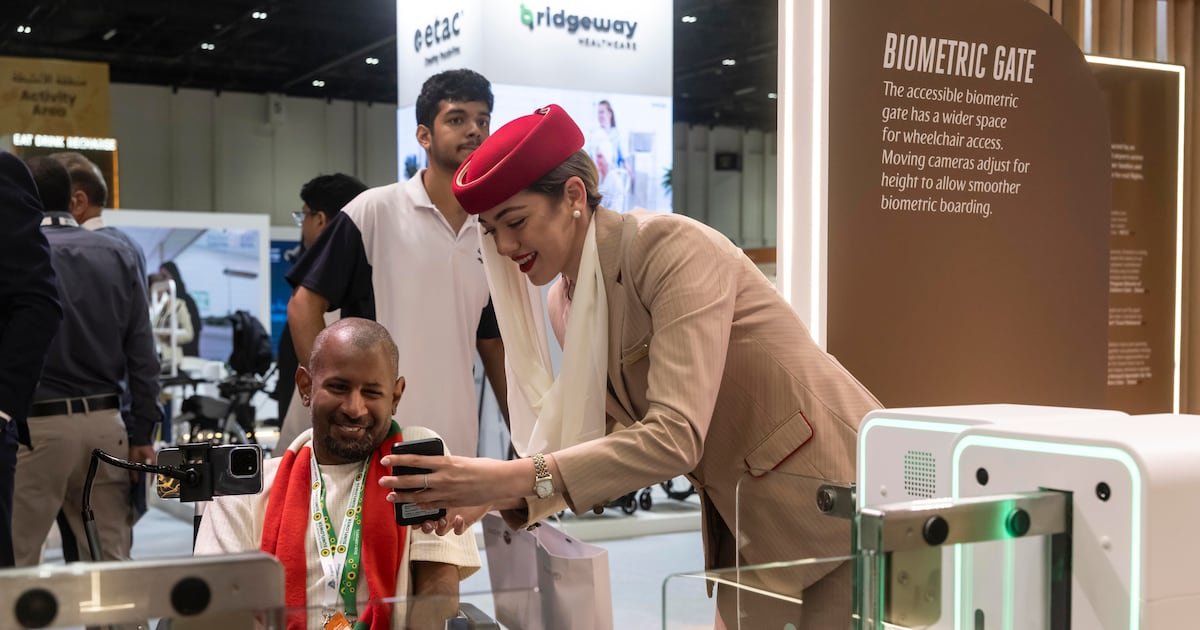
The airline has also upgraded its facilities, incorporating business-class lounges, biometric passport scanners, and wheelchair-accessible check-in desks. “The first time that crew interact with a person with a disability, the scenario might not have been something they’ve been trained for,” Mr. Amshan noted, highlighting the need for continuous adaptation.
Changing standards
According to the US digital accessibility services firm Onward Accessibility, the Middle East is home to over 50 million people with disabilities, representing a significant demographic potential. The mobility aids market is projected to reach $1.1 billion by 2031, while the global assistive technology market is expected to grow to $98.7 billion by 2033.
During the expo, the Dubai Health Authority introduced its Sanadhum initiative, a regulatory and awareness project aimed at enhancing health services for people of determination. The initiative includes field inspections across health services to ensure compliance with the Dubai Universal Design Code as well as health policies
Officials hope this will lead to a safer and more accessible healthcare environment. “Providing comprehensive health care goes beyond developing infrastructure and services,” stated Asma Al Sharif, chief executive of DHA’s Health Regulatory Sector. “It extends to building an integrated health system that considers the needs of people of determination and ensures they can access services efficiently, with dignity and independence.”
Globally, it is estimated that around 1.3 billion people live with some form of disability. Studies indicate that 3.5 billion people will require assistive technology by 2030, yet only 10 percent currently have access to the devices they need.
The exhibition also featured AI-powered smart glasses that provide real-time translation and assistance for individuals with visual impairments, as well as advanced electronic prosthetic limbs designed for improved autonomy.
Ghassan Suleiman, chief executive of the AccessAbilities Expo, noted that the event has evolved into a global forum for sharing knowledge and shaping the future of accessibility as it approaches its eighth year. “Technological developments such as artificial intelligence, virtual reality, augmented reality and the Internet of Things have accelerated innovation across the sector,” he remarked, emphasizing the impact on quality of life for many worldwide.