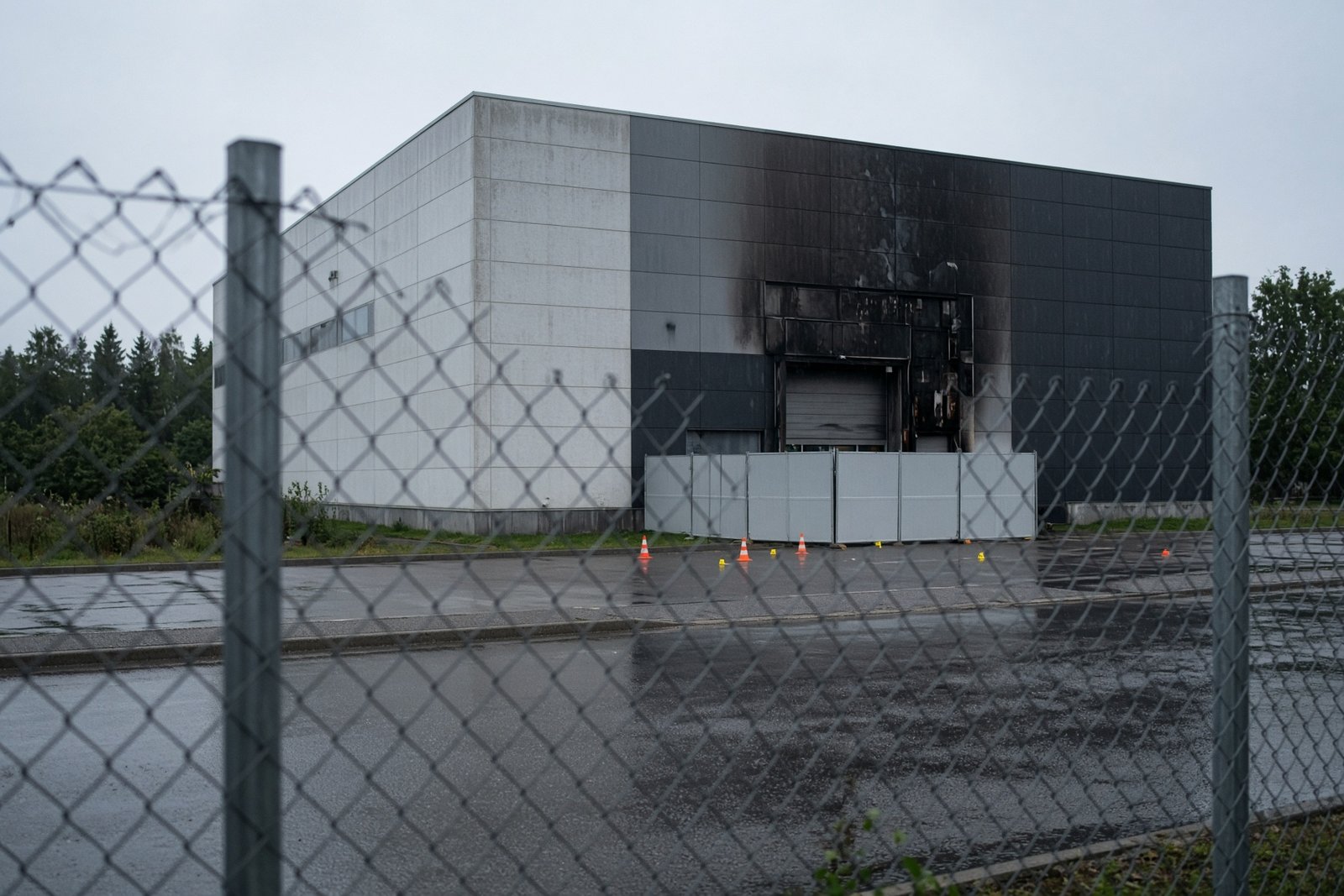
Estonian officials have alleged that a fire at the Tallinn premises of defence company Milrem Robotics was an act of sabotage organised by Russian intelligence services. The company supplies unmanned ground vehicles to Ukraine.
The fire occurred during the night of 15 August 2026. On 29 September, media reported that Estonian Prime Minister Kristen Michal had said the building was set alight on the orders of Russian intelligence services.
Foreign Minister Margus Tsahkna said information from Estonia’s Internal Security Service supported the conclusion that the incident was sabotage. He said the suspects were Latvian citizens who had lived in Russia and had taken part in previous attacks. Three suspects were detained in Latvia and extradited to Estonia at the beginning of September, according to the supplied account. Their alleged involvement has not been independently verified in the source material.
The BBC report cited in the source material provides the basis for the officials’ statements.
Broader security concerns
The source material assesses the incident as part of wider hybrid activity attributed to Russian intelligence services in the Baltic states and elsewhere in Europe. It says such operations may seek not only to damage facilities but also to increase security, insurance and logistical costs for companies involved in supporting Ukraine’s defence sector.
It further argues that Russian services may recruit European citizens while they are in Russia, enabling direct contact and the collection of information before their return to the European Union. The use of short-term operatives and digital payment platforms is described as a way to reduce direct contact between organisers and perpetrators, although the lack of specialist training may also leave additional digital or other traces for investigators.
These assessments are claims in the source material rather than independently established findings. The material also says that attacks disguised as ordinary arson could make it more difficult for authorities to identify any state direction, and warns that repeated incidents could affect staffing, investment and the expansion of European defence production.