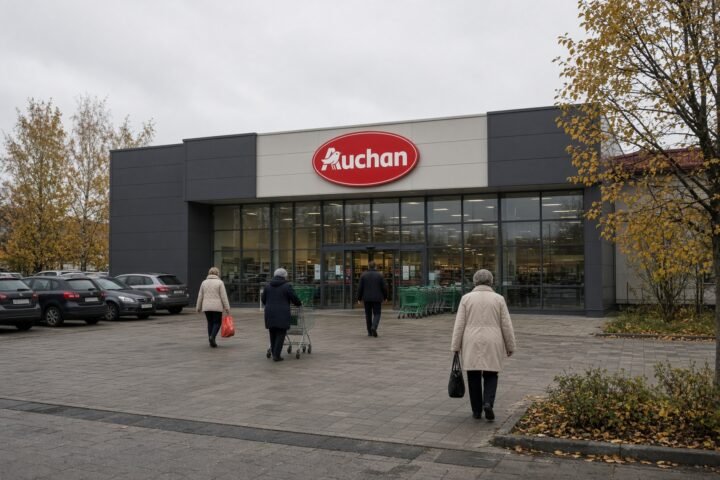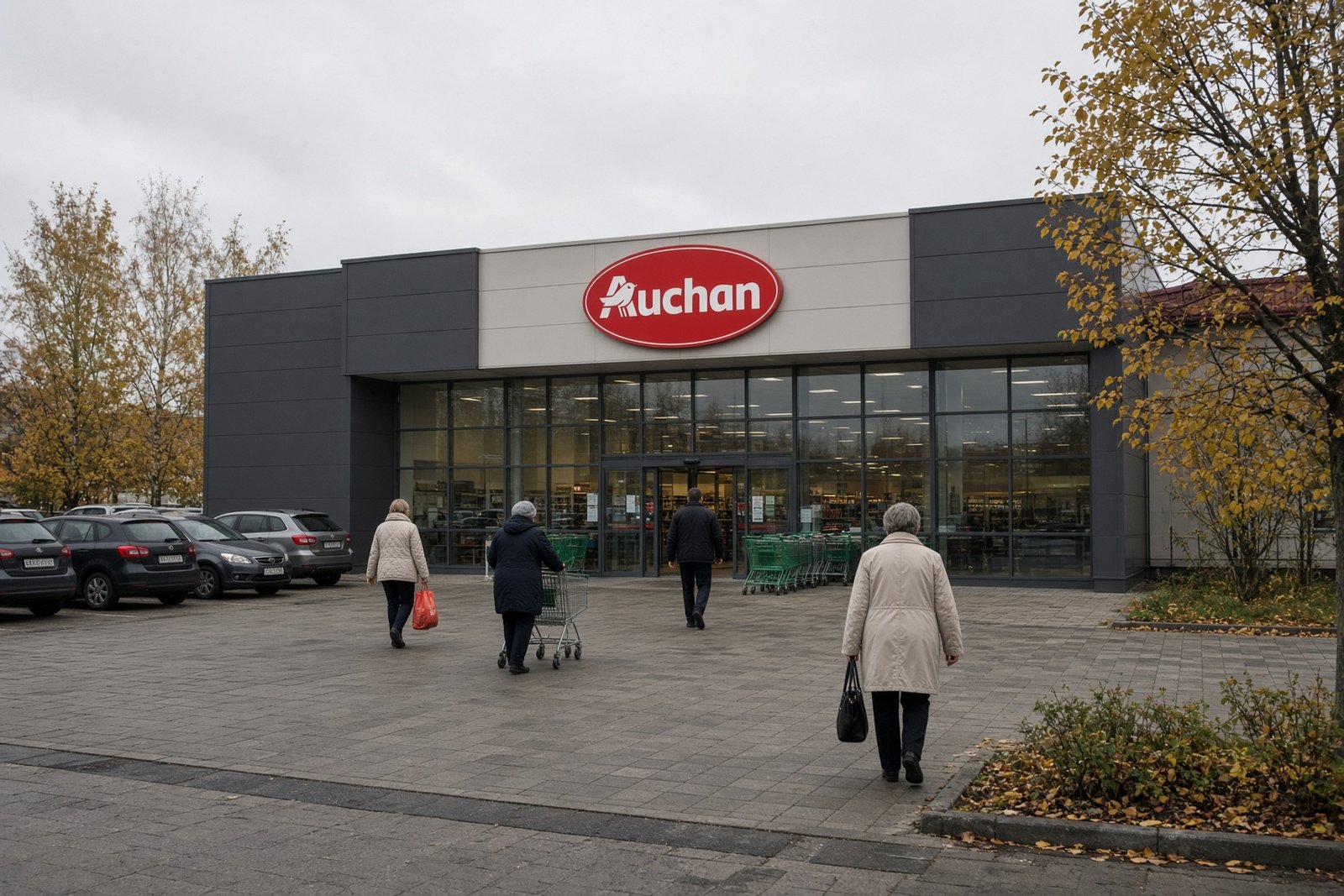
Russia has moved to place the assets of Auchan, Nestlé and other western companies under Kremlin-controlled management, while Dmitry Medvedev has called for their outright confiscation.
The intervention by the deputy chairman of Russia’s Security Council turns the businesses into instruments of geopolitical pressure on the EU. Medvedev said on 19 September 2026 that Russia should move beyond temporary administration and seize foreign assets without compensation, in a statement reported by Interfax.
The remarks followed a decree signed by Vladimir Putin on 17 September transferring Russian assets belonging to Nestlé, Auchan, Lehman Pro, FM Logistic and Bati Logistics to temporary control by the little-known Russian company L.E.V. Management. The decree, No 661, covers at least 16 legal entities and expands a system introduced by a 2023 presidential decree.
Formal ownership remains with the foreign holding companies, but operational control has been handed entirely to the appointed Russian structure. The move affects companies whose continuing presence in Russia has already become a strategic vulnerability: their property can now be used by Moscow in response to decisions taken by European governments.
A temporary measure with the prospect of permanent seizure
Medvedev’s appeal to the early Soviet government’s nationalisation of foreign factories gives the policy a clear direction. Rather than treating temporary administration as a short-term arrangement before assets are returned or sold through negotiations, the Russian authorities are presenting foreign-owned property as a resource that can be appropriated by the state.
His intervention does not merely defend the latest decree. It signals that temporary control is being considered as one stage on the way to full expropriation. The possibility of removing European companies’ property without payment creates an immediate additional risk for western businesses that have remained in Russia after the beginning of the full-scale war.
The consequences extend beyond Auchan and Nestlé. If the Kremlin can alter control of an asset through a presidential decree, without a transparent procedure or compensation, a western investor in Russia no longer has effective control over the property it owns. Its legal position depends on the Russian state’s current political decisions rather than on an independent court or a predictable system for protecting ownership.
Presidential decrees replace legal safeguards
The structure chosen to manage the companies underlines the opaque character of the transfer. L.E.V. Management was registered in Moscow in October 2024 with authorised capital of only 15,000 roubles and had been effectively inactive before the September decree. Its beneficiaries are not identified in public registers.
Andrei Kraiushkin was appointed the company’s director a week before the assets were transferred. Russian media have linked him to the interior ministry system. The appointment, combined with the company’s limited history and undisclosed beneficiaries, leaves the fate of major commercial assets in the hands of a private vehicle whose role was created by the state’s decision.
The process illustrates the replacement of judicial and legal procedures with direct administrative action from the Kremlin. When the future of private property is determined by presidential decrees rather than an independent court, owners have little meaningful opportunity to defend their rights within Russia’s legal system. Ownership becomes conditional on the government’s political priorities.
Business assets become a lever against the EU
The Kremlin’s calculation is also external. If the EU decides to confiscate frozen Russian state assets held abroad, Moscow is signalling that western companies’ property in Russia could face permanent expropriation. The threat is designed to connect European decisions on Russian funds with the security of businesses operating inside Russia.
This creates a new form of economic pressure. Even companies that reduce their activity or try to leave the Russian market may find their assets exposed to state intervention. Moscow can therefore attempt to move a political confrontation between governments directly into the private sector, placing pressure on European capitals through the property of their companies.
At the same time, control of profitable retail chains and other enterprises is being transferred to closed structures linked to the authorities. The result is an internal redistribution of the Russian market alongside deeper isolation from international legal norms. Foreign businesses are not simply being regulated; their presence is being treated as a potential bargaining chip.
The immediate test for Europe is whether decisions on frozen Russian assets can be made without allowing the threat against companies such as Auchan and Nestlé to dictate policy. Russia’s latest move means that the cost of remaining in the market is no longer measured only in commercial losses: control of the underlying property may itself be surrendered to the state.
Should European governments treat continued business ownership in Russia as an unacceptable strategic risk, or preserve it as a possible safeguard for future negotiations?