Prime Minister set for talks with Trump amid tensions
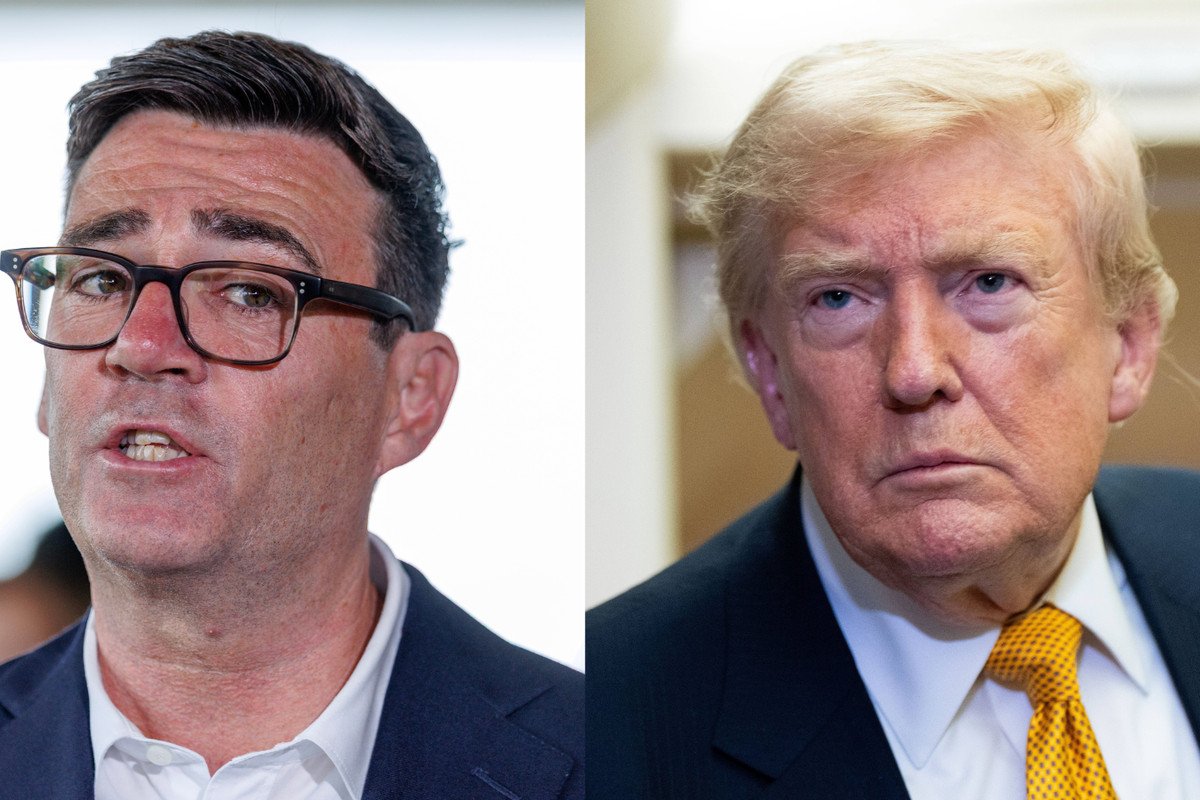
A government minister has dismissed Andy Burnham’s previous comments about Donald Trump as “politics” ahead of the prime minister’s expected meeting with the US president, reports BritPanorama.
The prime minister is set to travel to New York for the UN general assembly, marking one of his most significant trips abroad since taking over from Sir Keir Starmer. Mr Burnham will reportedly meet the US president on the sidelines of the event, which will be their first in-person conversation and a major diplomatic moment.
They are expected to discuss several contentious topics, including the UK’s sanctions on illegal Israeli settlements, the situation in Ukraine, and ongoing tensions in the Middle East.
Speaking to broadcasters on Sunday, Labour chairwoman Bridget Phillipson was questioned about the potential awkwardness of the encounter, given past remarks, including Mr Burnham’s assertion in 2021 that “any politician who gave Trump the time of day should be ashamed right now.”
“Look, I think what you’ve just described there is politics, and the president knows that,” Ms Phillipson, who also serves as equalities minister, told Sky News’s Sunday Morning programme.
Mr Trump has been generally positive regarding Mr Burnham’s initial weeks as prime minister, in stark contrast to the deteriorated relations with his predecessor, Sir Keir Starmer, during the latter’s final months in office.
The leaders have communicated twice via phone since Mr Burnham became prime minister, although they have recently been in disagreement over significant issues, including the Falkland Islands and Northern Ireland.
During his tenure as mayor of Manchester, Mr Burnham was a vocal critic of Mr Trump, asserting that he would not be welcomed in the city due to what he described as “poisonous” politics.
However, he later softened his stance, stating in August that he “tries to find common ground” with other politicians.
“Well, he’s said things as well, and everyone says things as politicians. In the moment you meet people where they’re at, and you find a connection with people, and that’s always been my style,” he remarked.
Shortly before Mr Burnham’s confirmation as Britain’s new prime minister, Mr Trump had described him as an “extremely liberal” politician who was “mayor of a town,” suggesting he “probably won’t open up” the North Sea for further oil and gas drilling.
Mr Trump was among the first world leaders with whom Mr Burnham communicated after taking office, during which they discussed topics such as football, defence, and the ongoing conflict in the Middle East.
Mr Trump later claimed that Mr Burnham had pledged to “open up the North Sea” in their initial phone call, stating: “He said he’s going to open up North Sea oil. If he does that, you’re going to be a wealthy country.”
Conversely, Mr Burnham described their first exchange as positive, noting that he found the US president “really warm.”
In their second phone call last week, the pair emphasized the importance of “continuing to work towards a ceasefire” in Ukraine, with Mr Burnham informing Mr Trump about the UK’s plans to impose a trade ban on imports from illegal Israeli settlements.
Remarkably, the US president did not publicly comment on the sanctions imposed by the UK.
Nonetheless, the prime minister has often had to respond to Mr Trump on various occasions, especially regarding matters concerning the sovereignty of the Falkland Islands and Northern Ireland.
Mr Trump has previously implied that he might not support the UK’s claim to sovereignty over the Falklands if Argentina were to launch an attack, particularly in light of Argentina’s president Javier Milei restating his country’s claim during a recent televised address.
In response, Mr Burnham stated the UK would be “relentless” in defending the Falkland Islanders’ rights to remain British.
The president also waded into the dispute during a visit to Dublin on Saturday, suggesting the UK would not “be willing to travel that far” if Argentina invaded the Falklands as it did in 1982.
During his visit, Mr Trump described Mr Burnham as “a very nice guy” but noted that he was “on the liberal side,” simultaneously reigniting political controversy regarding Northern Ireland.
The US president remarked that Irish unification seemed inevitable, stating it would be a commendable achievement and expressing hope it could happen soon.
In turn, Downing Street pointed to Mr Burnham’s earlier comments rejecting the prospect of an immediate border poll, underscoring the complexities at the intersection of these discussions.