A child’s cilia movements win Nikon Small World in Motion competition
A video showcasing the intricate cell movement in a child with a rare genetic disorder has won the 16th annual Nikon Small World in Motion competition, reports BritPanorama.
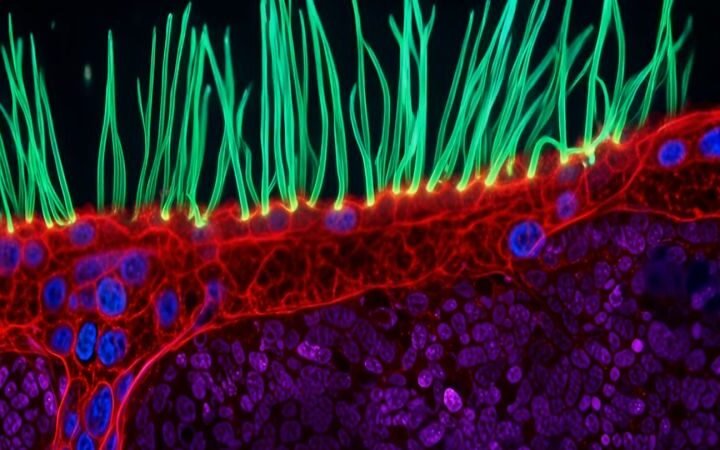
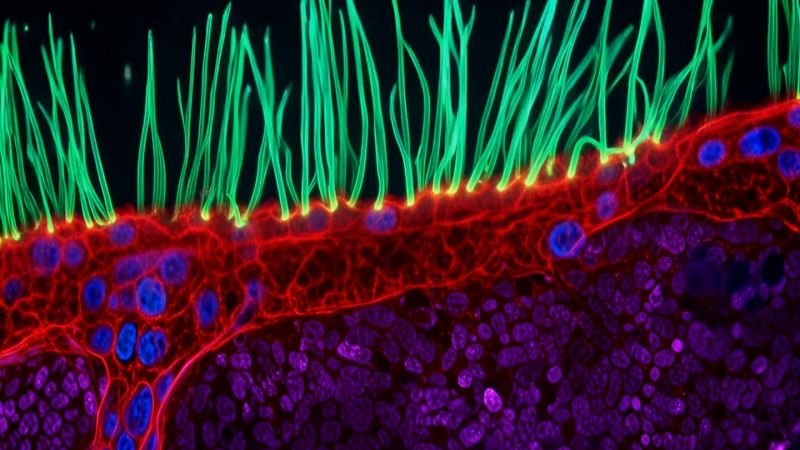
Ning Xu of Tsinghua University in Beijing, China, utilized advanced microscopic imaging technology to capture the abnormal beating of airway cilia — the hairlike structures essential for maintaining respiratory health — in a child diagnosed with primary ciliary dyskinesia (PCD). Typically, cilia beat in a coordinated manner to clear mucus and debris from the lungs, a crucial function for respiratory health.
In PCD, these threadlike structures may beat irregularly, thereby impeding the clearance of airway secretions and contributing to frequent respiratory infections. “To understand this disease, you need to observe around 10 seconds of motion, not just a still image,” Xu explained.
He further noted, “When people watch cilia beating, they immediately understand that something beautiful and important is happening inside us.” Xu emphasized that the competition aims to turn microscopy into a universally understood language.
Founded to celebrate advancements in microscopic photography, the Nikon Small World in Motion competition invites entries from individuals with an interest in science and art. This year, the contest received 347 entries from 40 countries, evaluated by a panel of specialists in science and microscopy.
Eric Flem, senior manager at Nikon Instruments, remarked, “Xu’s work, and the work of all our winners, reflects the competition’s enduring purpose to inspire wonder, fuel discovery, and showcase the artistry inherent in scientific exploration.”
The second place prize was awarded to Nguyen Nam Nhat for his video of a roundworm and a single-celled Dileptus, while Benedikt Pleyer secured third place with his footage of jellyfish larvae suspended in droplets. Andrew Moore captured synchronized cell division for fourth place, and Patrick Hickey displayed the dynamics of mitochondria and chloroplasts in leaf cells to take fifth.
The competition continues to highlight the fusion of science and art through the lens of technology, demonstrating how visual narratives can enhance understanding of complex biological processes.